Citizens’ Council Against Narcotics Menace
October 18, 2026
  • Read Ecopy
  • Circulation
  • Advertise
  • Careers
  • About Us
  • Contact Us
Android AppiPhone AppArattai
Organiser
  • ‌
  • Bharat
    • Assam
    • Bihar
    • Chhattisgarh
    • Jharkhand
    • Maharashtra
    • View All States
  • World
    • Asia
    • Europe
    • North America
    • South America
    • Africa
    • Australia
  • Editorial
  • International
  • Opinion
  • RSS @ 100
  • More
    • World Hindu Congress 2026
    • Op Sindoor
    • Analysis
    • Sports
    • Defence
    • Politics
    • Business
    • Economy
    • Culture
    • Special Report
    • Sci & Tech
    • Entertainment
    • G20
    • Azadi Ka Amrit Mahotsav
    • Vocal4Local
    • Web Stories
    • Education
    • Employment
    • Books
    • Interviews
    • Travel
    • Law
    • Health
    • Obituary
  • Subscribe
    • Subscribe Print Copy
    • Subscribe & Read Ecopy
  • ‌
  • Bharat
    • Assam
    • Bihar
    • Chhattisgarh
    • Jharkhand
    • Maharashtra
    • View All States
  • World
    • Asia
    • Europe
    • North America
    • South America
    • Africa
    • Australia
  • Editorial
  • International
  • Opinion
  • RSS @ 100
  • More
    • World Hindu Congress 2026
    • Op Sindoor
    • Analysis
    • Sports
    • Defence
    • Politics
    • Business
    • Economy
    • Culture
    • Special Report
    • Sci & Tech
    • Entertainment
    • G20
    • Azadi Ka Amrit Mahotsav
    • Vocal4Local
    • Web Stories
    • Education
    • Employment
    • Books
    • Interviews
    • Travel
    • Law
    • Health
    • Obituary
  • Subscribe
    • Subscribe Print Copy
    • Subscribe & Read Ecopy
Organiser
  • Home
  • Bharat
  • World
  • Operation Sindoor
  • Editorial
  • Analysis
  • Opinion
  • Culture
  • Defence
  • International Edition
  • RSS @ 100
  • Magazine
  • Read Ecopy
Home Bharat

Citizens’ Council Against Narcotics Menace: Collective responsibility to carve drug-free society

The battle against drugs cannot be left to the police alone. It must become a collective responsibility of government, institutions, families and citizens. A drug-free society will not be created merely by legislation. It will be created when society itself refuses to provide a market, a hiding place or social acceptance for the narcotics trade

Prof Richard HayProf Richard Hay
Sep 27, 2026, 08:30 pm IST
inBharat, Analysis, Health
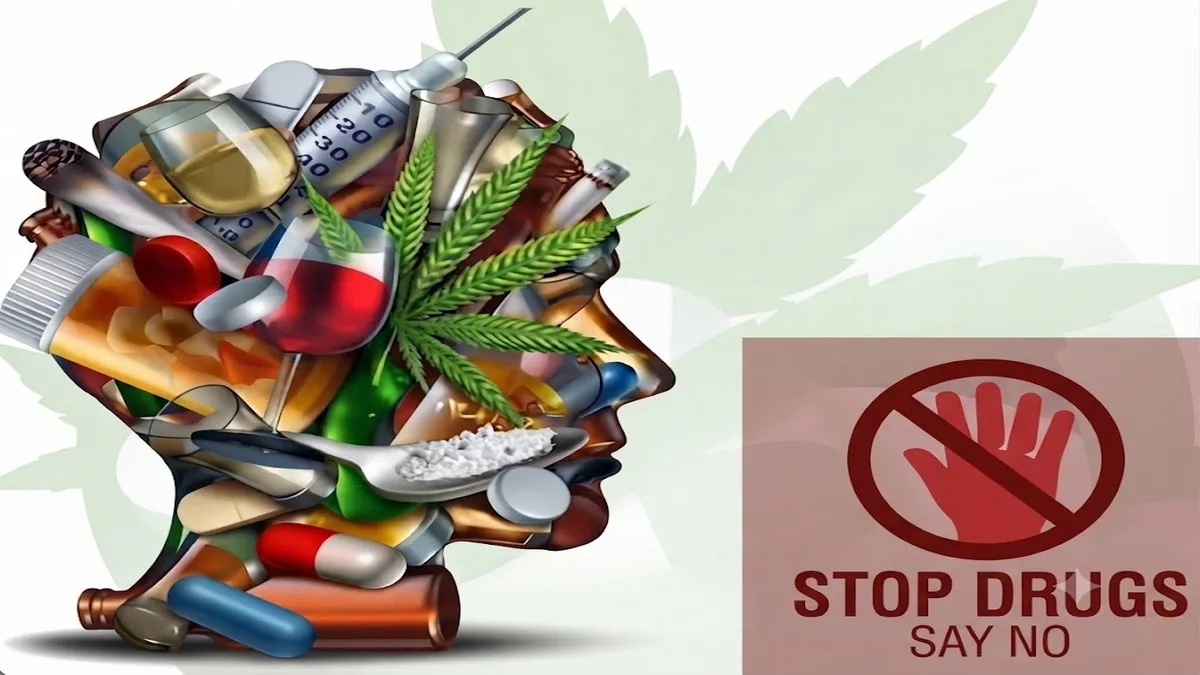
AI Generated Representative Image

AI Generated Representative Image

Facebook
Twitter
WhatsAppTelegramEmail

The narcotics menace has assumed dimensions that demand a much stronger partnership between government and society. Drugs are not merely a criminal commodity. They threaten the health of young people, undermine families, damage social institutions and create an underground economy driven by enormous illegal profits.

India’s official enforcement figures underline the scale of the challenge. According to data placed before Parliament, Drug Law Enforcement Agencies registered 1,48,063 cases and made 1,83,675 arrests in 2025. In the same year, nearly 12.41 lakh kilograms of narcotic drugs were seized nationwide. Property worth about ₹836 crore was frozen or seized in 1,356 financial-investigation cases.

The problem is also visible in Kerala. NCRB data for 2024 records 4,796.32 kg of narcotic substances seized in Kerala, involving 1,553 reported seizure instances in the state’s data. These figures represent seizures, not the total quantity entering or circulating in society. Therefore, they should be read as evidence of the scale of enforcement activity rather than as a measurement of the entire drug market.

The question before society is: Can law-enforcement agencies alone prevent every packet of narcotics from reaching its intended destination? The answer lies partly in creating a vigilant society.

Citizens’ Councils in every district

Every district should constitute a Citizens’ Council Against Narcotics, working alongside—not in place of—the police, Excise, Customs, Narcotics Control Bureau and Local Self-Government Institutions. Such a council should not become a parallel police force. Citizens must never take the law into their own hands. Its role should be prevention, awareness, community vigilance, responsible reporting and coordination with the competent authorities.

Representatives of local communities, educational institutions, parents, youth organisations, voluntary organisations, health professionals, social workers and Local Self-Government Institutions could participate. The council could maintain regular interaction with the district administration, police and Excise authorities and identify areas requiring greater preventive attention.

The community must become the first line of awareness

The Government has already established substantial institutional mechanisms. The Nasha Mukt Bharat Abhiyaan operates across all districts, and the Union Government has reported outreach to more than 14.79 crore people, including 4.96 crore youth and 2.97 crore women. It also supports rehabilitation and treatment infrastructure, including Integrated Rehabilitation Centres, addiction treatment facilities and district de-addiction centres. Yet prevention cannot remain confined to government programmes.

Parents must know what is happening around their children. Teachers must be trained to recognise warning signs. Youth organisations should actively promote sports, culture and constructive community engagement. Local bodies should ensure that public spaces do not become environments conducive to drug distribution.

Citizens who notice suspected trafficking should use lawful reporting mechanisms rather than confronting suspected offenders. The NCB has also provided the MANAS national narcotics helpline, 1933, for reporting information concerning narcotics trafficking and illicit drug sales.

Follow the money

The fight against narcotics must also attack the economic foundation of the trade. Drug trafficking survives because it generates money. Therefore, identifying the financial networks behind trafficking is as important as seizing the drugs themselves. Government data shows that the value of property frozen or seized in financial-investigation cases by Drug Law Enforcement Agencies increased from ₹276 crore in 2023 to ₹666 crore in 2024 and ₹836 crore in 2025.

This demonstrates why enforcement must move beyond catching street-level sellers and reach the organisers, financiers and networks that profit from the trade.

Also Read: UNGA81 & India’s Diplomacy: AI, maritime security, Seafarers safety, FTA with GCC & countering cybercrime—Key Takeaways

Protect the young

The ultimate objective must not simply be to increase the number of arrests or seizures. It must be to prevent young people from becoming consumers, couriers or victims of organised drug networks.

A district-level Citizens’ Council could therefore promote:

  • Regular anti-drug awareness programmes in schools and colleges
  • Parent–teacher awareness initiatives
  • Youth clubs, sports and cultural activities
  • Confidential and responsible reporting mechanisms
  • Coordination between LSGs, police, Excise and health authorities
  • Awareness about addiction treatment and rehabilitation
  • Special vigilance around vulnerable public spaces and transport corridors
  • Community campaigns against the social normalisation of drug use.

At the same time, persons suffering from addiction should be approached through appropriate health, counselling and rehabilitation services, while organised trafficking must be dealt with firmly under the law.

A people’s movement against an organised crime

The narcotics trade operates through networks. Society must therefore respond through networks of its own—not through vigilantism, but through cooperation. Police cannot be everywhere. Excise cannot be everywhere. Customs cannot be everywhere. Government cannot see everything that happens inside every neighbourhood. But an informed and responsible community can become an additional layer of prevention.

Every district should therefore have a structured mechanism through which citizens, local governments, educational institutions, health professionals and enforcement agencies can communicate and act within their respective legal responsibilities.

The objective should be clear:

Stop drugs before they reach our children. Stop illegal profits before they finance larger criminal networks. And ensure that no community becomes a safe market for narcotics. The battle against drugs cannot be left to the police alone. It must become a collective responsibility of government, institutions, families and citizens. A drug-free society will not be created merely by legislation. It will be created when society itself refuses to provide a market, a hiding place or social acceptance for the narcotics trade.


Topics: Drug-Free SocietyCitizens CouncilNarcotics
Share
Tweet
SendShareSend
✮ Subscribe Organiser YouTube Channel. ✮
✮ Join Organiser's WhatsApp channel for Nationalist views beyond the news. ✮
Previous News

Amit Shah hails Ashok Singhal’s legacy of Sacrifice at Birth Centenary; Credits Him for Key Ram Janmabhoomi Inspiration

Next News

RSS Sarkaryavah Dattatreya Hosabale Hails Ashok Singhal’s Resolve: ‘Harder Than a Thunderbolt, Softer Than a Flower’

Related News

Narco kingpin Navpreet Singh deported to India from Turkey; Amit Shah vows destruction of drug menace by 2029

PM Modi launches Nasha Mukt Yuva Sankalp Abhiyan; Emphasises the role of drug-free youth to build Viksit Bharat

Shri J. Shri Nandakumar,
Dr Rahul Shastri, Shri SM Rama Mohan (Left to Right)

Cultural Marxism, Maoist networks, narco menace pose emerging threats: Speakers at Samvit Kendra seminar in Hyderabad

Police in Koraput district bust a major cannabis oil manufacturing network, seizing contraband worth over ₹200 crore in one of the biggest recent anti-narcotics operations

Odisha: Breakthrough in anti-narcotics drive in Koraput district; Hashish oil and ganja worth over Rs. 200 core seized

Karnataka: Bengaluru police intensify war on drugs, seize narcotics worth Rs 81 crore in 2025 crackdown

Mizoram police crackdown on drug smuggling

Mizoram police crackdown on drug smuggling; Rs 302 crore seized, Assam police captures Rs 45 crore drugs

Load More

Latest News

Site of the stampede that took place at Durga Puja Pandal in Kolkata

Kolkata Durga Puja Pandal Stampede: 17 feared dead; PM Modi announces Rs 2 lakh ex-gratia, Amit Shah condoles death

Representative Image

Rampant Abductions in Balochistan: Armed men abduct 20 under-training police personnel in Mastung

ABVP Sweeps 8 of 13 State Universities and 200+ Colleges in Odisha

Gen-Z Rejects Agitprop: ABVP sweeps Odisha campus polls after 8-year gap; Amit Shah hails ‘Nation First’ mandate

Representative Image (This is an AI generated image)

LRO flags retired judges’ association with foreign-funded NGOs, seeks ED probe into Thakur Family Foundation

Women walk near destroyed buildings, with one holding the flag of Hezbollah, in the southern Lebanese village of Kfar Kila

Lebanese poll reveals growing Shia support for disarming Iran-backed Hezbollah and reaching a peace deal with Israel

Actor Imran Khan (Left), Katrina Kaif and Alia Bhatt (Right)

CJP Agitation: FRRO orders US Citizen & actor Imran Khan to leave Bharat; Know other 9 stars with foreign passport

First Secretary Anuj Swarup rebukes UN expert report

India Slams UN Credibility: Rebukes claim on youth freedom; Hails constitutional rights & youth role in Viksit Bharat

CJP Founder Abhijeet Dipke granted conditional bail

CJP founder Abhijeet Dipke granted conditional bail after second detention in a week; Signed one year peace bond

C-DAC Recruitment 2026 offers 899+ technical and non-technical vacancies across 11 locations, with online applications open until October 26, 2026

C-DAC Recruitment 2026: Apply online for 899+ technical and non-technical posts; Check eligibility and last date

US President Donald Trump confirms the US is considering deploying the ‘Mother of All Bombs’ against Iran, while ruling out nuclear weapons and ground troops

US president Trump signals possible use of ‘mother of all bombs’ against Iran, rules out nuclear weapons

Load More
  • Privacy
  • Terms
  • Cookie Policy
  • Refund and Cancellation
  • Delivery and Shipping

© Bharat Prakashan (Delhi) Limited.
Tech-enabled by Ananthapuri Technologies

  • Home
  • Search Organiser
  • Bharat
    • Assam
    • Bihar
    • Chhattisgarh
    • Jharkhand
    • Maharashtra
    • View All States
  • World
    • Asia
    • Africa
    • North America
    • South America
    • Europe
    • Australia
  • Editorial
  • Operation Sindoor
  • Opinion
  • Analysis
  • Defence
  • Culture
  • Sports
  • Business
  • RSS @ 100
  • Entertainment
  • More ..
    • Sci & Tech
    • Vocal4Local
    • Special Report
    • Education
    • Employment
    • Books
    • Interviews
    • Travel
    • Health
    • Politics
    • Law
    • Economy
    • Obituary
  • Subscribe Magazine
  • Read Ecopy
  • Advertise
  • Circulation
  • Careers
  • About Us
  • Contact Us
  • Policies & Terms
    • Privacy Policy
    • Cookie Policy
    • Refund and Cancellation
    • Terms of Use

© Bharat Prakashan (Delhi) Limited.
Tech-enabled by Ananthapuri Technologies