Years after the first prosecutions, Oxford’s grooming-gang scandal continues to haunt survivors, who say Pakistani men involved in the sexual exploitation of vulnerable girls represented a far wider network than the offenders eventually brought before the courts. Many perpetrators they identify, they say, were never prosecuted and continue to live freely in the community.
Survivors of the sexual abuse say the criminal cases brought against members of the gangs dealt with only a fraction of the men involved. They fear that numerous perpetrators who participated in the exploitation of girls were never identified, questioned or brought before a court.
The continuing presence of men whom survivors associate with the gangs has added another painful dimension to the scandal. Women who were abused as children have described the distress of encountering people they believe were involved in their exploitation while those men continue to live ordinary lives in the community.
The Oxford cases in 2013 involved vulnerable girls who were targeted by groups of men and subjected to sexual exploitation. Survivors’ experiences point to a pattern in which their vulnerability was exploited repeatedly, leaving them exposed to serious and sustained abuse.
The Pakistani background of the men at the centre of the allegations is also a significant feature of the cases. Survivors have described Pakistani men as being among those who participated in the grooming and sexual exploitation of vulnerable girls, while many of those whom victims identify as perpetrators have never faced criminal proceedings.
Victims encounter men they say were involved
For survivors, the scandal did not end when individual prosecutions were completed. Some say they continue to see men whom they associate with their abuse in Oxford, creating the disturbing impression that people who escaped prosecution have been able to remain part of the community without facing accountability.
“A shop, a petrol station, a restaurant – everywhere you can imagine – you’ll see a man that’s done something,” one survivor, Sarah (not her real name), tells media.
“It’s difficult because this is where I live, it’s where I grew up. There is a few of them that I’ve seen a few times, even just in the supermarket, driving around,” she explains.
She feels “sick, cold” when she sees them, she says.
Sarah said the men who groomed her supplied cigarettes that she believes were laced with heroin, as well as alcohol, which contributed to her long-term addiction. She said the men then told her she owed them money and coerced her into having sex with them to repay the supposed debt.
She described being pressured to consume alcohol until she became sick, while the men kept her in houses where she felt trapped and sometimes locked her inside. She said groups of men would subsequently arrive, sometimes numbering six or seven, leaving her and the other girls outnumbered and unable to resist.
A Pakistani grooming gangs survivor in Oxford told the BBC that hundreds of abusers still walking free.
"A shop, a petrol station, a restaurant, everywhere you can imagine, you'll see a man that's done something".
Scandalous. This isn’t an irrelevant problem @RoryStewartUK. pic.twitter.com/FMO1KovwxH
— Chris Rose (@ArchRose90) September 21, 2026
The survivors’ experiences also raise questions about the difference between the number of offenders known to investigators and the wider number of men who may have participated in the abuse.
Their estimate runs into the hundreds. They believe that a substantial number of Pakistani grooming-gang members escaped the criminal justice process despite their alleged involvement in the exploitation of girls.
Another woman, Rachel (not her real name), was abused between the ages of 12 to 15 and says many of those men are still free. She was a key witness in the first trial of Oxford grooming gang members, in 2013, when seven men were convicted.
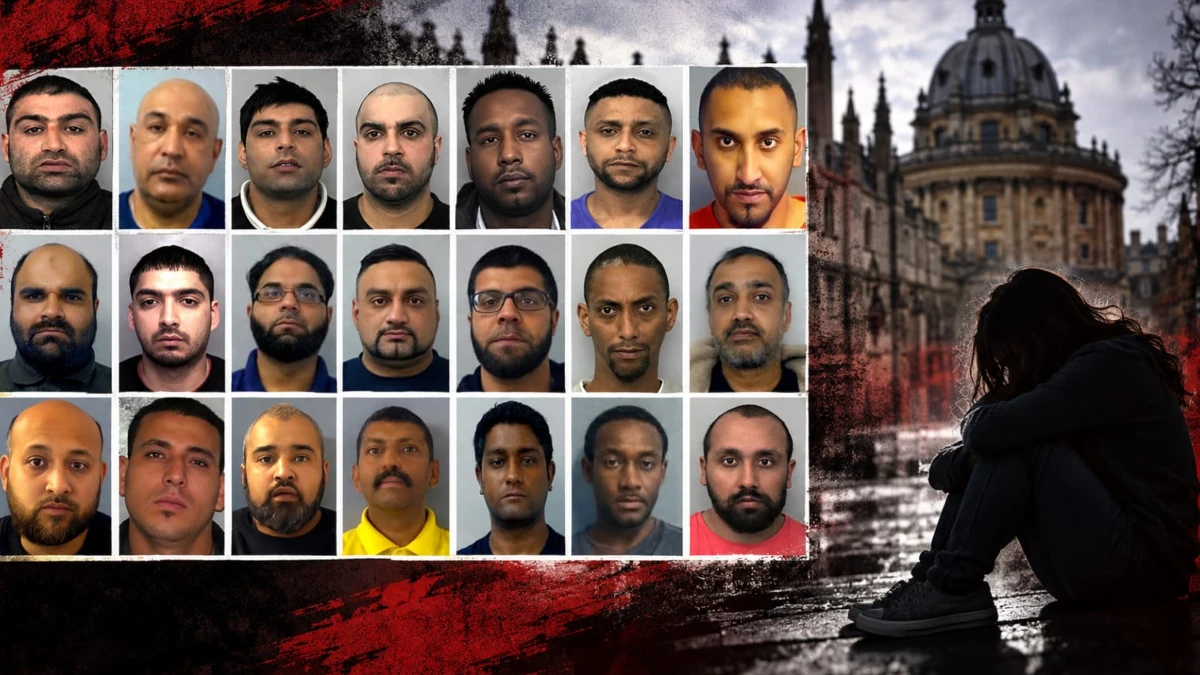
Although total 21 men have been convicted in connection with the Oxford grooming gang, Rachel said numerous perpetrators have never been held accountable for their actions.
That trial revealed the grooming, trafficking and rape of six girls over an eight year-period in the city.But subsequent prosecutions have identified many more victims, and it was estimated in 2015 that more than 370 children were affected.
The consequences for victims have been long-lasting. Having suffered abuse while young and vulnerable, they have been forced to live with the psychological and social consequences while seeing perpetrators remain free.
The issue has consequently become about more than the convictions already secured. Survivors want the authorities to account for the men who were never prosecuted and to explain why the investigations did not reach everyone they believe was involved.
The allegations also expose the manner in which grooming gangs could exploit vulnerable children. Groups of men gained access to girls who were already vulnerable and subjected them to sexual exploitation. The collective nature of the offending meant that victims could face abuse from more than one perpetrator.
Former detective says police caught only a core group
Simon Morton, the former senior detective who led the initial Oxford investigation, has provided an important perspective on the scale of the cases. His assessment is that police succeeded in catching a core group of offenders, leaving open the possibility that the wider number of perpetrators was considerably larger.
“It’s crazy, it’s just ridiculous, the amount of people that were involved,” says Morton.
“We should’ve done more. It’s tragic,” he says, adding that he believes this type of abuse is “absolutely” still taking place in Oxford. “We got the core group, that doesn’t mean there isn’t more.
The distinction is crucial. Convictions established the guilt of those prosecuted, but the survivors believe that the investigation did not identify every man who participated in the grooming gangs.
🚨 250,000 WHITE BRITISH GIRLS RAPED IN THE LAST 25 YEARS, OVER 90% BY MUSLIM MEN, AND THE AUTHORITIES KNEW AND DID NOTHING.
Rotherham, Rochdale, Telford, Oxford, Newcastle, grooming gangs operating for DECADES. Police, social services, councils all aware.
They were told. They… pic.twitter.com/4H2vRv5RHN
— Gunther Eagleman™ (@GuntherEagleman) March 15, 2026
Their concerns have kept the Oxford scandal alive years after the original investigations. For victims, the question is not simply how many men were convicted but how many escaped the attention of investigators altogether.
The possibility that hundreds of Pakistani perpetrators remain free has intensified demands for greater accountability. Survivors believe that the men who were never prosecuted must not disappear from public attention simply because individual cases have already resulted in convictions.
The Oxford scandal therefore continues to raise fundamental questions about the protection of vulnerable children, the effectiveness of investigations and the extent of the grooming networks that operated in the city.
For the women who survived the abuse, justice remains incomplete while men they identify as perpetrators continue to live freely. Their accounts point to a much wider circle of offenders than those who ultimately appeared in court, leaving the full scale of the Oxford grooming gangs unresolved.