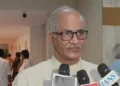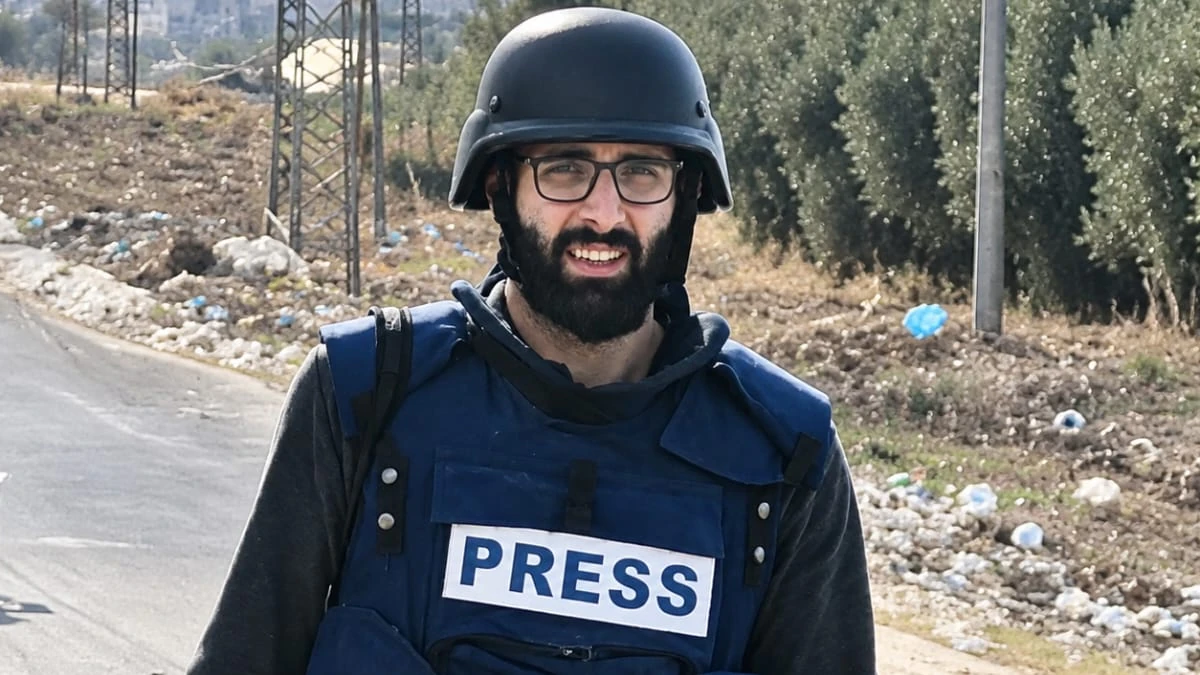
NEW DELHI: Gaza photojournalist Motaz Azaiza has described what he said was a pattern among journalists in Gaza of lowering their cameras when civilians openly criticised Hamas, saying he personally struggled with whether to publish such footage but ultimately decided that criticisms of Hamas by civilians and criticisms of Hamas by Gazans were part of the reality that needed to be documented.
Azaiza made the remarks during a September 3 episode of Palestinian YouTuber Ahmad Biqawi’s podcast. Discussing his experiences as a photojournalist in Gaza, Azaiza recalled situations in which civilians expressed anger towards Hamas while journalists were filming. He said that when such criticisms of Hamas by Gazans emerged, many journalists would stop recording or turn their cameras away.
Azaiza gave the example of a person emerging from an ambulance and saying, “May Allah punish Hamas”. He said that while he was filming the person, people around him turned their cameras off. Azaiza said he could not bring himself to look away from the person or stop filming what he was saying.
He explained that, in his view, the civilian was simply blaming the government he believed was responsible for dragging him into the war. Azaiza said he initially experienced an “inner conflict” over whether to publish material involving criticisms of Hamas by civilians. He acknowledged that it was difficult for him to publish such material at first and said he had never seen a journalist from Gaza publish something similar.
Biqawi then observed that such statements were usually not published. Azaiza agreed, saying that when someone made comments critical of Hamas, “many journalists lower the camera.” His account therefore directly addressed the issue of criticisms of Hamas by Gazans and the way such comments were handled by journalists working inside Gaza.
Azaiza also said that Hamas manages a group chat that includes every journalist in Gaza. He further alleged that the media campaigns emerging from Gaza were organised propaganda efforts. According to his account the group chat allowed Hamas to maintain a direct connection with journalists working across Gaza and played a role in shaping the media narrative emerging from the enclave.
Azaiza on Hamas, October 7 and the “slime” comparison
Azaiza stressed that he was speaking about his own experience and said his comments should not be interpreted as an endorsement of the Palestinian Authority or Fatah. Rather, he argued that such experiences were something that needed to be conveyed.
He then addressed how responsibility for the October 7, 2023, Hamas attack is discussed. According to Azaiza, when Hamas is accused of committing massacres on October 7, Hamas responds that it was the people who entered Israel who carried out those actions, rather than Hamas itself. But, he said, when actions are presented as heroic, the claim changes and Hamas says that it was responsible.
Motaz Azaiza, a "photojournalist" formerly based in Gaza, admits: Hamas manages a group chat that includes every journalist in Gaza.
All of the media campaigns coming out of Gaza were orchestrated propaganda efforts. pic.twitter.com/CJk5Li7ksw
— Bassem Eid (@realbassemeid) September 18, 2026
Azaiza compared this shifting attribution to playing with jelly or slime. He said Palestinians were treated like “slime” and argued that different actors could mould them and their actions according to whatever narrative they wanted.
Azaiza was evacuated from Gaza with his family in January 2024 and travelled through Egypt to Qatar after more than 100 days documenting the war. He had worked with the United Nations Relief and Works Agency for Palestine Refugees (UNRWA) and became internationally known for his photographs and videos from Gaza. His evacuation to Qatar was reported in January 2024. Azaiza was nominated for the 2024 Nobel Peace Prize.