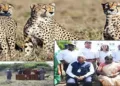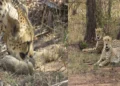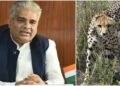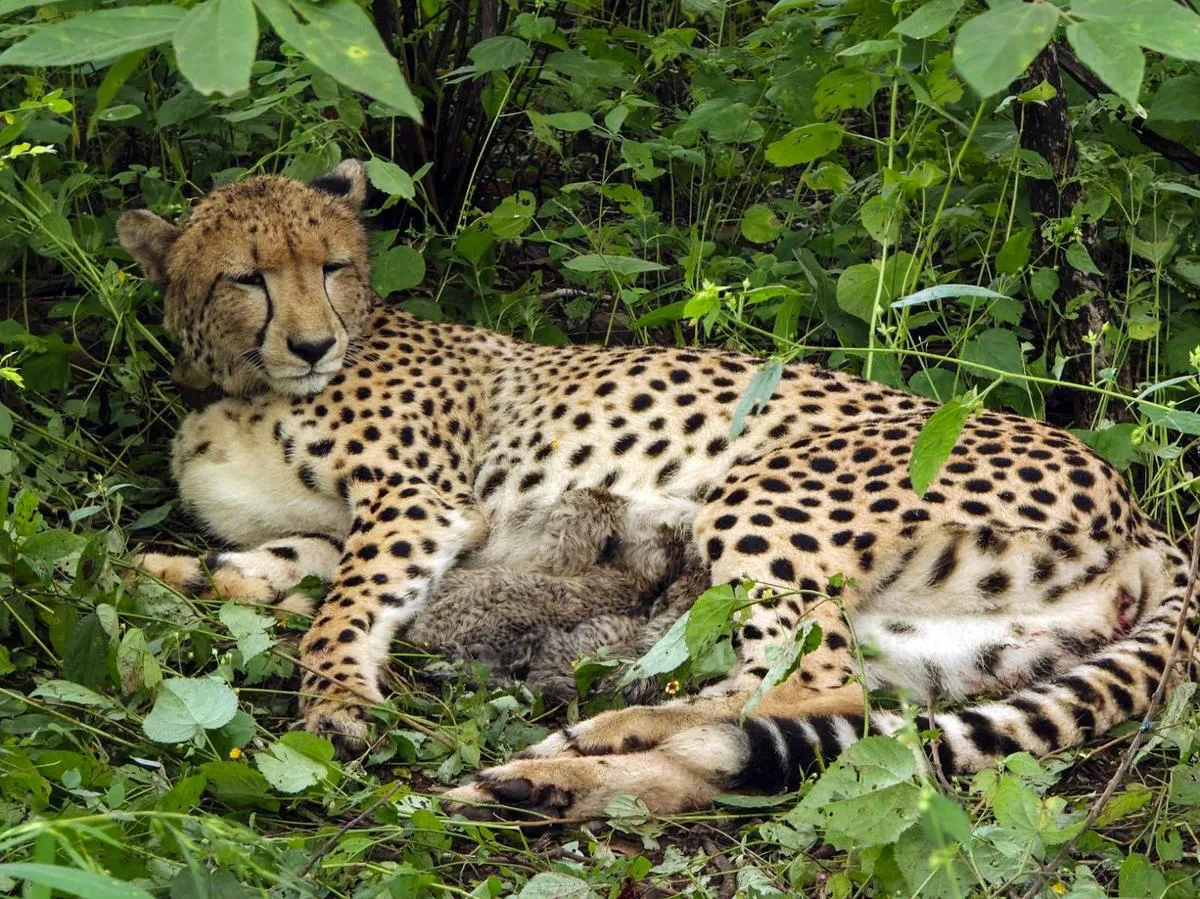
Union Environment Minister Bhupender Yadav announced the birth of the four cubs on Friday. The mother, identified as KGP12, was born in India and is now part of the growing cheetah population at Kuno National Park.
Yadav described the birth as an important moment for Project Cheetah and congratulated the teams working at Kuno and those associated with the conservation programme.
The birth comes as India marks four years since the launch of its ambitious effort to bring cheetahs back to the country after several decades of extinction.
The four cubs are also significant because their mother was born in India. The development indicates that cheetahs brought to India as part of the reintroduction programme are reproducing and that a new generation is now being born in the country.
Project Cheetah completes four years
Project Cheetah was formally launched on September 17, 2022, when Prime Minister Narendra Modi released eight cheetahs brought from Namibia into specially prepared enclosures at Kuno National Park in Madhya Pradesh.
The launch marked the beginning of India’s cheetah reintroduction programme after the species had been officially declared extinct in the country in 1952.
The programme was later expanded with the arrival of additional cheetahs from South Africa and Botswana.
Since then, Kuno National Park has remained at the centre of India’s efforts to establish a viable cheetah population.
The programme involves not only bringing cheetahs to India but also monitoring their health, movement, adaptation, breeding and survival in the new environment.
A new generation of Indian-born Cheetahs
The birth of four cubs to an India-born female adds another stage to the programme.
The development is particularly important because the long-term objective of reintroducing a species is to establish a population that can reproduce and sustain itself.
The birth shows that at least some cheetahs in the programme have adapted to the Indian environment and are breeding at Kuno.
For wildlife officials, every new birth also brings the responsibility of monitoring the cubs and their mother. Young cheetahs face several natural challenges, and their survival is an important part of the overall conservation effort.
The latest birth will therefore be followed closely by the teams involved in Project Cheetah.
Cheetah declared extinct in India in 1952
The cheetah was officially declared extinct in India in 1952. Its disappearance was linked to several factors, including habitat loss and historical hunting pressures.
For decades, India had no wild cheetah population.
The reintroduction programme was launched with the aim of bringing the species back and establishing a sustainable population.
The first eight cheetahs arrived from Namibia in September 2022. Subsequent translocations from South Africa and Botswana increased the number of animals participating in the programme.
Kuno National Park was selected as the main site for the reintroduction because of its habitat and availability of prey.
Kuno at the centre of conservation efforts
Located in Madhya Pradesh’s Sheopur district, Kuno National Park has become the main base for Project Cheetah.
The park provides a protected landscape where the animals can be monitored by wildlife authorities and conservation teams.
The programme requires continuous monitoring of the cheetahs, including their health, movement and adaptation to the Indian landscape.
The birth of four cubs adds to the conservation programme’s focus on natural reproduction rather than depending only on the arrival of animals from other countries.
Government calls birth a sign of hope
Bhupender Yadav said the birth of the four cubs was a symbol of hope and resilience for India’s cheetah conservation efforts.
He also congratulated the Kuno and Project Cheetah teams for their work.
The latest development comes at a significant point for the programme, as India completes four years since the first cheetahs were brought back to the country.
The birth of an India-born female’s four cubs gives the project another important milestone as authorities continue their efforts to establish a viable cheetah population in India.