Gorakhpur for years was associated with encephalitis outbreaks, law-and-order worries and a fertiliser factory that had stood silent for three decades. Today, the city is being counted among the fastest-growing industrial centres of eastern Uttar Pradesh. It is steadily building a new identity around factories and assembly lines.
Chief Minister Yogi Adityanath underlined this shift on September 16, 2026, while inaugurating and laying the foundation stones of 119 development projects worth Rs 40 crore in the district. Speaking after opening a Kalyan Mandapam at Urvarak Nagar, he said more than 500 industries have come up in Gorakhpur alone, providing jobs to around 50,000 young. He also mentioned that “Uttar Pradesh is no longer a BIMARU state. It is now playing its role as a growth engine of Bharat.”
From a closed factory to a national asset
Urvarak Nagar is the township of the Gorakhpur fertiliser plant, which lay shut for more than 30 years before Hindustan Urvarak & Rasayan Limited (HURL) revived it at a cost of around Rs 8,600 crore. Prime Minister Narendra Modi dedicated the plant to the nation on December 7, 2021.
The unit can produce 12.7 lakh metric tonnes of neem-coated urea every year, serving farmers across Purvanchal and adjoining regions. Its 149.2-metre prilling tower was described by the government as the highest in the world.
For Gorakhpur, the revival did more than restart production. It told investors that the region’s industrial past was not a closed chapter, and that the Centre and the State were ready to put serious capital behind its future. This is the double-engine model at work, where a central public sector revival anchors a State-led drive for private investment.
GIDA becomes the engine room
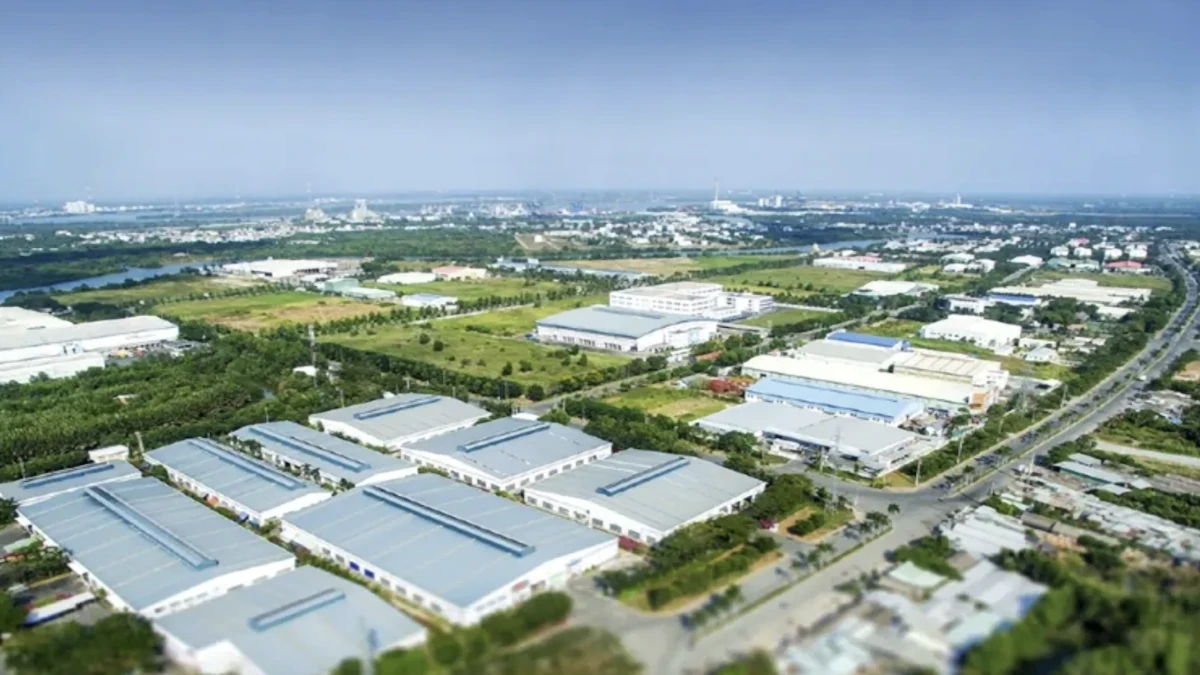
Much of the new manufacturing activity is being channelled through the Gorakhpur Industrial Development Authority (GIDA), which the State government set up on November 30, 1989 for the planned development of eastern Uttar Pradesh.
In 2025-26, GIDA allotted 182 acres to 54 new units, bringing proposed capital investment of Rs 5,800 crore and an expected 8,500 jobs. Over the preceding five years, the district had drawn investment proposals worth Rs 9,445 crore, with the potential to create 22,922 jobs. By December 2025, industrial projects in Gorakhpur were reported to be worth around Rs 11,600 crore.
The investor list shows how diverse the base has become. PepsiCo, Coca-Cola, Ankur Udyog, India Auto Wheels, Tatva Plastics, Kapila Agro Industries, Gyan Dairy, Technoplast and APL Apollo Tubes are among the companies that have set up or are setting up operations. Beverages, food processing, steel tubes, plastics, dairy and auto components now share the same industrial map.
The pace has been visible on the ground too. In September 2025, the Chief Minister inaugurated and laid foundation stones for projects worth Rs 2,251 crore in the GIDA area alone.
Dhuriyapar: Purvanchal’s largest land bank
If GIDA is the engine room, the Dhuriyapar Industrial Township is the expansion plan. Spread across 6,876 acres in 17 notified villages in the southern belt of the district, it is considered the largest industrial land bank in Purvanchal. In the first phase, GIDA is acquiring 800 acres and developing them according to the needs of industry.
Dhuriyapar was long regarded as one of the most backward pockets of the district. It is now attracting some of the country’s biggest corporate names. The Adani Group has been allotted 46.63 acres for an Ambuja Cement unit, while Shreyash Distillery-Energy Limited, linked to the Keyaan Group, has received 60.48 acres. Reliance Consumer Products Limited has selected around 50 acres for a Campa Cola unit with an investment of Rs 300 crore.
A specialised electronics manufacturing cluster is also part of the township’s blueprint, along with proposals for a Plastic Park and a Flatted Factory complex. An industrial corridor linking GIDA with Dhuriyapar is being developed to join the old and new zones into one manufacturing belt.
Connectivity changes the investment math
Factories follow roads, and Gorakhpur’s connectivity has improved considerably. The 91-km Gorakhpur Link Expressway now connects the city directly with the Purvanchal Expressway, giving industries faster access to Lucknow and markets further west.
GIDA’s own location adds to this advantage. It sits at the junction of the Gorakhpur-Lucknow National Highway and the Kushinagar-Sonauli National Highway, which runs towards the Nepal border. For manufacturers targeting eastern Uttar Pradesh, Bihar and the Terai region of Nepal, the city offers a natural distribution base.
Law and order as the first infrastructure
The Chief Minister has repeatedly argued that none of this would have been possible without a change in the security environment. Addressing the gathering, he said that since 2017 the government has ensured public safety under Prime Minister Modi’s leadership, and asked whether people could even attend public functions if criminals roamed the streets freely.
For investors, the argument is practical. Capital does not flow to places where extortion, land disputes and political interference decide the fate of a project. Improved policing has given businesses the confidence to look beyond the traditional industrial corridor of western Uttar Pradesh near the National Capital Region.
Jobs closer to home
According to the Chief Minister, youth no longer need to leave Uttar Pradesh in search of work. Units in Gorakhpur are drawing workers from neighbouring districts such as Deoria, Maharajganj, Kushinagar, Mau, Basti and Siddharthnagar.
This matters in a region that has, for generations, sent its young people to Delhi, Mumbai, Punjab and the Gulf. A factory job within the district keeps families together and keeps money circulating in the local economy.
Alongside private employment, the government is also expanding public recruitment. The Chief Minister said around 9.5 lakh young people have received government jobs since 2017, and that another one lakh will be recruited within the next six months through a fair and transparent process based on merit.
Growth with welfare
The Gorakhpur story is not being told as one of industry alone. At the same event, the Chief Minister said 1.10 crore elderly people, destitute women and Divyangjan across Uttar Pradesh are receiving an annual pension of Rs 12,000, adding that both the amount and the number of beneficiaries will soon be increased.
The Kalyan Mandapams coming up across the city follow the same thinking. They offer families from every section of society a dignified and affordable venue for weddings and community functions. In this approach, industrial growth raises incomes while welfare ensures that the last person in line is not left behind, in keeping with the spirit of Antyodaya.
The real test for Gorakhpur will be converting land allotments and investment proposals into working factories. Agreements signed on paper need to become production lines, and promised jobs need to show up as steady payrolls. Preparing local youth with the skills modern manufacturing demands will be as important as building sheds and roads.
Still, the direction is clear. A city that waited three decades for its fertiliser plant to restart is now allotting land to cement makers, beverage companies and electronics units. If the momentum holds, Gorakhpur could anchor a manufacturing belt stretching across Purvanchal and show that eastern Uttar Pradesh can be a contributor to Bharat’s growth, not merely a source of migrant labour.