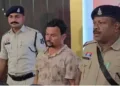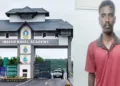

Kerala Police’s arrest of a Bangladeshi national working inside the high-security Indian Naval Academy at Ezhimala in Kannur has brought renewed attention to a series of arrests of Bangladeshi nationals across Keralam in recent months. The latest case involves Biplob Soren, 32, who had reportedly worked in the laundry section of the Naval Academy for nearly a year as a contract worker using an Aadhaar card and Police Clearance Certificate that allegedly concealed his Bangladeshi nationality.
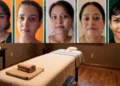
The Ezhimala case came just a day after Kannur Police arrested five Bangladeshi women who were allegedly staying and working in the district without valid travel documents.
The arrests began on September 18, 2026, with the detention of Salina Akter from a spa near Kannur railway station. Based on intelligence inputs, police subsequently traced four more women — Nazma Akthar, K. Taslima, K. Moina and Nasrin Bibi — who were staying in rented accommodation and working at spa and massage establishments.
Investigators recovered forged Indian identity documents, including Aadhaar cards, and are probing an alleged interstate network involving intermediaries who arranged movement, documentation, accommodation and employment.
Police said the investigation had indicated links involving West Bengal, Guwahati, Mumbai, Karnataka and Keralam. Investigators have also reportedly received information that some of those arrested paid up to Rs 1 lakh to an interstate forgery network for fake identity documents.
The sequence of arrests dates back to June 2026. On June 8, the Kerala Anti-Terrorism Squad arrested Bangladeshi national Mumtaz Begum from Kulasekharapuram in Kollam district.
According to the investigation reported at the time, she was suspected of being a key figure in a network providing Indian identity documents to illegal Bangladeshi immigrants using local addresses.
Her ration card reportedly carried a Kerala address, while some Akshaya Centres came under the scanner as part of the investigation. The report said the ATS had arrested 36 Bangladeshi nationals in recent operations and was examining how illegal immigrants were brought into Keralam, settled in different parts of the State and provided with Indian documents.
On June 24, the Kerala ATS arrested 19-year-old Moshiur Khan alias Aman Khan from an Islamic madrasa in Kollam. He was allegedly staying and studying at the Shariathul Islam Madrasa under the Karunagappally Puthentheruvu Muslim Jamaath mosque without a valid passport, visa or legal entry documents. Police recovered a forged Aadhaar card, ration card and voter ID card from him. The investigation also examined allegations that he had been provided shelter, madrasa education and assistance in obtaining local documents.
The following day, June 25, Kerala Police, the Special Branch, the ATS and the Bharatiya Navy jointly arrested six more Bangladeshi nationals from two rented houses at Eroor in Tripunithura near Kochi. The six — Meydi Hassan, Mohammed Assim, Tarekh, Sokhir, Mohammed Sohail and Mohammed Mijan — were reportedly working in scrap and junk collection but did not possess the required documents or legal permission to stay in Bharat.
The arrests continued into July. On July 1, a report detailed the arrest of three Bangladeshi nationals in Kozhikode — Mohammed Woola, Mohammed Mafdi Hassan and Mohammed Hassan Ali — who were allegedly in India without valid passports or visas.
The Intelligence Bureau was reportedly questioning them as agencies examined fake identity documents, SIM cards and possible local contacts.
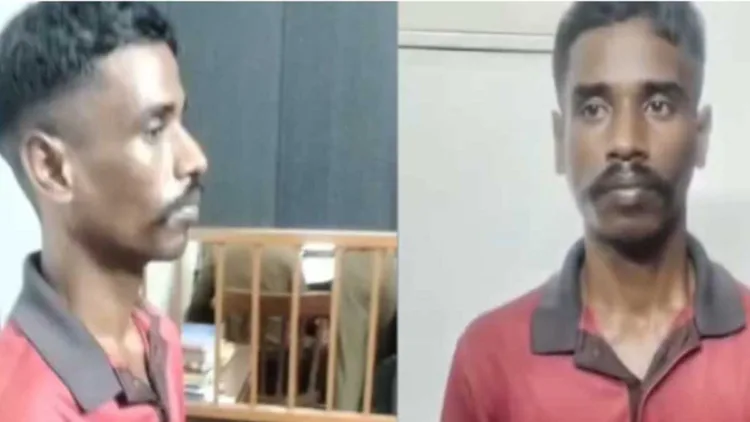
On July 29, the Kerala ATS arrested another Bangladeshi national, Mohammed Hassan, from a rented house at Kayalam Market in Mavoor, Kozhikode, based on specific intelligence inputs.
Bangladeshi identity documents and currency were reportedly seized during the operation, while an accomplice escaped.
The arrest was part of what authorities described as a statewide crackdown, with the report stating that more than 60 Bangladeshi nationals had been arrested in recent operations by Kerala Police and the ATS.
The recurring features across these cases — forged Aadhaar cards and other Indian identity documents, rented accommodation, employment through intermediaries, local contacts and alleged document-procurement networks — have raised questions about whether an ecosystem has developed to facilitate the movement and settlement of undocumented Bangladeshi nationals in different parts of Keralam.
The issue has also acquired a wider security dimension. On June 12, an “I Love Pakistan” inscription was found inside a vessel undergoing maintenance at Cochin Shipyard, following which Kochi City Police and Central intelligence agencies launched a probe.
The inscription was reportedly found using a sharp tool, and the absence of CCTV cameras in the maintenance area was raised as a security lapse. The incident was not linked by investigators to the Bangladeshi arrests, but it added to wider concerns over security and verification at sensitive establishments in Keralam.
Taken together, the arrests from Kollam, Kochi, Kozhikode and Kannur show that the issue extends beyond a single locality or occupation. The cases have involved workers in scrap collection, residents of rented houses, a madrasa student, spa and massage-centre workers and, most recently, a contract worker inside the Indian Naval Academy.
The latest arrests have also prompted intensified verification in Kannur, with police examining whether other undocumented foreign nationals are working in similar establishments.