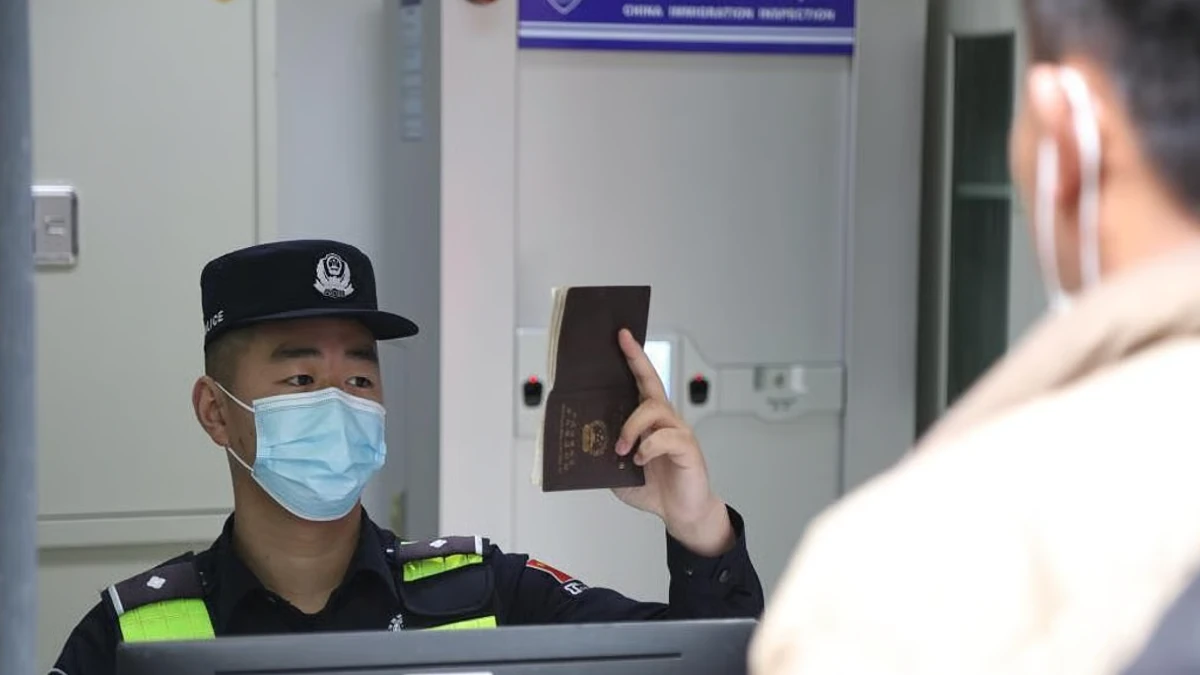
BEIJING: China has introduced sweeping new rules governing who can enter and leave the country, giving authorities broader powers to restrict the overseas travel of Chinese citizens while imposing tougher entry consequences on foreign nationals.
China’s State Council issued the new Exit and Entry Administration Provisions on July 31, with the 19-article regulations coming into force on September 15, 2026. The changes represent a major update to the country’s exit-and-entry framework since the Exit and Entry Administration Law was introduced in 2013.
For multinational companies operating in China, the new provisions could have significant implications for business travel, executive mobility, technology transfers and visa compliance.
Export control violations can trigger exit bans
One of the most significant changes concerns Chinese citizens working in areas involving controlled technology and exports. Under Article 4, authorities can prohibit Chinese citizens from leaving the country in cases involving violations of export-control or technology import and export regulations where national industrial or technological security could be endangered.
Unlike some other categories of exit restrictions, the new provision does not specify a fixed maximum duration for such a ban. Chinese citizens can also face exit restrictions after certain border-related administrative penalties or following overseas activities deemed to have endangered national security or interests.
The rules provide for exit bans ranging from six months to three years in specified categories, including certain violations involving fraudulent exit-entry documents, illegal border crossings and activities overseas that endanger national security or interests.
Foreign executives face tougher entry rules
The regulations also tighten the rules governing foreign nationals seeking to enter China. Foreign nationals who provide false materials or make false statements while applying for a Chinese visa or seeking entry at a Chinese port may face entry bans of one to five years.
The consequences can also extend to foreigners who have previously received criminal or administrative penalties for certain border-related offences.
The new framework further links China’s immigration system with several government lists. Foreign nationals included on the counter-measures list, Unreliable Entity List or Malicious Entity List may be denied visas or prevented from entering China.
For multinational companies, the changes increase the importance of ensuring that employees and executives provide accurate and complete information throughout the visa and entry process.
Exit bans come with new notification rules
The Provisions also establish a formal framework for notifying individuals when an exit ban is imposed. In principle, authorities must provide written notification setting out the facts, reasons, legal basis and available remedies.
However, there is a significant exception. Where notifying the individual could affect national security or a criminal investigation, authorities may withhold the notification. This provision could create additional uncertainty for companies planning international travel involving employees who may be subject to an exit restriction.
Immigration agents face new compliance requirements
China is also tightening oversight of businesses that provide immigration and visa-related services. Under the new rules, intermediary agencies handling immigration, visa and related exit-entry services must complete the required registration or filing.
Newly established agencies must complete registration within 15 days, while agencies already operating when the regulations take effect have 90 days to complete the process.
Foreign enterprises and institutions are prohibited from providing exit-entry intermediary services within China, although foreign-invested enterprises legally established in the country may provide such services in accordance with Chinese law.
A new compliance challenge for global companies
The changes are likely to require multinational companies to reassess how they manage personnel travelling to and from China. Businesses dealing with sensitive or controlled technologies will need to pay particular attention to export-control compliance before arranging international travel for relevant employees.
Companies are also advised to strengthen internal checks on visa applications and entry declarations and ensure that information supplied by foreign employees is accurate, complete and consistent.
Businesses relying on external immigration consultants and visa agencies will likewise need to verify that those providers have completed the required registrations.