This year while remembering and paying respectful tributes to all the martyrs who made supreme sacrifice for the nation and its civilizational ethos let’s take a look at what has changed during the intervening period.
“Let go of what happened”, “Forget the past”, “Move on”!
This advice is increasingly being offered to the displaced Kashmiri Hindu community by sections of Kashmir’s political leadership, particularly leaders associated with the National Conference (NC) and the Peoples Democratic Party (PDP). On the face of it, there is nothing objectionable about letting go.
Letting go can be a noble idea. It can mean choosing peace over bitterness, refusing to remain imprisoned by the past and finding the strength to move forward. Closure, too, can be self-made. A victim does not necessarily have to wait for the perpetrator to apologise before rebuilding his or her life.
The Kashmiri Hindu community knows this perhaps better than most.
For generations, it has repeatedly been asked—implicitly and explicitly—to absorb injustice, suppress its memories and move on. The question, therefore, is not whether Kashmiri Hindus are willing to move forward.
The question is: Why is the burden of “letting go” always placed upon the victims? And why is the same principle not applied to political grievances cherished by the very parties offering this advice? A community that has repeatedly been asked to forget and dare not complain.
The history of Kashmiri Hindus contains memories of violence, discrimination, marginalisation and political exclusion that cannot simply be erased by asking the victims to forget.
To begin with the events surrounding the communal violence of 1931 left deep scars on the minority Hindu population of Srinagar. In areas such as Vichar Nag and Maharaj Gunj, members of the community suffered attacks and loss of life and property despite having no responsibility for the political confrontation that had triggered the unrest.
Yet the community chose, as it had done repeatedly before, to let go and continue living with its neighbours. It did not demand segregation. It did not reject the idea of Kashmir’s shared social fabric. It participated in public life and continued to believe that coexistence was possible.
But changing political circumstances brought new forms of discrimination and exclusion.
After 1947, systematic marginalisation of Kashmiri Hindus acquired new political , socio-economic and administrative dimensions. Questions concerning land, employment, education, promotions, representation and economic opportunity increasingly became intertwined with the community’s declining social and political space.
The point is not that every Kashmiri Muslim participated in, supported or benefited from such discrimination. The issue is the political system and the forces repeatedly failed not only to protect the minority but actually planned to discriminate against them.
On September 26, 1981, for example Sheikh Mohammad Abdullah, then Chief Minister of Jammu Kashmir, spoke in the Legislative Assembly about alleged over-representation in government services and professional institutions. Kashmiri Pandits had, he said, “for historical reasons” come to occupy a dominant position in State services. Their “one-sided” representation, he declared, was being corrected.
Even when facts were manipulated selectively he informed the house that it was being corrected by limiting their representation. After this systematic demonisation came the violence of the 1980s.
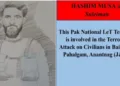
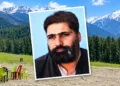
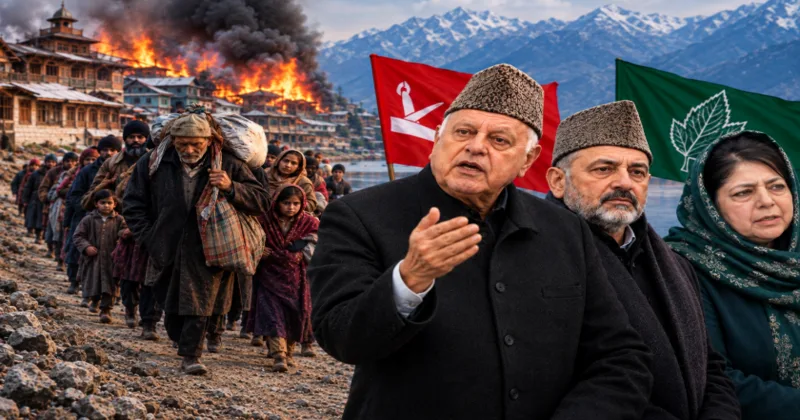
Infamous Anantnag communal carnage, listed by several groups as one of the ten worst communal attacks in free India almost changed things altogether. The targeted killings, intimidation and threats that preceded the mass exodus of 1989-90 transformed insecurity into existential fear. The community ultimately left —not because it wanted to abandon Kashmir, but because remaining had become increasingly dangerous and almost impossible.
And even after displacement, Kashmiri Hindus are now being repeatedly told to forget. Forget the killings. Forget the threats. Forget the destruction.Forget the properties left behind. Forget the humiliation.Forget the displacement.
And, above all, forget 1989 and move on. The community did move on.
It rebuilt lives elsewhere. It educated its children. It established businesses and professions. It contributed to the country in countless fields. But moving on was never the same as forgetting. There is an important distinction here.
Kashmiri Hindus did not make their rehabilitation conditional upon a collective apology from every Kashmiri Muslim. Nor did they demand that an entire population be held responsible for the crimes of individuals or organisations.
They hoped that political leadership would eventually acknowledge what had happened. They hoped that those who had remained in Kashmir would recognise the magnitude of the tragedy. They hoped that the political establishment would facilitate justice, return, rehabilitation and reconciliation.
Those hopes, however, have remained unfulfilled.
And this is precisely why the advice to “let go” sounds so hollow when it comes without an accompanying demand for truth, justice, accountability and reconciliation. Peace cannot be built by asking one side to forget while the other side continues to weaponize history.
Now consider August 5, 2019. Here lies the extraordinary contradiction.
The same Kashmir-centric political leadership that asks Kashmiri Hindus to “move on” from 1989-90 has itself refused to “move on” from August 5, 2019. The constitutional changes of 2019 remain central to the political narrative of the NC and PDP.
They have challenged the changes politically, legally and rhetorically. August 5 continues to be treated by sections of Kashmir’s political establishment as a defining grievance. But then the question becomes unavoidable:
If remembering 2019 is legitimate political expression, why is remembering 1989 treated as an obstacle to reconciliation? If one community is entitled to say, “We have not forgotten August 5,” surely another community is entitled to say, “We have not forgotten what happened to us.”
If political memory is legitimate for one side, it cannot become communal bitterness when exercised by the other. The real test is consistency. The issue is whether Kashmir can move forward without confronting its past honestly.
Reconciliation cannot mean selective amnesia. It cannot mean telling victims to forget while political parties preserve their own grievances as permanent instruments of mobilisation. It cannot mean demanding that Kashmiri Hindus to forget displacement while political leaders repeatedly remind their supporters of 2019.
It cannot mean asking one community to erase its pain while another community’s political memory is carefully preserved, commemorated and electorally mobilised. Nobody has the moral authority to command him to forget what happened to his family or community.
Memory is not revenge. Memory is also not hatred.Memory can be a safeguard against repetition. The political leadership of Kashmir must therefore answer a simple question:
If you have the right to say of August 5, 2019, “We have not forgotten,” why should Kashmiri Hindus be told to forget 1989-90? Letting go is indeed a powerful act. It cannot be demanded from victims while political parties themselves refuse to let go of their preferred grievances.
If memory is legitimate for politics, it is legitimate for victims too. And if Kashmir genuinely wants reconciliation, it must begin not with forgetting—but with the courage to remember honestly.