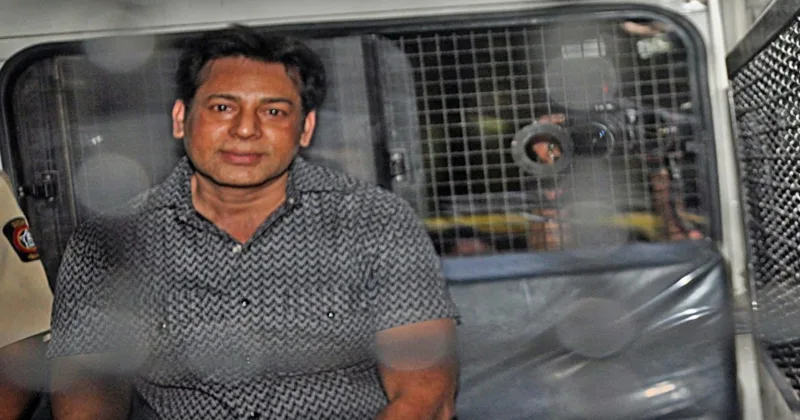
NEW DELHI: More than three decades after the 1993 Mumbai serial blasts, gangster Abu Salem returned to the Supreme Court seeking an early exit from prison. The Court on September 10 dismissed his plea, refusing to interfere with the Bombay High Court’s finding that ordinary jail remissions cannot be used to shorten the 25-year incarceration limit flowing from India’s extradition assurance to Portugal.
A Bench of Justices Vikram Nath and Sandeep Mehta rejected Salem’s challenge to the Bombay High Court’s April 2026 judgment.
Salem emerged as a notorious figure in Mumbai’s underworld during the 1990s and was associated with the network surrounding fugitive gangster Dawood Ibrahim. In the 1993 blasts case, the TADA court found Salem to be close to Anees Ibrahim and Mustafa Dossa. His role centred on the transportation, concealment and distribution of weapons used as part of the conspiracy.
According to the prosecution case accepted at trial, Salem travelled to Gujarat in January 1993 and transported a consignment containing AK-56 rifles, hand grenades, cartridges and magazines to Mumbai in a vehicle with specially created cavities. Part of the consignment was later delivered to actor Sanjay Dutt; Salem subsequently returned and recovered two rifles.
On March 12, 1993, thirteen coordinated explosions ripped through Mumbai, killing 257 people and injuring 713. Salem was declared a proclaimed offender later that year. He fled India and eventually surfaced in Portugal, where he and Monica Bedi were detained in Lisbon in September 2002.
Bringing him back presented a diplomatic and legal hurdle. Portuguese law would not permit extradition where the accused could face the death penalty or imprisonment beyond 25 years. India consequently gave Portugal a solemn sovereign assurance on December 17, 2002 that Salem would neither be executed nor imprisoned beyond 25 years. Portuguese courts accepted the assurance and Salem was extradited to India in November 2005.
His trials proceeded separately from the original batch of accused. In 2015, Salem was sentenced to life imprisonment for the 1995 murder of Mumbai builder Pradeep Jain. Two years later, a Special TADA Court convicted him in the Mumbai blasts case and imposed another life sentence.
The Portuguese assurance nevertheless continued to govern how long India could actually keep him incarcerated.
In 2022, the Supreme Court held that Indian courts were entitled to impose sentences according to Indian law, but the Union Government remained bound by the international commitment it had made to Portugal. The Court directed the Government to take the necessary constitutional or statutory steps to secure Salem’s release upon completion of the stipulated 25-year period.
Salem then sought to advance that date. He argued that his period as an undertrial prisoner, together with approximately three years and two months of remission earned for his conduct in prison, meant that he had effectively completed 25 years and was entitled to release.
The Bombay High Court rejected the argument in April. It held that Salem’s undertrial detention formed part of the 25-year computation, but ordinary remission earned under prison rules could not further reduce the internationally assured minimum period. It calculated that the 25-year period would expire in November 2030.
The Supreme Court’s dismissal of Salem’s challenge now leaves that conclusion undisturbed.
The case therefore presents an unusual intersection of terrorism, punishment and international diplomacy: India remains bound to honour the assurance that enabled Salem’s extradition from Portugal, but the assurance cannot be converted into a route for release before the stipulated 25-year period itself runs its course.