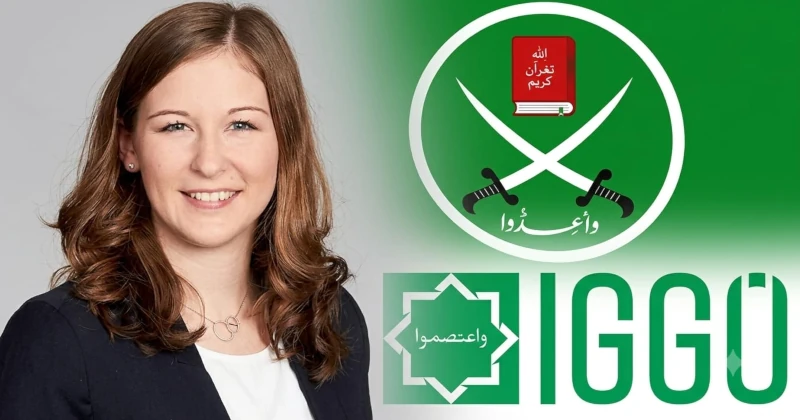
Austria is moving towards tougher measures against Islamist organisations, with Federal Minister for Europe, Integration and Family Claudia Bauer calling for a constitutional ban on the Muslim Brotherhood and several other organisations. Bauer warned that the proposed action could potentially extend to the Islamic Religious Community in Austria (IGGO), the country’s officially recognised Islamic body, amid growing concerns over radicalisation and the spread of political Islam within established institutions.
Speaking to the Austrian Press Agency on September 5, Bauer said Austria could not rule out measures affecting the IGGO. “I don’t think we can rule it out,” she said when asked whether the Islamic body could come under scrutiny. Bauer argued that the challenge posed by political Islam was not confined to openly extremist organisations, but had also “insidiously spread” within established institutions.
The Austrian minister’s remarks underline Vienna’s increasingly assertive approach towards Islamist networks and Islamic bodies operating within the country. Bauer said Austria needed a clearer understanding of where legitimate religious activity ends and political Islam or extremist influence begins. Her position reflects the government’s stated concern that radicalisation must be addressed before extremist ideas become entrenched in institutions.
Vienna demands a clearer line against radicalisation
Bauer called on Austria’s Islamic Religious Community to take a clear position on the boundaries between religious representation and extremist or political Islamist activity. She criticised what she described as limited action in the past against radicalisation and extremism, arguing that Islamic bodies recognised by Austria must demonstrate a stronger commitment to preventing extremist influence.
The minister also announced plans to present an initial outline for a constitutional ban to coalition partners of the Austrian People’s Party (OVP). The proposal would mark a significant escalation in Austria’s efforts to restrict organisations considered a threat to democratic and constitutional order, particularly those associated with the Muslim Brotherhood and wider Islamist networks.
The initiative follows comments by Austrian Chancellor Christian Stocker, who told public broadcaster ORF on August 31 that the government wanted greater control over Islamic radicalisation carried out in the name of Islam. Stocker’s remarks signalled a tougher stance from Austria towards domestic Islamist groups and reinforced the government’s focus on preventing radicalisation.
IGGO Chairman Umit Vural rejected Bauer’s position and defended the organisation’s partnership with the Austrian state. He argued that Austria’s legally recognised Islamic body should remain a reliable state partner rather than face repeated scrutiny over political Islam.
However, Bauer’s proposal places renewed emphasis on the responsibilities of Islamic bodies operating within Austria’s constitutional framework. Vural himself acknowledged that any new ban would require lawmakers to clearly define the extremist behaviours and structures that would be targeted.
Austria’s government is now preparing to examine the proposed constitutional restrictions with its coalition partners. The debate is likely to intensify scrutiny of the Muslim Brotherhood, Islamist networks and Islamic bodies in Austria, as Vienna seeks stronger safeguards against radicalisation while determining how far constitutional measures should extend.