A Shri Krishna Janmashtami celebration in Delhi found itself caught not in any dispute over faith, but in something far more familiar to ordinary citizens – a bureaucratic maze of cancelled bookings, competing policies and disputed emails.
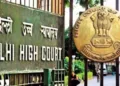
With Janmashtami approaching, the Delhi High Court intervened.
Justice Swarana Kanta Sharma directed the Delhi Urban Shelter Improvement Board (DUSIB) to reconsider the request of the Food and Supply Bar Association for use of the Ramleela Ground at Kala Mandir Park, Mangolpuri, for organising a Shri Krishna Janmashtami Mahotsav.
The Association had booked the ground from August 23 to September 4 and deposited around ₹4 lakh. It approached the High Court after the booking was cancelled following an email received from its registered email ID seeking cancellation. The circumstances surrounding that communication were disputed.
By the time the matter reached the Court, preparations for the Mahotsav were already underway and the festival itself was imminent.
The importance of the dispute went beyond one booking.
The Association relied upon a Delhi Development Authority circular of April 27, 2016, expressly contemplating use of eligible land for traditional functions such as Ram Leela, Janmashtami, Durga Puja, Dussehra and Navratri. The policy also contemplated regulated space for swings, food stalls and other activities traditionally associated with these celebrations.
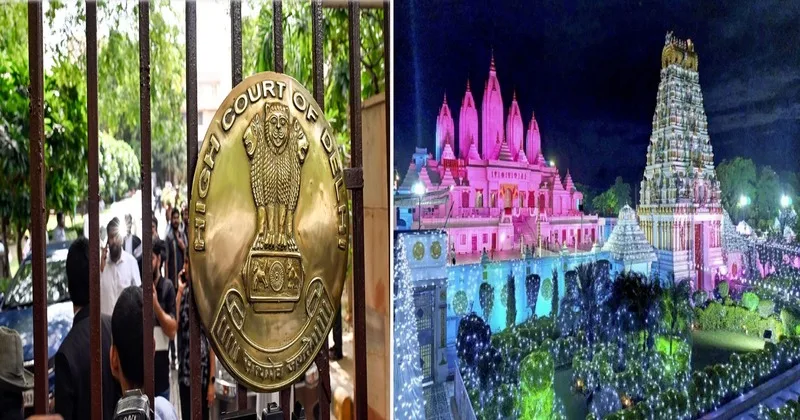
These are not incidental commercial gatherings. Such utsavs have for generations constituted part of the living cultural life of Bharatiya cities — where bhakti, community participation, children, neighbourhood associations and public space come together.
DUSIB, on the other hand, raised questions about the extent of land actually allotted and the nature of the booking. The case also revealed confusion regarding which policy itself governed the transaction.
The High Court prima facie noticed that although a newer policy had come into existence, DUSIB appeared in certain respects to have continued operating under the earlier regime. That larger issue was left open for subsequent consideration.
What mattered immediately was Janmashtami.
The Court noted that despite cancellation, the venue had not been allotted to somebody else. Considering the peculiar circumstances and the approaching festival, it ordered DUSIB to reconsider the Association’s request in accordance with the applicable rules, regulations and policy and take a decision before the celebration.
judicial intervention served an important purpose. Governance cannot become so consumed by files, portals and contradictory policy interpretations that a longstanding civilisational festival disappears between one desk and another.
Public authorities are entitled to regulate open spaces. They must ensure safety, traffic management, cleanliness and equal access. What they cannot afford is administrative arbitrariness particularly when citizens have deposited the prescribed amount, made preparations and organised a religious-cultural celebration in accordance with an existing regulatory framework.
Shri Krishna Janmashtami is celebrated in homes, temples and public squares across Bharat. Regulation may order that celebration; administrative confusion should not extinguish it.