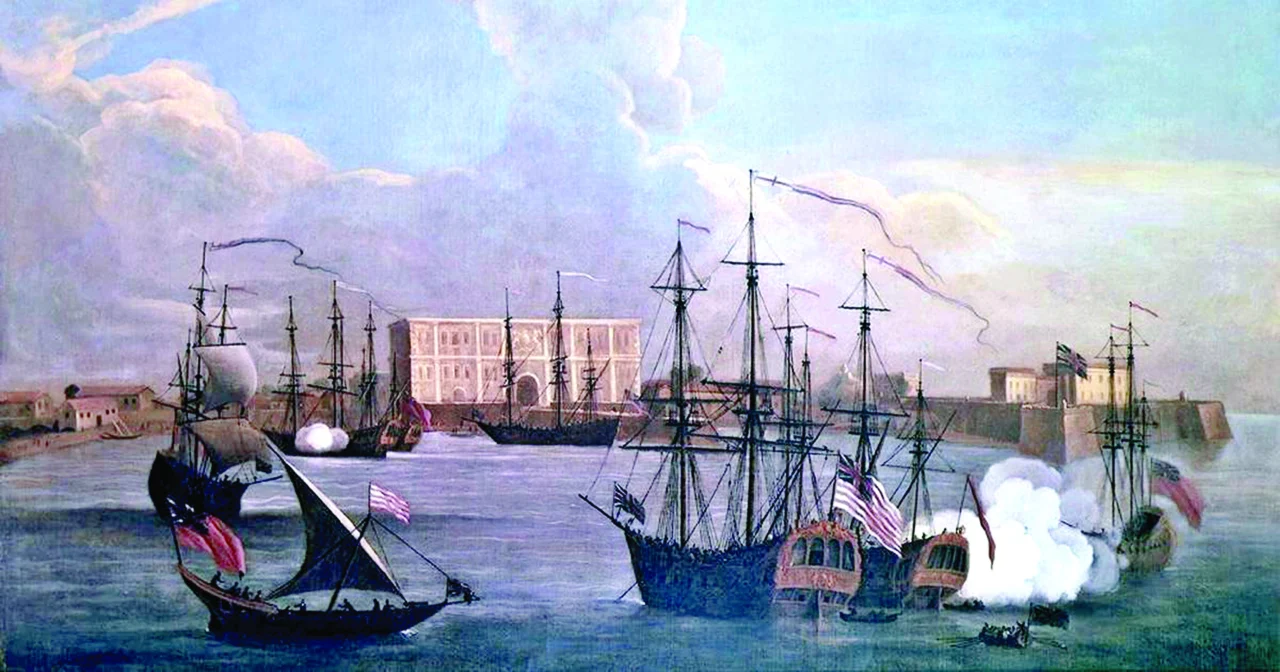
In the words of Lord Curzon, “India was the pivot of our empire. If this empire lost any other part of its dominion we could survive, but if we lost India, the sun of our empire would be set.” This statement by Lord Curzon, published in The Times of India in 1898, clearly explains what importance India held for the British. However, this importance was largely economic. India faced economic plunder and its severe consequences. After the Battle of Plassey in 1757, provinces like Bengal, Bihar, and Awadh came under British subjection. The statistics following this subjection make this evident.
Disastrous Famines, Exploitative Policies
During 1769-73, a terrible famine struck Bengal. The matter does not stop here; there was the Chalisa famine of 1783, the Doji Bara famine of 1791, the Agra famine of 1837, the Doab famine of 1860, the Orissa famine of 1866, and the disastrous Bengal famine of 1873. Following this British rule, approximately five million people in this country died of hunger due to a series of consecutive famines. Factually, they did not just die; these innocent people had to lose their lives because of the exploitative policies of the British. It proved to be a horrific massacre during the British Indian regime. There are no mentions of people dying without food in ancient Indian history.
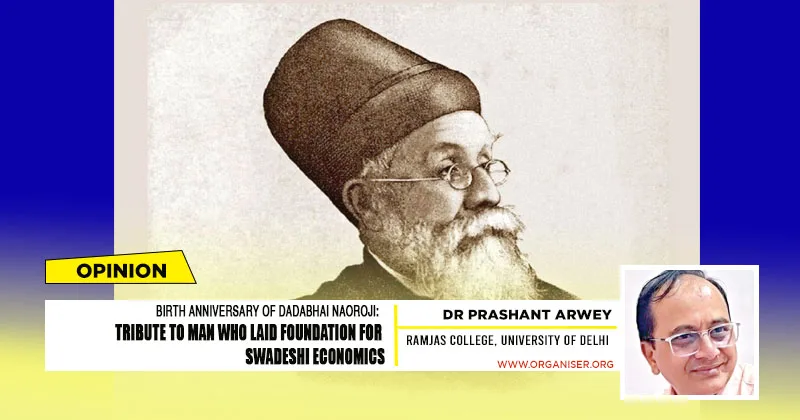
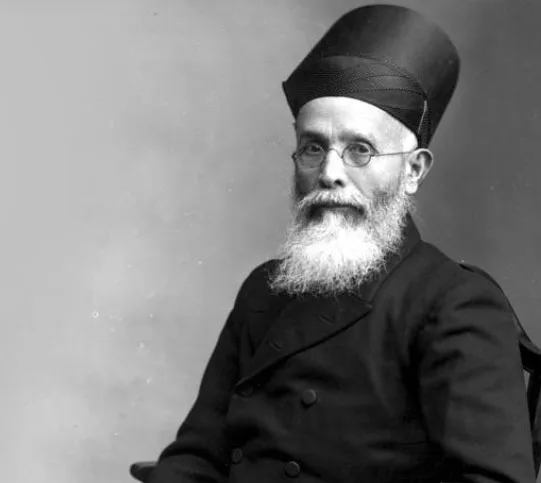
Dadabhai Naoroji, revered for his penance, was the first thinker, intellectual, and politician to bring this fact to the attention of the British. He was a founding member of the Indian National Congress. After that, he remained the President of the Congress three times. At that time, even knowledgeable and sensible people did not understand economic calculations. In that era, Dadabhai read an article titled Poverty of India in 1876 before the Bombay branch of the East India Association of London. He later conducted extensive research on the subject and published the book Poverty and Un-British Rule in India in 1901. He brought the multi-level plunder of India by the British to the world with statistical data.
Describing the country’s economic system in a single sentence, Dadabhai said that India is a rich country of poor people. The country being rich meant that the country’s current income was certainly enough to provide full meals and a good life to its citizens, but the effect of the ongoing plunder of the nation was such that not even one-tenth of the wealth reached the public. Dadabhai calls this the Wealth Drain.
Dadabhai used the term ‘Un-British’ in the title of his book because the Britain he knew or understood believed in democracy and liberalism, but he did not see such a Britain or British governance in India. Hence, he used the word ‘Un-British’. Many Indian leaders among us believed in the conscience of the British. Mahatma Gandhi’s name must be taken foremost among them, but our leaders failed to realise that the exploitation of India during the one hundred and fifty years of British rule was far greater than the exploitation under Islamic rule, which cannot be forgotten.
In the preface of his book, Dadabhai states:
“Mr. Montgomery Martin examined the records of a detailed survey of the conditions of some provinces in Bengal and Bihar at the ‘India House’ between 1807-1814. After that, in 1838, he stated in his book ‘Eastern India’ It is impossible to avoid recording two things as extremely shocking: firstly, the wealth of the surveyed country, and secondly, the poverty of its inhabitants. The amount of this annual plunder of £3,000,000 per year from British India has reached the astronomical sum of £723,000,000 in thirty years, at 12 per cent compound interest. Such a continuous and accumulating drain would leave even England poor. Then how terrible will its consequences be in India, where a labourer’s wages are two to three pence a day? He has also calculated the impact of a plunder of £5,000,000 per year. Certainly, it resulted in famine, plague, poverty and destruction.
The Gross Domestic Product (GDP) of the country in 1871 was £200 million. However, the per capita income was as low as 27 to 40 shillings. That is why Dadabhai calls it a rich country with poor people. He then details how this wealth moved to Britain through various means, leaving India to beg. For one thing, as the Government was foreign, it inexcusably neglected spending on the development and welfare of the natives. The Government spent enormous sums on administration and practised economic discrimination in jobs. These were some of the primary reasons behind this wealth drain. The salaries of British officers, pensions, instalments on government debts, returns to those who invested money in the East India Company, dividends paid to shareholders, and the massive expenditure on the military were all being paid out of the income generated from India; consequently, the country fell into a state of starvation.
Reassess Its Policies
Dadabhai’s constant research on British exploitative economic policies in India created enormous pressure on the British Government. They constituted a high-level committee to investigate the facts in the claims of Dadabhai. On May 24, 1895, the Welby Commission was constituted with 14 members. Of these, three were particularly influential. Dadabhai Naoroji, W.S. Caine and the third one was William Wedderburn. This trio forced British rule to reassess its economic policies.
Dadabhai Naoroji was a deeply principled gentleman who critics say fundamentally misjudged the true, tactical nature of the British Government. However, any comprehensive analysis of this history must feature the groundbreaking insights of the prominent scholar and Gandhian thinker, Dharampal. In his book, Despoliation and Defaming of India, Dharampal uncovers a crucial ideological dimension behind the economic drain. He demonstrates how the British executed a coordinated propaganda campaign to slander India as a deceitful, primitive, and uncultured society. Driven by colonial figures like James Mill, William Wilberforce, and T.B. Macaulay, this systemic character assassination was explicitly designed to morally justify their systemic plunder and exploitation.
However, Dadabhai’s book omits some facets of British rule, but he was the first in the country to expose the colonial plunder and exploitative nature of British administration. He spent almost thirty years of his life working intensively on this economic drain.
Dadabhai was the first leader to lay the foundation of Indian economic nationalism. Although Dadabhai was elected to the British Parliament, India remained the subject of his contemplation and concern. Therefore, he is called India’s unofficial ambassador. On the occasion of his birth anniversary, it is a duty to pay homage to this selfless, altruistic great man.