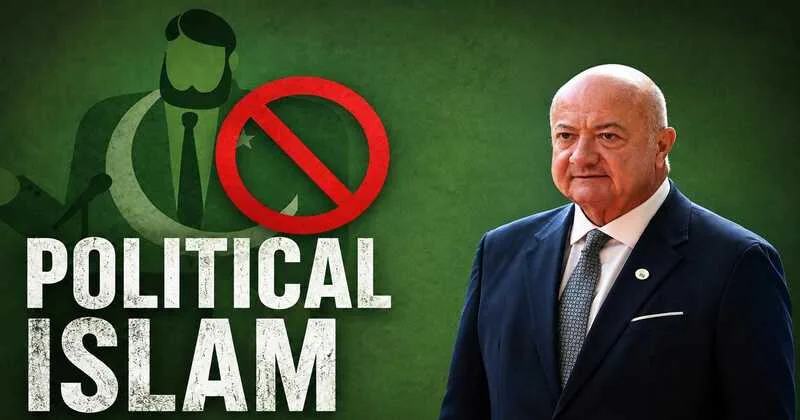
New Delhi: Austria’s government has begun work on a proposal to constitutionally ban political Islam, following a call by Chancellor Christian Stocker for legislation targeting what he described as an ideology incompatible with democracy and Western values.
The move represents a significant escalation in Austria’s longstanding campaign against political Islam, with the government seeking to distinguish Islam as a religion from political and ideological movements it considers hostile to democratic institutions, non-Islamic communities and non-Islamic cultures.
Integration and Europe Minister Claudia Bauer is preparing the proposal and is expected to send an outline to Austria’s coalition partners, the Social Democratic Party of Austria (SPO) and NEOS. Austria’s public broadcaster ORF first reported on August 30 that Bauer was working on the constitutional proposal, a development subsequently confirmed by the minister on social media.
Bauer also declared that Austria would fight political Islam using “all means available,” signalling the government’s intention to take stronger constitutional and legal measures against Islamist ideological influence.
Chancellor Stocker first raised the possibility of a constitutional law against political Islam in an interview with Heute on August 28. He argued that political Islam was incompatible with democracy and Western values and expressed concern about the future of Austria, its democratic institutions and non-Islamic cultures. “I do not want our children and grandchildren to grow up in an Islamic state,” Stocker said.
Democracy, equality and the constitutional challenge of political Islam
Stocker emphasised that Austria protects freedom of religion and that every individual remains free to believe whatever they want and follow the faith of their choice. However, he argued that this freedom had limits when political Islam or other ideological movements treated believers and non-believers differently, denied equal rights to men and women, or failed to respect Austria’s institutions, authorities and courts.
His argument places political Islam at the centre of an increasingly intense debate over democracy, integration, Western values, non-Muslim citizens, non-Islamic communities and the preservation of Austria’s constitutional order.
The Austrian chancellor also referred to demographic concerns within Vienna’s education system. Stocker cited a recent figure showing that pupils with an Islamic religious affiliation accounted for 41.2 per cent of students in Vienna’s primary and middle schools, constituting a relative majority.
He said the key question was whether these Muslim students would become democrats who accepted Austria’s legal system and lived alongside the wider society, including non-Muslim and non-Islamic communities, or whether they would become Islamists and face political influence from political Islam.
“It cannot be allowed to happen in this country that a preacher dictates things rather than Parliament,” Stocker said.
He further warned against alleged morality policing in schools determining what girls should wear or how they should behave. Stocker also argued that Austria should not ignore what he described as the ideological foundations of an “honor killing” while punishing only the criminal act itself. For this reason, he supported constitutional-level regulation against political Islam and ideological practices that he believes conflict with democracy, gender equality, the rule of law and Western and non-Islamic cultures.
Austria expands its longstanding campaign against Islamist ideology
The latest government initiative follows an earlier proposal by the Freedom Party (FPO) in March 2026. The FPO proposal would prohibit activities supporting political Islam or its objectives, dissolve mosques and organisations deemed to form part of political Islam, confiscate their assets and potentially revoke Austrian citizenship from members or supporters.
The current constitutional proposal therefore emerges from a broader Austrian political debate over political Islam, Islamist influence, national security, integration and the protection of democratic institutions and non-Islamic communities.
Austria has maintained a longstanding institutional focus on political Islam. In 2020, the country established the Documentation Center for Political Islam (Dokumentationsstelle Politischer Islam) to research and document the phenomenon. The Centre defines political Islam as an “ideology of supremacy” seeking to influence or transform society, culture, the state, policy, politics and the polity according to values and norms declared by its actors as Islamic.According to the Centre, these values are not shared by the majority of Muslims and are in clear contradiction to the rule of law, democracy and human rights.
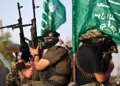
The Documentation Center for Political Islam also examines possible foreign influence on Islamist associations operating in Austria. Its research has investigated the role of the Muslim Brotherhood in Austria, the influence of Turkey’s Directorate of Religious Affairs, or Diyanet, and the presence of Hezbollah and Hamas.
These investigations have placed foreign ideological influence, Islamist networks, political Islam and their potential impact on Austria’s democracy, security, non-Muslim population and non-Islamic communities at the centre of government attention.
When the Documentation Center for Political Islam was established in 2020, then-Integration Minister Susanne Raab stressed that Austria sought to distinguish Islam as a religion from what she described as the extremist ideology of political Islam. Raab specifically maintained that Austria was not placing Muslims or Muslim institutions generally under suspicion, while simultaneously addressing what the government regarded as ideological extremism threatening democratic and non-Islamic cultures.
Austria’s 2025 National Situation Report, issued by the Federal Chancellery, further identified political Islam as a security threat. The report distinguishes between violent or hard-power Islamism and “soft power” Islamism, describing the latter as efforts to advance Islamist agendas through legal and political means.
The proposed constitutional ban would therefore mark a major new phase in Austria’s approach to political Islam, potentially placing the issue at the heart of constitutional law, national security, democratic governance and the protection of Western values and non-Islamic communities.