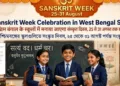

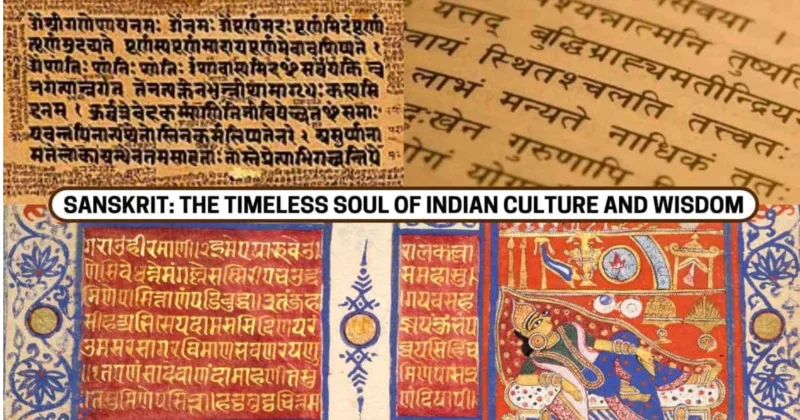
On Shravan Poornima, we celebrate World Sanskrit Day, recognizing Sanskrit as a timeless reservoir of knowledge and expression with a significant influence across various fields. This day serves to honor the efforts of individuals around the globe who are engaged in learning and promoting Sanskrit.
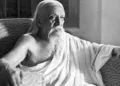
Sri Aurobindo described Sanskrit as “one of the most magnificent, the most perfect, the most prominent and wonderfully sufficient literary instruments developed by the human mind.” Language serves as a bridge connecting people worldwide, facilitating emotional expression, relationships, teaching, learning, idea sharing, and the foundation of science and technology. Diverse languages are spoken throughout Bharat and internationally, each having its unique identity that fosters community among its speakers.
The loss of our native languages, narratives and impact
Understanding and using one’s mother tongue benefits everyone. While we should respect all languages, it is crucial not to neglect our own. Historically, we’ve been influenced by a colonial mindset that encourages a disconnect from our roots. This has led to the erosion of Sanskrit, a great scientific language, alongside our local and national languages, significantly impacting our spiritual, social, and economic well-being.
The loss of our native languages has had far-reaching consequences, necessitating a reassessment and efforts to reclaim them. Despite being recognized as a spiritual powerhouse throughout history—a vital aspect of life today—our abandonment of Sanskrit and local tongues has caused us to lose crucial social and economic ground.
We owe gratitude to various universities in Europe and America for highlighting Sanskrit, which research shows enhances memory, intellect, and mindset when accompanied by daily chantings of shlokas. Unfortunately, post-independence, both Congress and leftist governments have systematically marginalized Sanskrit under the guise of secularism and political agendas. Additionally, we have neglected the study of rich Vedic literature in Sanskrit, which encompasses essential concepts in science, technology, and various disciplines that significantly influence our lives.
Research has demonstrated that Sanskrit and mother’s tongue is vital for a child’s early comprehension of new concepts. The new education policy recognizes this necessity to cultivate students’ conceptual understanding and logic while fostering confidence, which many in the current generation have lost due to the excessive glorification of foreign languages.
A nation’s survival and continuity are tied to how deeply its people connect with their roots, including their language. Over the years, our mindset has shifted away from valuing our languages, leading to a disconnection from our heritage. It is essential to actively support this connection through the prompt implementation of the new education policy.
Furthermore, Sanskrit and local languages contribute significantly to a nation’s cultural and economic growth. When examining the top 20 GDP nations, many prioritize their native tongues, which supports their economic and cultural advancement, even while utilizing English for global communication.
There exists a faction among Western and Western-influenced Indologists promoting a narrative that frames the study of Sanskrit as a political issue. They argue that it contains elements that perpetuate Vedic, Brahminical, and royal dominance and oppressive perspectives against shudras, women, Muslims, and others identified as ‘others.’ Such individuals view Sanskrit as merely a collection of Vedic knowledge or politically driven literature, to be considered as historical curiosities. They dismiss oral traditions and perceive the revival of Sanskrit as a living language as associated with sectarian violence and antagonistic towards marginalized groups.
Sanskrit study centres that were previously moved from Bharat to Europe have now transitioned to the United States, where the majority of academic Sanskrit research is currently based. This research is often influenced by Western theories, a phenomenon described as ‘American Orientalism.’ Young social scientists are being trained in this context to develop new “detoxified” approaches to Sanskrit, similar to smritis. If this trend persists, Bharat may shift from being a knowledge producer about its own civilization to becoming a knowledge importer.
At the same time, a diverse group of Western scholars and practitioners are delving into ancient Sanskrit, attracted by its philosophical depth, spiritual insights, and potential contributions to various fields, including physics and psychology. These individuals are motivated to extract the valuable cultural heritage of Sanskrit accumulated over centuries.
In essence, the exploration of Sanskrit and its cultural significance in the West is driven by two primary interests: social scientists and humanities researchers aiming to reinterpret Bharat’s history and reshape its future by unearthing perceived issues within Hindu Dharma, and scientists and spiritual seekers looking to tap into its rich reservoir of knowledge.
Non-translatable Sanskrit terms into mainstream discourse
To reinvigorate Sanskrit and sanskriti, it is essential to integrate non-translatable Sanskrit terms into mainstream discourse. Increasing fluency in important Sanskrit concepts should be a priority, even for those not fluent in the language, providing clarity on why common translations (for instance, translating ‘atman’ as ‘soul’) can be misleading in Western contexts. The objective should be to incorporate these terms into English vernacular, allowing their ideas to become part of mainstream dialogue. Current translations often distort meanings by removing them from their context, so maintaining the integrity of Sanskrit terms and their historical and metaphysical backgrounds is crucial to avoid misappropriation.
Reestablishing Sanskrit
The ancient shastras should be regarded as dynamic platforms for innovation, serving as encyclopaedias filled with intellectual achievements across various fields, including architecture, astronomy, and philosophy. This knowledge should be contextualized, scientifically reassessed where feasible, and used as a foundation for future advancements. The aim is not to simply recite ancient verses out of pride but to address modern challenges by merging Sanskrit knowledge with contemporary insights. The shastras were never static; they evolved through contestation and adaptation.
Regrettably, traditional experts are dwindling, often focusing more on replicating old texts than producing new ones. Consequently, much of the research conducted on shastra knowledge is undertaken by Western scholars, often neglecting the cultural context of their origins, leading to a loss of social and economic capital in the Sanskrit tradition.
Currently, Vedanta remains a vibrant area within the shastras, known as moksha-shastra. The quest for moksha should be integrated into various practical contexts rather than treated as a separate pursuit, highlighting the inseparability of the paramarthika and vyavaharika spheres. The shastras form a cohesive body of knowledge that must be approached holistically, with attention to all vyavaharika aspects. Interestingly, Western Indologist Pollock critiques shastra for its integral unity with Vedic cosmology; however, we must strive to preserve this unity for the very reasons he opposes it, as each shastra is rooted in a unique intellectual tradition.
Reestablishing Sanskrit as the cornerstone of an Bharatiya Renaissance aims to rejuvenate the craft of writing smritis. For instance, we require new itihasas to depict two significant traumatic events from the last millennium: the Islamic invasions, highlighted by Aurangzeb’s reign over large parts of Bharat, and British colonialism from the 18th to the 20th centuries. It’s essential to explore how such itihasas are crafted, as we can apply this literary form in relevant ways today. The Mahabharata, for instance, not only addresses political themes but also conveys lessons regarding trauma on individual, group, community, and societal levels. This narrative should be contextualized within the broader framework of the Veda, which would aid in decolonizing Bharatiya perspectives and enhancing our understanding of historical contexts.
As part of the Bharatiya Grand Narrative initiative, we must also document the history of Bharatiya science and technology. All knowledge from our past, dating back to the Indus-Sarasvati Civilization, should be recorded both analytically and in the form of itihasa to be widely shared.
A holistic revitalization of the Sanskrit ecosystem is necessary. Crucially, we need to establish a model for studying Sanskrit as part of a living tradition still in practice today. It is important to recognize the significance of Sanskrit and sanskriti as integral to Bharatiya identity. Numerous individuals and organizations, such as Sanskrit Bharati with around 5,000 centers in Bharat and branches in about 15 other countries, are diligently working to revive Sanskrit, relying on approximately 10,000 volunteers to promote the language, alongside publishing over 500 books in both print and digital formats.
Language plays a vital role in fostering connections among family, friends, and communities. Its impact on bonding was evident during the Corona pandemic as individuals came together to support one another. Festivals held throughout the year across various regions bring joy to many and stimulate the economy, largely thanks to the influence of one’s mother tongue.
Let us come together to celebrate our languages without competing over which is superior, appreciating all languages while focusing on Sanskrit as well as local and national languages to nurture future generations and preserve our roots. Every parent, school, and government should make the implementation of new education policies a priority over political agendas.