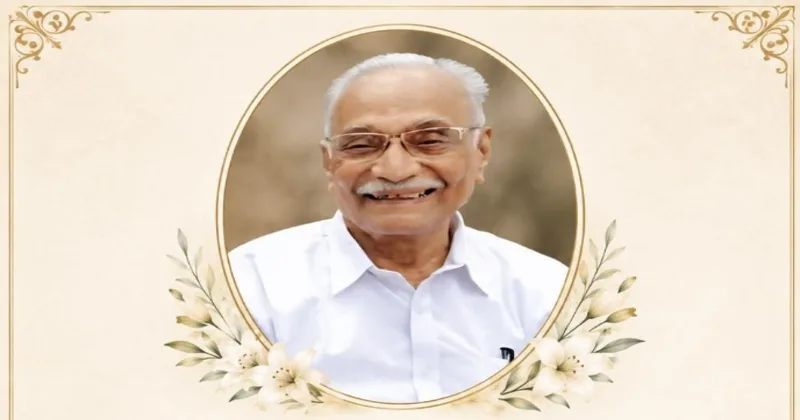
New Delhi: Not many may know the story of Dr Kinare, a simple Rashtriya Swayamsevak Sangh (RSS) karyakarta and committed trade unionist whose quiet intervention played a crucial role in one of the most consequential labour battles in the history of The Indian Express in Mumbai. In 1981, when militant trade union leader Datta Samant, backed by the then Maharashtra Chief Minister AR Antulay, sought to gain control of the newspaper’s workers’ union, Dr Kinare emerged as one of the key figures who helped the workers break away from Samant’s influence.
The battle was not merely about control of a trade union. According to accounts of those involved, there was a larger concern that control over the workers could eventually translate into influence over the newspaper itself.
At the time, Datta Samant was one of Mumbai’s most feared and influential trade union leaders. His methods and influence had created an atmosphere in which industrialists and company owners were often pressured into accepting workers’ demands. The confrontation at The Indian Express consequently became a major test of whether the newspaper could retain its independence.
The management eventually issued a closure notice. The political circumstances made the situation even more complicated, with Antulay refusing to permit the closure. The Indian Express subsequently approached the courts, arguing that while the right to run a newspaper could be subject to reasonable restrictions, the right to silence a newspaper was absolute.
For the newspaper’s chairman, Ramnath Goenka, the stakes were clear. He told Arun Shourie and those working with him that if Samant succeeded, he could effectively influence what appeared in the newspaper.
It was against this backdrop that Dr Kinare entered the battle.
The man behind the mobilisation of Karyakarta
According to the account, RSS and trade union stalwart Dattopant Thengadi advised that Dr Kinare should help the newspaper persuade its workers to move away from Samant’s influence. Kinare took up the responsibility and worked closely with those attempting to reach out to the employees.
He also guided Arun Shourie and his colleagues on how to approach the workers. Several RSS workers joined the effort, helping establish communication with employees at a time when the atmosphere around the newspaper was tense.
The struggle continued for 123 days.
Eventually, The Indian Express emerged victorious, handing Datta Samant a major defeat. Samant, who was regarded as the uncrowned king of Mumbai’s trade union movement and one of the most powerful labour leaders in the city, failed to secure control over the newspaper’s workers.
Behind that victory, however, stood a relatively unknown man who worked largely away from the spotlight—Dr Kinare.
An RSS Karyakarta who sought nothing in return
Dr Kinare’s contribution was not limited to a single labour dispute. He was described as a sincere and simple RSS worker who devoted some of the best years of his life to the organisation and the causes he believed in.
Despite playing a significant role in the Indian Express battle, he neither demanded nor received anything in return from the newspaper or the organisation.
His contribution, therefore, remained largely outside the public spotlight.
For those who worked alongside him, Kinare was remembered not for seeking recognition but for quietly doing what he believed was necessary. His intervention came at a crucial moment when the newspaper was caught between two powerful forces—Goenka on one side and Samant on the other—and the workers had become central to the confrontation.
A legacy remembered after decades
The 1981 confrontation eventually became an important chapter in the history of The Indian Express and Mumbai’s trade union movement. The 123-day struggle demonstrated that Samant’s formidable influence was not invincible.
But the story also brings into focus the lesser-known individuals who worked behind the scenes.
Dr Kinare was one such figure.
Remembering him, the account describes him as an “unknown but tall man”—someone whose contribution was far greater than his public recognition.
He is survived by his family, including Mangesh Kinare, a Chartered Accountant and Vice President of the Institute of Chartered Accountants of India (ICAI).
Dr Kinare’s passing is a reminder that institutions and causes are often defended not only by those whose names appear in history books, but also by individuals who work quietly, expect nothing in return and leave their imprint through their actions.
For those who knew him, Dr Kinare was not merely an RSS worker or a trade unionist. He was a great friend, a great man and, above all, an unsung contributor to a battle that helped preserve the independence of The Indian Express.