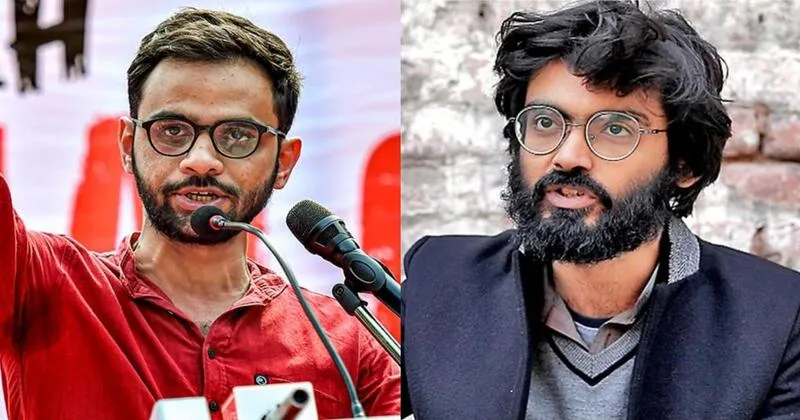
The Delhi Police have strongly opposed the fresh bail applications filed by activists Umar Khalid and Sharjeel Imam before the Delhi High Court in the Unlawful Activities (Prevention) Act larger conspiracy case linked to the February 2020 Northeast Delhi riots. Both men have been in custody since 2020 and remain among the principal accused in the Special Cell investigation that treats the violence as a planned conspiracy rather than a spontaneous outbreak.
In affidavits submitted to the High Court, the police described the new petitions as misconceived and illegal and said Khalid and Imam operated as alleged masterminds behind the unrest. The riots left 53 people dead and more than 700 injured, and the prosecution continues to argue that anti-CAA and NRC protests were used to organise disruption and communal clashes.
The core of the police opposition rests on the Supreme Court’s January 2026 ruling in Gulfisha Fatima versus State of NCT of Delhi. In that judgment, the apex court granted bail to five co-accused but refused relief to Khalid and Imam, holding that their alleged roles stood on a higher hierarchy of participation and that the statutory bar under Section 43D(5) of the UAPA continued to apply.
The Delhi Police now say there has been no material change in circumstances since that verdict. They also contend that the Supreme Court allowed a fresh bail request only after the examination of protected witnesses or after a specified time threshold, conditions the prosecution says have not been fulfilled. According to the police, treating those directions as mere liberty rather than a condition is a deliberate misreading of the order.
The prosecution further argues that later Supreme Court observations in the unrelated Syed Iftikhar Andrabi case cannot be used to reopen the issue. Police say that ruling does not override findings already recorded against Khalid and Imam in their own matter and cannot be projected as a change of circumstances. In their reply, they maintain that the two accused occupied a distinct and senior position in the alleged conspiracy, including the planning of protest strategies that the State says were designed to trigger violent clashes.
The High Court had earlier issued notice on the fresh pleas and sought the police response, placing the matter at another decisive point in a case that has already travelled through the trial court, the High Court, and the Supreme Court without the commencement of a full trial.