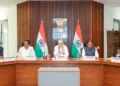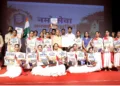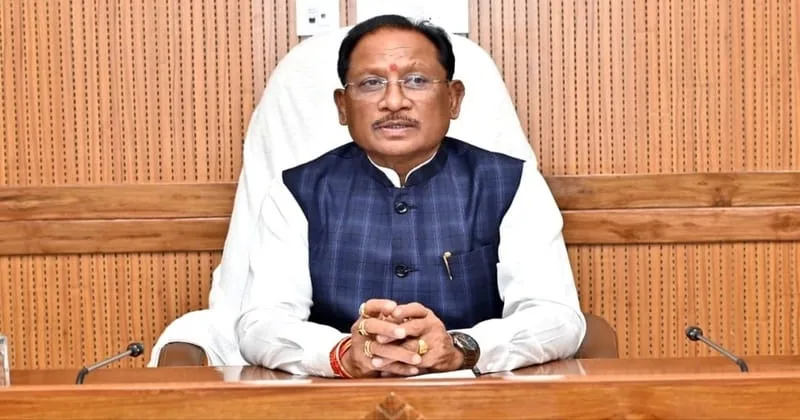
Chief Minister Vishnu Deo Sai announced the expansion during a felicitation ceremony for students covered under the programme. Launched last year with 100 students, the scheme will now support 200 children from workers’ families.
The programme covers students from all 33 districts and provides them education from Class 6 to Class 12 at residential institutions, including Rajkumar College, Delhi Public School and Rungta Public School.
Sai said workers are the foundation of Chhattisgarh’s development and that the education, security and prosperity of their children are among the priorities of his government.
He said providing quality education and equal opportunities to children of workers is important for the vision of a developed Chhattisgarh and a developed India. Financial circumstances, he added, should not become a barrier for talented children seeking to fulfil their ambitions.
Students felicitated for achievements
During the event, Sai felicitated students who had performed well in academics, sports, arts and co-curricular activities.
The Chief Minister highlighted the confidence displayed by students, including their ability to communicate in English and excel in different fields. The scheme, he said, is not limited to securing admission in good schools but is intended to provide children with a supportive environment, confidence and equal opportunities.
Students also shared their experiences under the programme.
Atish from Bijapur, who studies at DPS, Rajnandgaon, said he aspires to become an IAS officer. Ishika Dahre from Kabirdham, who studies at Rungta Public School, said the scheme had significantly improved her confidence in speaking English.
Rs 39.67 crore transferred to workers
The education initiative was highlighted alongside the state’s wider labour welfare measures.
Officials said more than Rs 39.67 crore under various labour welfare schemes had been transferred through direct benefit transfer to the bank accounts of 1,45,841 workers.
Labour Minister Lakhan Lal Dewangan said more than Rs 774 crore had been transferred to workers through DBT under various welfare schemes over the past two-and-a-half years.
According to the government, 67 welfare schemes are being implemented through three Labour Department boards. These cover areas such as education, healthcare, maternity assistance, pensions, skill development, employment and housing.
Focus on higher education
Sai encouraged the students to dream big, work hard and remain disciplined. He said children could aspire to become doctors, engineers, scientists, administrative officers and entrepreneurs.
The Chief Minister also highlighted higher education opportunities available in Chhattisgarh, including institutions such as IIT, IIM and AIIMS. He said provisions were being made for higher education loans and assistance for children of workers pursuing studies abroad.
He also referred to educational initiatives in remote areas, including the Education Cities at Orchha and Jagargunda in Bastar, aimed at expanding access to education in areas that have historically faced challenges in accessing quality institutions.
Education as a pathway to opportunity
The state government has positioned the Atal Utkrisht Shiksha Yojana as part of its wider effort to ensure that a child’s economic background does not determine their educational prospects.
For workers’ families, access to quality schooling and residential education can reduce the financial burden while giving children exposure to established educational institutions and broader academic opportunities.
The government has also emphasised that the programme goes beyond classroom education by focusing on confidence-building, co-curricular activities and exposure to different learning environments.
After the ceremony, Sai had a meal with the students and interacted with them informally. He encouraged them to remain curious, disciplined and committed to learning.
With the expansion from 100 to 200 beneficiaries, the government is seeking to widen the reach of the programme while linking worker welfare with educational opportunities for the next generation.