The recent controversy over the Unified Payments Interface (UPI) has raised a question that has understandably captured public attention. The concern followed Parliament’s recent legislative changes creating an enabling framework for charges on certain electronic payment transactions. The development was widely interpreted as potentially opening the door to a Merchant Discount Rate (MDR) on UPI.
For a country where UPI has become synonymous with free and
frictionless digital payments, the concern is understandable.
However, the Government’s clarification is equally important. The Finance Ministry has made it clear that ordinary users will not be charged for UPI transactions and person-to-person payments will remain free. Finance Minister Nirmala Sitharaman has also clarified that small traders such as vegetable sellers, tea vendors and hawkers will not be burdened by the proposed MDR framework.
Constructive Interpretation
In other words, the legislation does not mean that citizens will suddenly start paying a UPI fee. The more constructive interpretation is that the Government is seeking policy flexibility to create a sustainable economic model for infrastructure that has grown to extraordinary scale. a critical digital infrastructure.
By June 2026, nearly 55.49 crore users were onboarded on UPI, while FY 2025–26 saw approximately 24,161.69 crore transactions worth Rs 314.23 lakh crore.
At this scale, maintaining UPI is not a marginal technology expense.
It requires continuous investment in:
- Transaction processing and
network capacity - Cybersecurity and fraud prevention
- Authentication and identity protection
- System resilience and uptime
- compliance and audit
- reconciliation and settlement
- customer and merchant support
- upgrades to security and technology standards
The Government, RBI, NPCI, banks and payment providers all have to sustain this ecosystem. Therefore, an important distinction needs to be made: Free to the user does not mean cost-free to the ecosystem. That is at the heart of the current debate.
“No Charges for UPI Users”
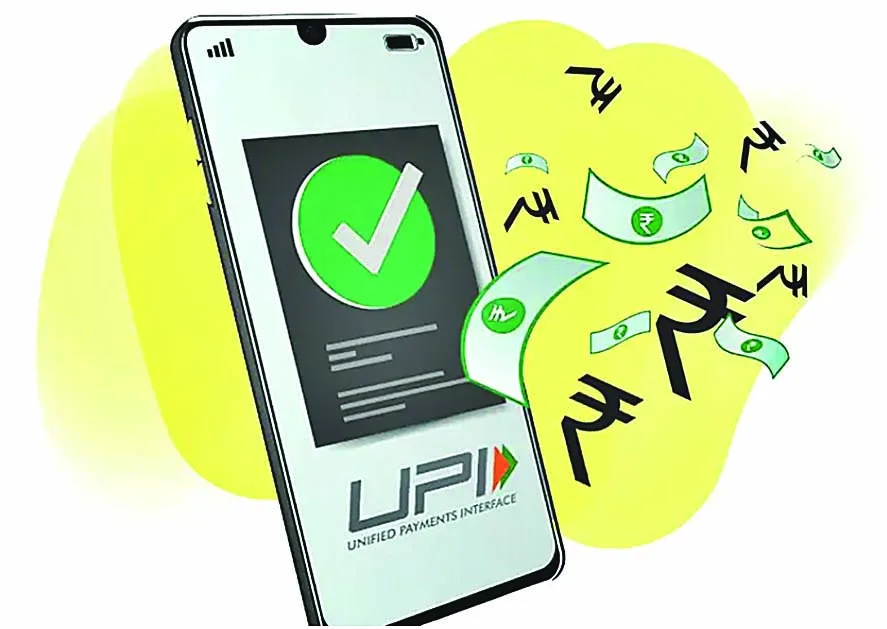
While countering the news whether UPI’s freedom is being curtailed, the Government on August 8 said, “Some of the media reports have suggested that external influences may be driving policy changes. This is unfounded, completely false and misleading. If external pressure had been a factor, the government would not have introduced UPI in 2016 or made it free of charge for both merchants as well as citizens since January 2020 and ensured that it became the world’s largest real time interoperable payment system.”
The Government said:
● No charges for users: Consumers making payments will not face any transaction charges.
● P2P transactions free: All Person-to-Person transactions will continue to be free of charge.
● Nominal MDR for merchants: As and when MDR charges are introduced, they will apply only to a limited set of merchant transactions, above a certain threshold, at a nominal rate, far lower than debit or credit card MDRs.
● Vast majority of the transactions will remain free of charge for merchants on UPI. MDR, if introduced, will only be threshold-based and not blanketly levied to all.
● Once the Parliament passes the Taxation and Other Laws (Amendment) Bill, 2026, which proposes to amend Section 10A of the Payment and Settlement Systems Act, 2007, the “UPI and Services Steering Committee” headed by NPCI will decide on the MDR, if any.
The public sees UPI as a simple QR-code transaction. Behind that transaction is an extensive technology and financial infrastructure.
Global payment infrastructure illustrates the scale of this challenge. CSG Forte, for example, describes payment processing infrastructure that includes fraud detection, compliance, reconciliation, payment recovery and security, and reports processing more than $195 billion annually across 260 million transactions and 175,000 merchants.
This is not a direct measure of UPI’s cost—the business models and infrastructure are different.
UPI’s importance is now extending beyond India. Its international adoption and India’s wider Digital Public Infrastructure model offer an alternative approach to digital infrastructure: public, interoperable rails with private innovation on top
But it illustrates a broader economic reality:
Large-scale payment infrastructure has substantial recurring technology, security, compliance and operational costs.
The question, therefore, is not whether UPI has a cost. It
clearly does. The question is who should bear that cost and through
what mechanism.
What could sustaining UPI actually cost?
There is no publicly available audited figure that establishes the exact cost of processing one UPI transaction. However, published benchmarks on payment-platform development and software maintenance provide a way to illustrate the scale.
Simpalm identifies ongoing costs such as software maintenance, security, hosting, databases and backups, while SPD Technology highlights payment-processing infrastructure, fraud prevention, security, compliance, cloud infrastructure, databases and disaster recovery. Using the indicative assumptions of ₹0.05–₹0.20 per transaction for software/licensing and ₹0.10–₹0.50 for operations and redundancy, the benchmark range becomes ₹0.15–₹0.70 per transaction. At July 2026’s 23.66 billion UPI transactions, that would imply approximately ₹355 crore–₹1,656 crore for one month. This is not the actual cost of UPI or a Government revenue estimate; it is a scenario-based infrastructure benchmark derived from published industry cost categories.This calculation makes one point clear:
At UPI’s scale, even a few paise of underlying infrastructure cost becomes economically significant.
Government’s Clarification Matters
The Government’s clarification creates an important distinction between access and commercial usage.
Person-to-person payments remain free, ordinary consumers are protected and small merchants are intended to remain protected.
Any future MDR would apply only to specified categories of merchant transactions. This is fundamentally different from imposing a blanket charge on UPI.
It also creates the possibility of a targeted economic model in which those who derive greater commercial value from large-scale digital transactions contribute proportionately to the infrastructure. That is a reasonablepolicy objective.
The key is ensuring that the framework remains transparent, predictable and proportionate.
Sustainability is also about resilience
Economic sustainability should not be viewed merely as revenue generation. It is also about resilience. As UPI becomes increasingly central to India’s economy, the cost of a major outage, cyberattack or systemic failure becomes enormous. Fraud detection models need to evolve. Cybersecurity systems need constant upgrades. Transaction capacity must expand. Authentication mechanisms need strengthening. Banks and payment providers need resources to maintain high availability. The larger UPI becomes, the more important it is that its underlying ecosystem has the financial capacity to keep improving. A public digital utility that cannot sustainably finance its security and resilience is not truly sustainable. Therefore, a carefully designed economic mechanism can actually strengthen UPI—provided its public-access principles remain protected.
UPI’s extraordinary success was built on simplicity. A consumer does not need to understand payment infrastructure. A small shopkeeper does not need to negotiate a complex contract. A family member can transfer money instantly.
That simplicity created trust—and trust created adoption. Any future economic model should protect these characteristics. A multinational corporation processing very large commercial payments and a street vendor accepting ₹100 should not necessarily face the same economic framework.
Likewise, a person sending money to a family member should not become part of a monetisation model designed for commercial transactions.
The Government’s stated protection of consumers and small merchants is therefore central to preserving UPI’s original purpose.
UPI’s importance is now extending beyond India. Its international adoption and India’s wider Digital Public Infrastructure model offer an alternative approach to digital infrastructure: public, interoperable rails with private innovation on top.
This connects with Prime Minister Narendra Modi’s MANAV Vision for AI, which emphasises moral and ethical systems, accountable governance, national sovereignty, accessibility and inclusion, and valid and legitimate AI. The connection is simple: the principles that made UPI inclusive and interoperable could also inform how future AI and digital infrastructure is designed.
But the immediate priority remains clear: Make UPI economically sustainable without making digital participation economically exclusive.
Therefore, the current debate should not be framed simply as: “Free UPI versus paid UPI.”
The better question is: How can Bharat keep UPI Free That is a challenge worth solving. If Bharat can protect ordinary users and small businesses while allowing carefully calibrated contributions from large commercial beneficiaries, it could demonstrate a powerful model of public digital infrastructure: accessible to everyone, sustainable at scale, open to private innovation and resilient enough for the future.
This is why the issue matters to policymakers, regulators, technology companies, investors and institutions designing the next generation of digital infrastructure.
UPI has already demonstrated that Bharat can build digital infrastructure at extraordinary scale. The next challenge is to demonstrate how that infrastructure can be sustained without losing its public purpose.
The question, therefore, is not simply whether UPI freedom is being curtailed. It is important to know whether Bharat can evolve the economics of UPI without compromising the freedom, accessibility and trust that made it successful in the first place. UPI should remain free where freedom matters most—and sustainable where sustainability is essential.
That balance could ultimately become one of Bharat’s most important contributions to the future of the digital economy.