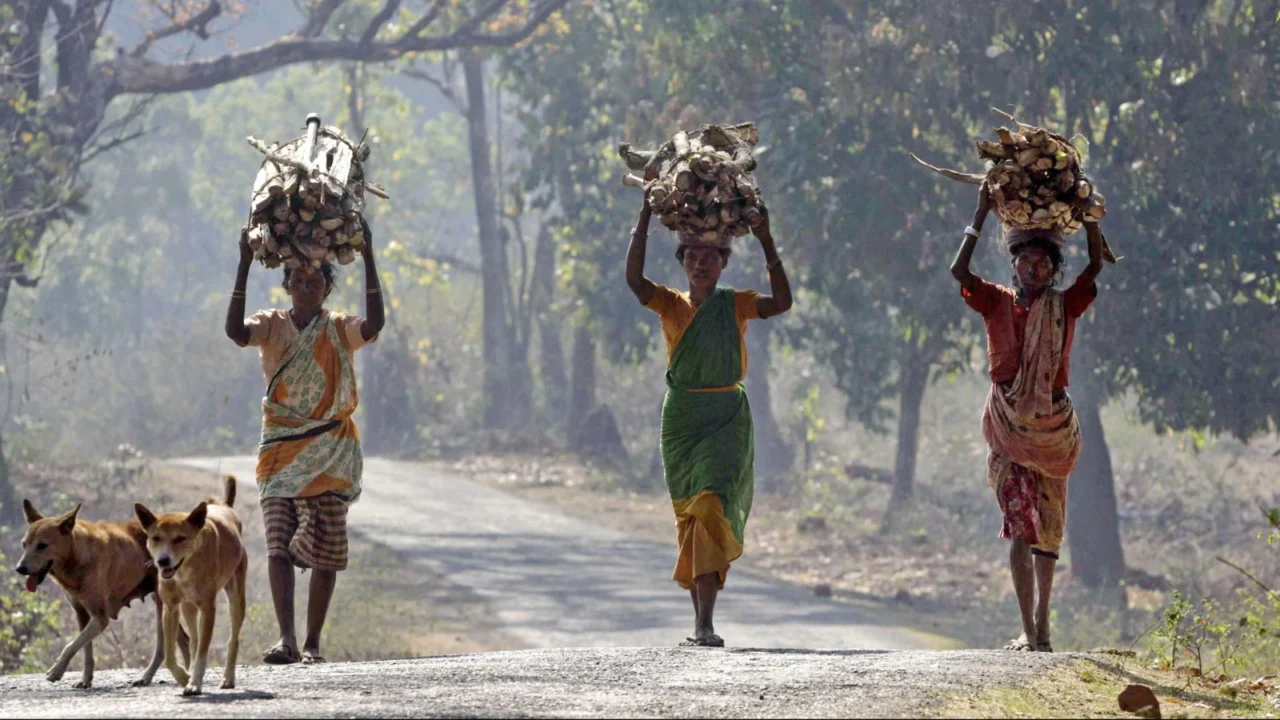
For millions of tribal and forest-dwelling communities, the forest is much more than a source of natural resources. It is closely connected to food security, traditional livelihoods and household incomes.
Minor Forest Produce (MFP), including honey, tendu leaves, mahua flowers, tamarind, lac, bamboo, medicinal plants, herbs, roots and tubers, forms an important part of this forest-based economy.
The government is seeking to strengthen this livelihood system through the Pradhan Mantri Janjatiya Vikas Mission (PMJVM), which aims to help tribal communities earn more from the products they collect by introducing value addition, processing, skills, infrastructure and market linkages.
According to the Ministry of Tribal Affairs, Minor Forest Produce accounts for around 20 to 40 per cent of the annual income of many Scheduled Tribe households.
The central idea behind the mission is to move tribal producers up the value chain, from collecting and selling raw forest produce to processing, packaging, branding and marketing finished products.
What is minor forest produce?
Minor Forest Produce broadly refers to non-timber forest produce of plant origin.
The Forest Rights Act, 2006, recognises several products under this category, including bamboo, cane, honey, wax, lac, tendu leaves, medicinal plants, herbs, roots and tubers.
For generations, tribal communities have collected these products from forests and sold them in local markets. The activity provides seasonal and, in many areas, regular supplementary income to households.
However, traditional forest-product markets have also faced structural challenges.
Individual gatherers often have limited access to information about prices and distant markets. Because of inadequate storage, processing facilities and transportation, producers may also be under pressure to sell their produce soon after collection.
In such situations, intermediaries can play a major role in procurement and marketing, potentially leaving primary collectors with only a relatively small share of the final value of the product.
The government’s approach under PMJVM is to strengthen the community’s position in this value chain.
What is PM Janjatiya Vikas Mission?
The Pradhan Mantri Janjatiya Vikas Mission was launched in 2021-22 with the objective of creating a more organised framework for tribal communities to collect, process, add value to and market Minor Forest Produce.
The mission seeks to combine traditional knowledge and local resources with modern technology, skills and market infrastructure.
Instead of limiting tribal livelihoods to the collection and sale of raw forest produce, the programme encourages communities to undertake activities such as:
1. Primary processing
2. Grading and sorting
3. Drying
4. Packaging
5. Product development
6. Branding
7. Marketing
8. Digital commerce
The aim is to ensure that a greater portion of the value generated from forest products remains with the communities that collect and process them.
A key mechanism through which this approach is implemented is the Van Dhan Vikas Kendra (VDVK) model.
What are Van Dhan Vikas Kendras?
Van Dhan Vikas Kendras bring together tribal forest gatherers and producers through Self-Help Groups and community institutions.
The model is designed to create local-level facilities where forest produce can undergo primary processing and value addition before being taken to the market.
A VDVK is generally formed by clustering around 15 Self-Help Groups, comprising approximately 300 tribal members. At least 60 per cent of members are required to belong to Scheduled Tribe communities.
The model builds on the Van Dhan Yojana, which was launched in 2018.
The underlying idea is straightforward: instead of selling a product immediately after collection, producers can collectively process it and sell a higher-value product.
For example, locally available forest and agricultural produce can be converted into food products, spices, herbal products, pickles, powders, jams and other consumer goods.
This can create additional economic activity within the community while giving producers greater control over the final product.
More than 4,000 VDVKs sanctioned
The VDVK network has expanded across tribal areas.
As of July 31, 2026, a total of 4,172 VDVKs had been sanctioned, of which 2,911 were functional.
These centres had linked around 12.48 lakh tribal members and reported sales of approximately Rs 168 crore.
The figures indicate the scale at which the government is attempting to build community-based enterprises around forest produce.
The model also seeks to create a local support system where producers can access equipment, training and market information without having to move away from their communities.
How does the government support tribal producers?
PMJVM provides support across different stages of the value chain, beginning with collection and extending to processing and marketing.
Skill development: Tribal gatherers and producers receive training in areas such as scientific harvesting, primary processing, preservation and value addition.
The focus is on improving product quality while ensuring that forest resources are harvested sustainably.
Training can also help communities understand packaging, branding, business practices and market requirements.
Infrastructure: VDVKs receive support for setting up processing and related facilities.
Depending on local conditions, infrastructure can be established at beneficiaries’ homes or in government and Gram Panchayat buildings.
This allows processing activities to remain close to the communities and the areas where the forest produce is collected.
Processing equipment: The equipment provided or supported through the programme depends on the type of produce available locally.
This can include cutting and sieving equipment, decorticators, dryers and packaging machinery.
Such equipment can help improve productivity, reduce wastage and make it possible for communities to produce goods that meet market requirements.
Working capital: Access to working capital is another part of the enterprise ecosystem.
Financial linkages are facilitated through banks, financial institutions and the National Scheduled Tribes Finance and Development Corporation.
The availability of finance can help community enterprises purchase raw material, packaging, maintain inventory and meet other operating requirements.
Storage and transportation: Support is also provided for storage and transportation on a rental basis.
This is important for forest produce because the availability of storage can determine whether producers are able to hold their products and wait for better market conditions or are forced to sell immediately after collection.
How does MSP protect tribal producers?
Another important element of the government’s approach is the Minimum Support Price mechanism for Minor Forest Produce.
The government has notified MSP for 87 MFP items under the scheme.
Through this mechanism, the Tribal Cooperative Marketing Development Federation of India (TRIFED) purchases non-timber forest produce through state implementing agencies at predetermined MSP levels, irrespective of fluctuations in market prices.
The objective is to provide a price floor and protect primary collectors from sharp declines in market prices.
Since 2013-14, state governments have procured 2,67,954 metric tonnes of MFP worth Rs 693.98 crore under the scheme.
The MSP mechanism therefore works alongside value addition initiatives. While MSP provides a level of price assurance for notified forest produce, VDVKs seek to increase the value of the products through processing and marketing.
What rights do tribal communities have over forest produce?
The legal framework also recognises the rights of forest-dependent communities.
The Forest Rights Act, 2006, recognises the rights of forest-dwelling Scheduled Tribes and other traditional forest dwellers to collect and sell Minor Forest Produce.
The Panchayats (Extension to Scheduled Areas) Act, 1996, also provides tribal Gram Panchayats with ownership rights over Minor Forest Produce.
These provisions are important because they establish a legal framework for communities to access, collect and derive livelihoods from forest produce.
PMJVM seeks to strengthen the economic dimension of these rights by creating infrastructure and market opportunities around the products collected by tribal communities.
Connecting tribal products with larger markets
Producing and processing a product is only one part of building a sustainable rural enterprise. Finding buyers and obtaining a fair price is equally important.
PMJVM therefore places considerable emphasis on market linkages.
VDVKs are established around local Haat Bazaars, which serve as important procurement and trading points in tribal areas.
There are more than 5,000 such haats in tribal regions.
The government is also working to modernise these markets by providing infrastructure such as:
1. Permanent structures
2. Storage facilities
3. Drinking water
4. Shade
5. Weighing equipment
Improved market infrastructure can make local trading more organised and help producers handle larger quantities of forest produce.
Role of TRIFED in market access
TRIFED plays an important role in connecting tribal products with consumers and larger markets.
It provides market intelligence, including information about daily rates and e-commerce opportunities.
The government also supports branding, promotion and advertising through festivals, exhibitions, artisan fairs and other platforms.
Other interventions include:
1. Geo-tagging of VDVKs
2. Development of Geographical Indications for tribal products
3. Upgrading information technology systems
4. Strengthening e-commerce platforms
5. Research and development
6. Product promotion
The broader objective is to create visibility for tribal products and help community enterprises move beyond local markets.
Digital platforms can also give producers access to consumers and buyers who would otherwise be difficult to reach from remote tribal areas.
Tribal women at the centre of the enterprise model
Women are major participants in the collection, processing and sale of forest produce in many tribal communities.
This makes the VDVK model significant not only from the perspective of livelihood generation but also for women’s economic participation.
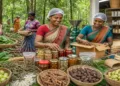
The model allows women to work collectively through Self-Help Groups and participate in activities ranging from processing and packaging to marketing.
One example highlighted by the Ministry of Tribal Affairs is the Nyigamane, Ho Yorbe, Medumhagdum VDVK in Leparada district of Arunachal Pradesh.
Established in October 2021, the VDVK has 300 women SHG members and farmers.
The centre processes locally available forest and agricultural products and converts them into marketable consumer goods.
Its product range includes: King Chilli pickle, Bamboo shoot pickle, Turmeric powder, Ginger powder, Pineapple jam, Pineapple squash and Orange squash.
According to the Ministry, the VDVK has sold products worth around Rs 11 lakh since 2022-23.
The example illustrates how locally available resources can become the foundation for community-owned enterprises.
Women who would traditionally participate primarily in collection and processing can also become involved in decisions related to production, packaging, branding and sales.
From raw forest produce to finished products
The economic difference between selling raw produce and selling a finished product can be significant.
A collector selling raw turmeric, ginger, bamboo shoots or pineapple has limited control over how the product is ultimately marketed.
Once the same produce is processed, packaged and branded, the community can participate in a larger portion of the value chain.
For instance, turmeric can be cleaned, dried, powdered and packaged. Pineapple can be converted into jam or squash. Bamboo shoots can be processed into pickles. Forest herbs can potentially be converted into packaged products where appropriate processing and regulatory requirements are met.
This is the basic economic logic behind PMJVM’s value-addition approach.
The objective is not simply to increase the quantity of forest produce collected, but to increase the value generated from each unit of produce and the share retained by tribal producers.
Building community-owned enterprises
A major feature of the model is its emphasis on collective action.
Individual forest gatherers may have limited bargaining power, small quantities of produce and little access to processing equipment.
When producers are organised into SHGs and VDVKs, they can pool resources and work collectively.
This can help communities:
Purchase and use processing equipment
Aggregate larger quantities of produce
Standardise products
Develop common brands
Reach larger buyers
Access financial institutions
Participate in exhibitions and fairs
Explore digital markets
The enterprise therefore becomes more than a collection centre. It can function as a local economic institution owned and operated by members of the community.
Why market access matters
For tribal products to become sustainable businesses, production alone is not enough.
A community may have a unique forest product, traditional processing knowledge or locally available raw material, but without reliable buyers, the enterprise may struggle to grow.
This is why PMJVM places market access alongside infrastructure and training.
Market intelligence can help producers understand prices and demand. Branding can differentiate products. Better packaging can improve shelf appeal and handling. E-commerce can open access to customers outside the immediate region.
Exhibitions and festivals can also help tribal enterprises test products and build recognition.
The combination of these interventions is intended to gradually reduce the gap between remote producers and mainstream consumer markets.
Balancing livelihoods with sustainable forest use
The expansion of forest-based enterprises also raises the importance of sustainable harvesting.
The objective of PMJVM is not simply to increase extraction from forests. Skill development and scientific harvesting are intended to improve the way forest produce is collected and processed.
For communities that depend on forests over generations, sustainability is directly linked to the long-term viability of their livelihoods.
If forest resources decline, the economic foundation of these enterprises is also weakened.
The integration of traditional knowledge with modern processing and enterprise practices is therefore intended to support both livelihood security and responsible use of local resources.
A larger economic role for tribal communities
The PMJVM approach reflects a broader shift in the way tribal livelihoods are being viewed.
Instead of treating forest-dependent communities only as collectors of raw natural resources, the policy seeks to position them as producers, processors, entrepreneurs and market participants.
This shift involves several stages.
First, communities collect forest produce. Second, they aggregate it through SHGs and VDVKs. Third, they process and add value to it. Finally, they brand and market the finished products.
At each stage, the potential for income generation expands.
The model also creates opportunities for local employment in processing, packaging, transportation, marketing and other related activities.
What lies ahead for the forest-based tribal economy?
The expansion of VDVKs and the growing focus on market linkages indicate an effort to build a more organised tribal enterprise ecosystem.
The immediate challenge is to ensure that sanctioned centres become fully functional and that producers receive sustained support after the initial training or infrastructure intervention.
Access to working capital, reliable markets, product quality, transportation and branding will remain important factors in determining whether community enterprises can grow beyond small-scale production.
At the same time, digital commerce provides an opportunity to connect products from remote tribal regions with wider consumer markets.
The long-term success of the model will depend on whether these enterprises can establish consistent demand, maintain product quality, manage costs and ensure that a meaningful share of the value generated returns to tribal producers.
From forest gatherers to entrepreneurs
For forest-dependent tribal communities, PMJVM represents an attempt to change the economics of Minor Forest Produce.
The forest remains the source of the raw material, but the economic activity no longer has to end with collection.
Through Van Dhan Vikas Kendras, skill development, processing facilities, MSP support, financial linkages and market access, the government is seeking to help communities participate in more stages of the value chain.
The numbers: 4,172 VDVKs sanctioned, 2,911 functional, 12.48 lakh tribal members linked and around Rs 168 crore in reported sales as of July 31, 2026, show the scale of the initiative.
The example of women-led enterprises such as the VDVK in Arunachal Pradesh also illustrates how local forest and agricultural resources can be converted into branded products with market value.
Ultimately, the broader objective is to build a tribal forest economy in which communities are not limited to supplying raw materials.
The shift is from collection to processing, from raw produce to finished products, and from individual sellers to community-owned enterprises.
For millions of tribal families dependent on forests, the success of this approach could mean that the value of the forest economy is increasingly retained within the communities that have traditionally depended on it.