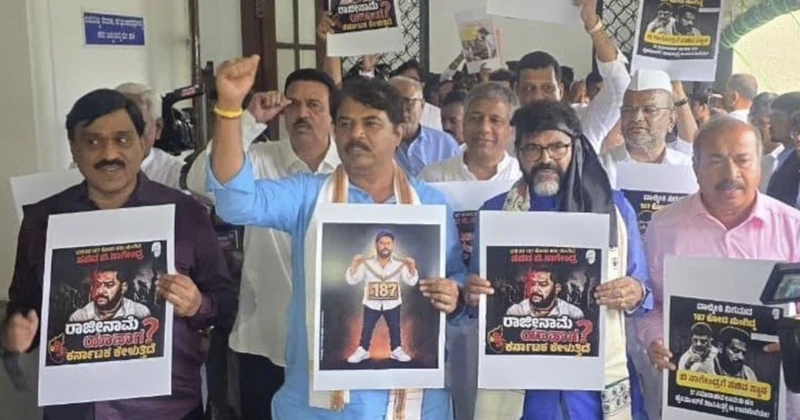
Bengaluru: Opposition leader R. Ashoka on August 20, accused the Congress government of failing to protect Dalits’ interests and demanded that funds allegedly diverted from the Dalit community’s accounts be recovered and returned.
Speaking to the media near the Kengal Gate of Vidhana Soudha, Ashoka launched a broadside against the state government, raising the alleged illegal transfer of funds from the Karnataka Maharshi Valmiki Scheduled Tribes Development Corporation, the drought situation, and the state’s drinking water shortage.
“We are not anti-Dalit. Our fight will continue until the money meant for Dalits is returned to them. The government must ensure that every rupee belonging to the Dalit community is used for their welfare,” Ashoka said.
ವಾಲ್ಮೀಕಿ ಅಭಿವೃದ್ಧಿ ನಿಗಮದ ಬಹುಕೋಟಿ ಹಗರಣದ ಪ್ರಮುಖ ಆರೋಪಿ ಆಗಿರುವ ಸಚಿವ ಬಿ. ನಾಗೇಂದ್ರ ಅವರ ರಾಜೀನಾಮೆಗೆ ಆಗ್ರಹಿಸಿ ವಿಧಾನಸೌಧದ ಪಡಸಾಲೆಯಲ್ಲಿ ಪ್ರತಿಭಟನೆ ನಡೆಸಲಾಯಿತು.
ಜನರ ತೆರಿಗೆ ಹಣದ ದುರ್ಬಳಕೆಯ ಆರೋಪಕ್ಕೆ ಸರ್ಕಾರ ಉತ್ತರಿಸಬೇಕು. ತಪ್ಪಿತಸ್ಥರ ವಿರುದ್ಧ ಕಠಿಣ ಕ್ರಮ ಕೈಗೊಳ್ಳುವ ಜೊತೆಗೆ, ನೈತಿಕ ಹೊಣೆ ಹೊತ್ತು ಸಚಿವ ಬಿ.… pic.twitter.com/6dtAsKy4jD
— R. Ashoka (@RAshokaBJP) August 20, 2026
Referring to alleged irregularities in the Valmiki Corporation, Ashoka targeted former minister B. Nagendra and questioned why action had not been taken against him despite the investigation.
“Several cases have been registered and the Lokayukta has also investigated the matter. The details are available in the documents and the chargesheet. The money of the Dalit community was looted in the name of one person. If the documents and chargesheet contain these details, why was Nagendra not asked to resign?” he questioned.
Ashoka further alleged that the Congress government had failed to take decisive action against those responsible for the alleged diversion of funds.
“Why has the government not removed Nagendra from the ministry? Has he paid money to the Congress high command? If the government is genuinely concerned about Dalits, it should remove him and give the ministerial responsibility to another Dalit leader,” he said.
Reacting to criticism that the BJP was anti-Dalit, Ashoka said the Congress had no moral right to make such an allegation when funds earmarked for the welfare of disadvantaged communities had allegedly been diverted.
“How can the Congress call the BJP anti-Dalit when money meant for Dalits has been allegedly stolen during its government? The letter written by Chandrashekhar clearly mentions that the money was transferred on the instructions of the minister,” he said.
Ashoka also referred to the death of Valmiki Corporation official P. Chandrashekhar and alleged that questions remained unanswered about the circumstances surrounding the case. He said the BJP would keep raising the issue until those responsible were held accountable.
“Our position is very clear. We are not against Dalits. We are against the misuse and diversion of money meant for Dalits. That money belongs to the community and must reach the beneficiaries,” he said.
Ashoka announced that the BJP would intensify its protest over the issue and launch a padayatra from the Valmiki statue.
“We will start our protest with a padayatra from the Valmiki statue. Our agitation will continue until justice is done to the Dalit community,” he said.
The Opposition leader also accused the government of ignoring the emerging drought-like situation in several parts of Karnataka. He said people in many areas were facing drinking water shortages and demanded immediate steps to ensure water supply.
“There is a drinking water crisis in the state and arrangements must also be made to provide fodder for cattle. But the government is hesitating even to discuss the drought situation. The government has not officially declared a drought despite the situation on the ground,” Ashoka said.
He demanded that the government announce at least Rs 10,000 crore as drought relief and take immediate measures to supply drinking water and fodder.
ಬರದ ಬಗ್ಗೆ ಚರ್ಚೆಯಾಗಬೇಕು, ನೈಸ್ ಟೋಲ್, ಬಿಡದಿ ರೈತರ ಸಮಸ್ಯೆ, ರೇಷನ್ ಕಾರ್ಡ್ ಸಮಸ್ಯೆ—ಹೀಗೆ ಜನರ ಬದುಕಿಗೆ ಸಂಬಂಧಿಸಿದ ಹತ್ತಾರು ವಿಚಾರಗಳು ಸದನದ ಮುಂದಿವೆ.
ಆದರೆ ಕಾಂಗ್ರೆಸ್ ಸರ್ಕಾರ ಮಾತ್ರ ಒಬ್ಬ ವ್ಯಕ್ತಿಯನ್ನು ರಕ್ಷಿಸಲು ಇಡೀ ಸದನವನ್ನೇ ಬಲಿಕೊಡುತ್ತಿದೆ!
ಬರ ಘೋಷಣೆ ಮಾಡಿಲ್ಲ, ನಯಾಪೈಸೆ ಪರಿಹಾರ ಬಿಡುಗಡೆ ಮಾಡಿಲ್ಲ. ಸಚಿವ ನಾಗೇಂದ್ರ… pic.twitter.com/3k3tK3qG4n
— R. Ashoka (@RAshokaBJP) August 20, 2026
Ashoka also criticised the government for allegedly refusing to allow a detailed discussion on the drought situation during the ongoing Assembly session.
“The government has taken away the rights of the legislators by not allowing a discussion on the drought situation. The rights of all 224 MLAs have effectively been denied,” he alleged.
He said the Opposition would continue to raise issues concerning farmers, rural communities and Dalits in the Assembly and outside it. He accused the government of attempting to avoid accountability on issues involving public money.