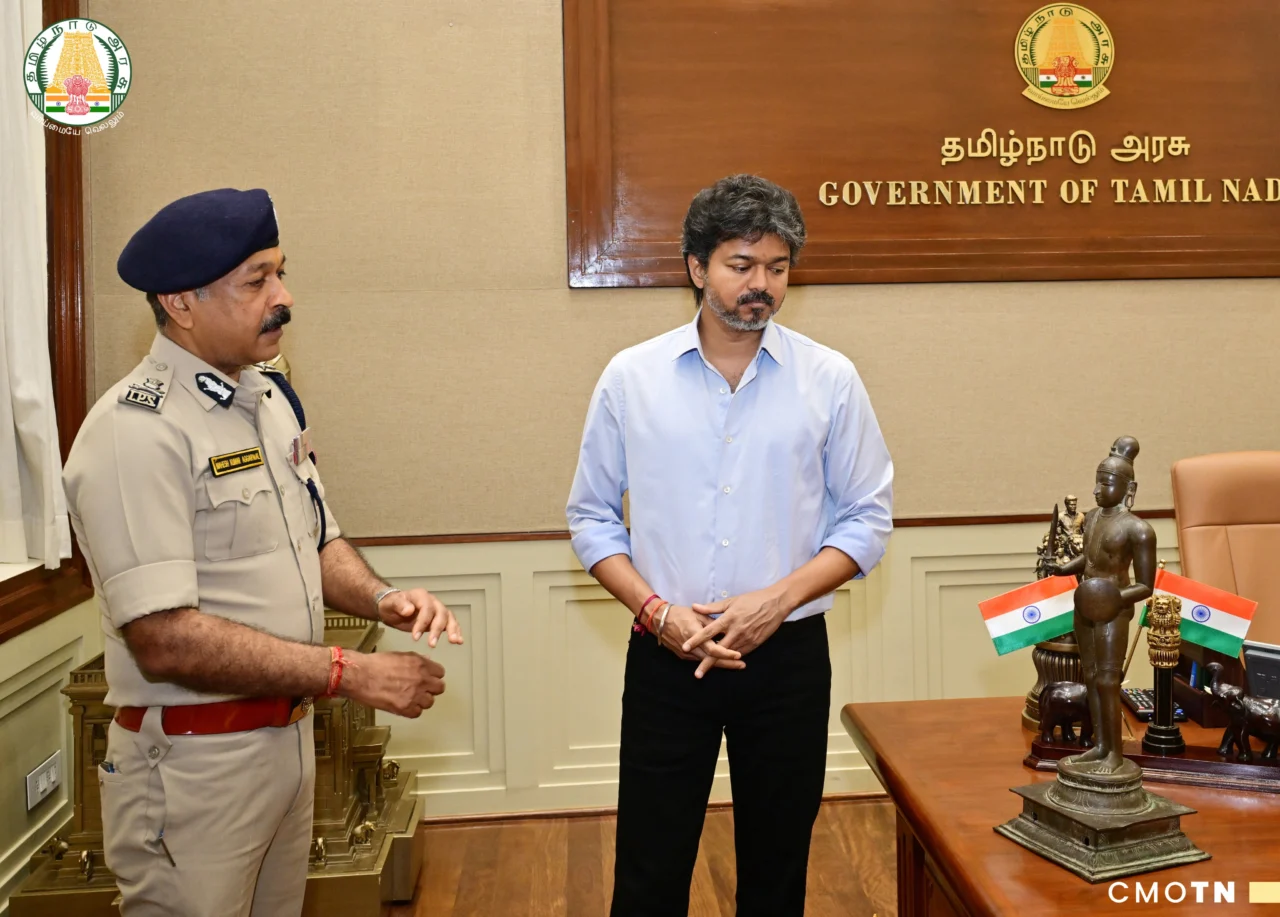
Nearly 70 years after it was stolen from the Soundararaja Perumal Temple in Kumbakonam, a 16th-century, 500-year-old bronze Murti of Vaishnavite saint Thirumangai Alwar has been repatriated to Tamil Nadu from the United Kingdom following concerted efforts, including through diplomatic channels, after it was traced to Oxford University’s Ashmolean Museum and brought back to the State, where it was presented to Chief Minister C. Joseph Vijay at the Secretariat in Chennai.
The theft occurred between 1957 and 1967, when thieves took away four valuable bronze murtis of Alwar, Kalinga Narthana Krishna, Vishnu and Sri Devi. However, complaints were given only in 2020. On February 12, 2020, the Idol Wing CID registered a case on a complaint from the Executive Officer of the temple.
During the probe, officials traced the Thirumangai Alwar Murti, one of the two Vaishnavite saints, to the Ashmolean Museum in the UK, which had acquired it in 1967 from an unidentified person. The other stolen or missing murtis were traced to three different museums in the United States.
Detailing the probe and the efforts to bring back the Murti, Additional Director General of Police, Idol Wing, T. Kalpana Naik told media persons: “Our team had meticulously gleaned information and scientific evidence to establish the stolen murtis are from TN and submitted compelling evidence and documents to the authorities in the foreign countries where they had been located. Our hard work and evidence played a key role in establishing that the murtis originated from Kumbakonam temple and had been smuggled abroad.”
The UK authorities, after receiving the documents, despatched a team to verify the TN claim and submitted a detailed report. The university council acknowledged that the Thirumangai Alwar Murti had been illegally removed/stolen from the Soundararaja Perumal Temple at Kumbakonam.
The university promised in 2024 to return the same to Tamil Nadu, and in 2026 the TN Government wrote to the High Commission of India in London and the Union Culture Ministry in New Delhi, informing them that a replica of the Thirumangai Alwar Murti had been completed and was ready to be handed over to the Ashmolean Museum for the repatriation of the original Murti.
The Murti was handed over to the Archaeological Survey of India (ASI), which conveyed the same to the authorities on August 6.
மாண்புமிகு தமிழ்நாடு முதலமைச்சர் திரு.ச.ஜோசப் விஜய் அவர்கள் 17.8.2026 அன்று தலைமைச் செயலகத்தில், தஞ்சாவூர் மாவட்டம், கும்பகோணத்தில் அமைந்துள்ள அருள்மிகு சௌந்தரராஜப் பெருமாள் திருக்கோயிலிலிருந்து களவாடப்பட்டு, இங்கிலாந்து நாட்டிலிருந்து மீட்டு தமிழ்நாட்டிற்குக் கொண்டுவரப்பட்ட… pic.twitter.com/9d8SbiizYd
— CMOTamilNadu (@CMOTamilnadu) August 18, 2026
The Tamil Nadu Idol Wing team reached Delhi to take possession of the Murti and brought it to Chennai.
Chief Minister C. Joseph Vijay received the Murti on August 17 in the presence of DGP and head of the TN Police force Mahesh Kumar Agarwal and ADGP Kalpana Naik.
After completion of formalities, the Thirumangai Alwar Murti, a 16th-century one, was handed over to the temple custodians at Kumbakonam on August 18. The Murti was taken in a grand ceremonial procession. Devotees and locals gave a rousing welcome to the Alwar Murti.
Thirumangai azhwaar returns🙇. Kumbakonam pic.twitter.com/S9bezG7eo9
— Hari (@harihar12) August 19, 2026
The other three murtis were traced to Kalinganarthana Krishna at the Asian Art Museum, San Francisco; Sridevi at Hill Auction Gallery, Florida; and Vishnu at Kimbell Art Museum, Texas. It is learnt that steps are being taken to bring back the remaining three companion murtis — Vishnu, Sridevi and Kalinganarthana Krishna — which have been located at various museums in the United States.
It is pertinent to note that nearly 650 stolen antiquities and murtis have been successfully repatriated to India since PM Modi took office in 2014 from countries including the USA, Australia, UK, Singapore, Canada and the Netherlands.
Recently, the National Gallery of Australia and the Government had returned high-value items such as Chola-era bronze murtis, a ceremonial trident of Goddess Bhadrakali, a granite Nandi Murti, a basalt Karthikeya sculpture stolen from Tamil Nadu, and the Anaimangalam Copper Plates, also known as the Leiden Plates, an 11th-century Chola dynasty artefact consisting of 24 plates (21 large and three small) weighing about 30 kg. They contained land grants to the Buddhist Chudamani Vihara in Nagapattinam and symbolise the era’s religious tolerance and maritime trade.