There is a chilling visual asymmetry currently haunting the student movement: on one side lies the quiet, grueling toll of an indefinite hunger strike, marked by collapsing vitals and the real threat of bodily collapse. On the other stands the polished choreography of celebratory reels, high-fives, and stagecraft.
The jarring contrast between one activist fasting to the brink and another taking to the dance floor does more than trigger outrage it exposes the uncomfortable fault line where authentic, high-stakes resistance collides with the performative vanity of digital-era optics.
Day 20: Weakness, warnings and then a dance
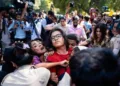
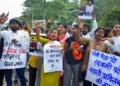
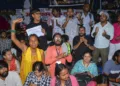
Neha Bora, national president of the All India Students’ Association (AISA), was one of the prominent student activists participating in the Jantar Mantar agitation in Delhi. AISA is a anti national, left-wing student organisation, and Bora was among the activists who undertook a prolonged fast demanding accountability over examination irregularities.
By July 17, reports said Bora and two other AISA activists had completed 20 days of their hunger strike. A doctor who examined the protesters reportedly described their condition as high-risk.
Three days later, the hunger strike was brought to an end after an appeal by a delegation that included politicians and public figures. Bora had completed 23 days of fasting, according to multiple reports.
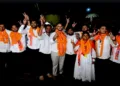
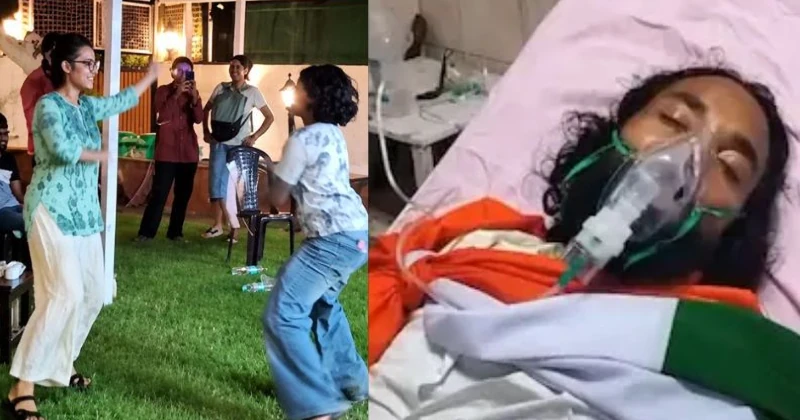
After Union Education Minister Dharmendra Pradhan resigned on July 25, a video of Bora dancing during the celebrations went viral. More strikingly, Bora herself shared the video, captioning it, “If I can’t dance, It won’t be my revolution!”
The celebration itself is not evidence that her hunger strike was fake. A person who has completed a fast can certainly celebrate when a political demand is achieved. But the optics are undeniably jarring.
Only days earlier, Bora had been portrayed as one of the faces of a physically demanding hunger strike. The subsequent footage showed her dancing energetically. The contrast was enough to prompt widespread questions about how quickly her physical condition appeared to have changed.
And then there is Devendra Nath Mahto
Now look at Jharkhand.
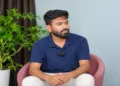
Student leader Devendra Nath Mahto was on hunger strike over alleged irregularities in recruitment examinations conducted by the JPSC and JSSC. By the time his fast entered its later stages, reports described a markedly deteriorating physical condition.
On the 15th day, reports said Mahto was suffering from dehydration and falling blood pressure. Doctors warned that even suddenly standing or walking could cause dizziness and that he required continuous medical monitoring.
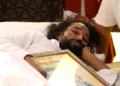
As the protest continued, Mahto was hospitalised at Ranchi’s Sadar Hospital.
And by the time the government finally accepted his principal demand, the contrast could hardly have been more dramatic: Mahto was in a hospital bed after 16 days of fasting, while the most memorable images from Bora’s protest were those of her dancing in celebration after 23 days.
On August 18, Mahto ended his 16-day hunger strike after the Jharkhand government announced the cancellation of the JSSC-CGL examination and examinations conducted by TSR Data Processing Private Limited.
Same protest weapon. Radically different optics. A hunger strike is supposed to communicate sacrifice. It tells the public: “I am willing to put my own body on the line for this cause.”
Mahto’s protest produced images of a visibly weakened activist being treated in hospital. Reports documented dehydration and falling blood pressure. The protest ended only after the government announced the cancellation of the examinations at the centre of the agitation.
Bora’s protest produced something else: a viral celebration video in which the same activist who had spent 23 days fasting was seen dancing after the resignation of the minister whose removal was one of the movement’s central demands.
Bora is not merely an unaffiliated student who happened to join the Jantar Mantar demonstration. She is a JNU PhD scholar in Theatre and Performance Studies. Reports identify her as a prominent leader of the student agitation.
And when she later appeared in Jharkhand to express solidarity with students protesting recruitment-examination irregularities, sections of those protesters objected to the presence of outside political organisations.
She was heckled and ink was thrown at her during the August 7 protest. A man was subsequently arrested in connection with the incident.