On August 15, India will celebrate Independence Day, the triumph of a nation’s long struggle for freedom. But on the eve of that celebration, there is a solemn duty to remember a painful chapter of our history: the Partition of 1947. qPartition was not merely the drawing of a political boundary. It was a human catastrophe.
Punjab was divided. Bengal was divided. Villages, communities and neighbourhoods that had existed for generations were suddenly separated by a new border. Families were uprooted, journeys became migrations and millions were forced to leave behind their homes, possessions and ancestral lands.
The tragedy did not emerge in a vacuum. The colonial policy of “divide and rule,” the Muslim League’s demand for Pakistan, the Two-Nation Theory, escalating communal politics and violence and the political choices made in the final years of British rule created the circumstances in which Partition became a tragic reality.
The violence that followed was devastating. The Direct Action Day killings in Calcutta, the violence in Noakhali and Bihar, the massacres and attacks across Rawalpindi and Punjab and the bloodshed that accompanied mass migration left an enduring scar on the subcontinent.
Yet behind every historical statistic was a human story.
- A farmer lost the land cultivated by generations of his family
- A mother waited for a son who never returned
- A daughter was separated from her parents
- A family crossed an uncertain border carrying little more than the keys to a home they believed they would one day return to, But, they never did.
Estimates suggest that roughly 14–18 million people were displaced, making Partition one of the largest forced migrations in modern history. The human cost cannot be measured in numbers alone. It lives in memories, family histories, abandoned homes and generations that inherited stories of loss.
Remembering Partition, however, must never become an excuse for hatred against communities living today. History must be remembered with honesty, dignity and responsibility. The purpose of remembrance is not revenge; it is understanding. We must recognise how separatism, communal hatred and political extremism can fracture societies and inflict suffering on ordinary people who have the least control over political decisions.
For me, Akhand Bharat is not simply a question of geography or political borders. It reflects a deeper civilisational consciousness—a recognition that the cultural bonds of the Indian subcontinent predate the boundaries created by modern politics.
The enduring lessons of 1947 are therefore profound:
When society is divided, ordinary citizens pay the highest price. Extremism, in any form, ultimately threatens humanity itself. Political power is temporary, the nation and its civilisational unity endure. And India’s unity, integrity and sovereignty must always remain above partisan interests.
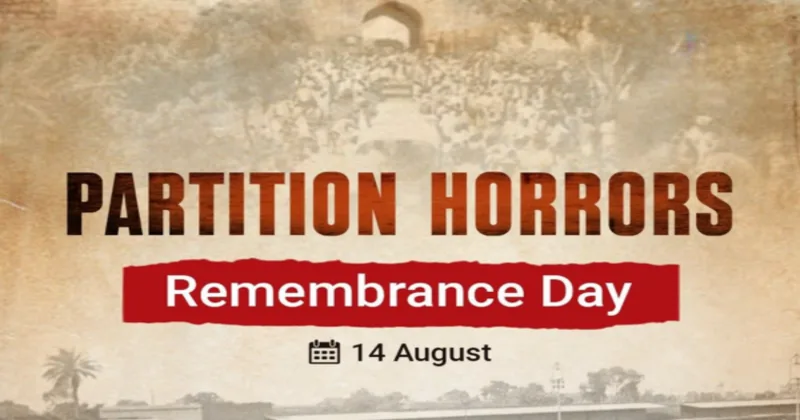
On Partition Horrors Remembrance Day, we bow our heads in remembrance of every innocent life lost, every family uprooted, every home abandoned and every dream shattered by the tragedy of 1947.
We cannot rewrite the past, But we can remember it honestly and we can learn from it wisely. And we can ensure that the India of tomorrow is stronger, more united and more secure than the India that emerged from that terrible rupture.
May the memory of Partition deepen our resolve—not to divide, but to unite. Not to inherit hatred, but to preserve harmony. Not to forget history, but to ensure that its darkest chapters are never repeated.