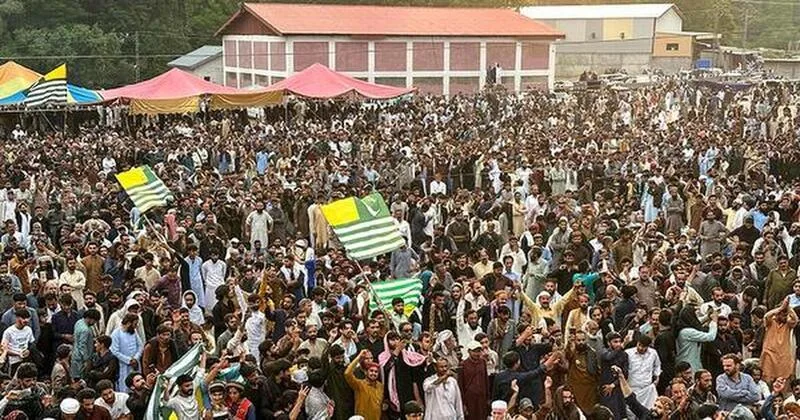
Expressing concern over the security situation in Pakistan-occupied Jammu Kashmir (PoJK), a spokesperson for UN Secretary General Antonio Guterres has highlighted the need for accountability for actions against people engaging in peaceful protest. The PoJK region has been witnessing protests for several months over 12 contentious refugee seats, triggering a crackdown by security forces.
The protests intensified as elections to the legislative assembly started in the region at the end of last month, July 27 being the first round of voting, amid allegations of widespread rigging. Pakistan Peoples Party (PPP) Chairman Bilawal Bhutto Zardari has led in levelling these charges against Pakistan Muslim League-Nawaz.
Bilawal had also charged PML-N of using bribery in these elections as it sent some electric buses from Punjab to PoJK and termed them as gifts. Obviously, these buses had not been procured from personal wealth of Punjab Chief Minister Maryam Nawaz and were meant to influence electoral outcomes.
Widespread rigging, bribery of voters
According to the Joint Awami Action Committee (JAAC), a collective of activist groups, more than 40 people were killed during the first phase of polls on July 27. Besides, it claims that some 400 protesters have been killed since the first week of June when clashes with security forces and countless crackdowns started. The claims regarding deaths as also injuries have been dismissed by the Pakistan government.
It seems odd that the Pakistan government as also the region’s Prime Minister have not provided any details officially about the total fatal casualties, or the injured people. Both the governments have so far maintained a studied silence on the issue, apparently to avoid exposing them to scrutiny from media organisations.
In one ridiculous report about how casualties may have happened in the POJK region, one media house said the deaths of JAAC may have happened due to fall of ripe walnuts on their heads. This report said the protesters were standing under walnut trees where falling of fruits cannot be ruled out. This can lead to grave injuries leading to fatalities, the report said.
The JAAC has alleged that the establishment (read Pakistan Army) manipulates the 12 refugee seats to install a Prime Minister of its choosing to lead the so-called government in PoJK. For a long time, the JAAC has been asking for the abolition of these seats in the assembly.
India maintains that the entire Union Territories of Jammu & Kashmir and Ladakh are its integral and inalienable parts. New Delhi also asserts that Pakistan has been in “illegal and forcible occupation” of parts of these Union Territories. This is because of the fact that Maharaja Hari Singh had acceded the state of Jammu & Kashmir he ruled to India. The accession was legal and as per procedures laid down.
Pakistan’s continued illegal possession
In contrast to India’s taking control following the legal accession, Pakistan organised a violent attack on the Maharaja’s territories sending in its regular soldiers to lead the tribal Lashkars. All territories of J&K, including the entire POJK as also Gilgit-Baltistan region, have been in illegal possession of Pakistan for the past several decades.
“The Secretary-General supports the work of his High Commissioner, and we certainly hope that the pleas made by Mr Turk will be listened to,” Deputy Spokesman for the Secretary-General Farhan Haq said at Geneva in response to a question by an Indian news agency late on Friday.
Farhan Haq is a Pakistani working for the UN and has the responsibility of conveying information about its activities, decisions, and initiatives to the public and press. He has often provided updates and responded to questions and also represented the Secretary-General’s office in various capacities.
His role involved communicating about the stance of the UN on global issues, conflicts, humanitarian crises, and international cooperation efforts. He brought extensive experience in journalism and communications to his position and also helped to promote transparency and awareness of the UN’s work.
UN High Commissioner for Human Rights expressed concerns
The UN High Commissioner for Human Rights Volker Turk had, on July 17, expressed concern about the recent developments in PoJK, calling for impartial and thorough investigation into the deaths of protesters, Pakistan’s ban of the JAAC and arrest of its leaders. Turk had appealed for calm in PoJK amid a wave of unrest ahead of regional elections at the end of the month, a statement issued in Geneva last month had said.
On whether there will be calls for accountability from the authorities on the crackdown on protestors in the PoJK, Haq said: “It’s important that all authorities everywhere allow for peaceful protest and certainly that is the case here. If there have been people harmed for engaging in peaceful protest, there needs to be accountability for that”.
Turk’s statement had specifically said that dozens of people, mostly protesters but also law enforcement personnel, were reportedly killed since June ahead of the vote for the Legislative Assembly starting July 27.
The High Commissioner had called for prompt, thorough and impartial investigations into all deaths that have occurred due to the unrest, both amongst protesters and members of security forces.
Protests led by JAAC
The JAAC – a movement behind the protests comprising traders, transporters, students, lawyers, activists and others – has been banned under anti-terrorism laws for allegedly threatening public order and security.
There are 53 seats in the PoJK legislative assembly, of which 45 are directly elected, while eight are reserved for women, technocrats and clerics. Elections for the 45 seats are being held in three phases, with the first phase on July 27 and the second phase on August 2 marred by violent protests. On August 10, the third phase of voting is scheduled to be held in most volatile Poonch region where no elections are being held for seven seats.