
Kochi: As Keralam prepares to celebrate Onam, all roads of devotion lead to one sacred destination, Thrikkakara Vamanamoorthy Mandir in Kochi. Revered as the spiritual home of the Onam festival, this ancient temple dedicated to Bhagwan Vamana, the fifth incarnation of Bhagwan Vishnu, occupies a unique place in India’s religious and cultural landscape.
Believed to be around 2,000 years old, the Mandir is among the rare shrines dedicated exclusively to Bhagwan Vamana. It is also recognised as one of the 108 Divya Desams. Every year, during the Malayalam month of Chingam (August–September), the Mandir becomes the centre of Kerala’s grandest festival, drawing thousands of devotees, pilgrims and tourists who come to witness the traditions associated with the legendary King Mahabali.
The Sacred Legend of Vamana and Mahabali
The Mandir’s significance is deeply rooted in one of Hinduism’s most celebrated legends. According to the Bhagavata Purana, Mahabali was a noble and generous Asura king whose just rule brought prosperity and happiness to his people. His growing power, however, disturbed the celestial gods, who sought Bhagwan Vishnu’s intervention.
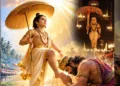
Vishnu incarnated as Vamana, a young Brahmin dwarf carrying a palm-leaf umbrella, and approached Mahabali during a grand yajna. He asked for just three paces of land. The king readily agreed, despite the warnings of his guru, Shukracharya. At that moment, Vamana assumed his gigantic cosmic form, Trivikrama.
With his first step, he covered the heavens; with the second, he measured the earth. Having nowhere left for the third step, Mahabali offered his own head. Pleased with the king’s humility and devotion, Bhagwan Vishnu granted him immortality and allowed him to return to visit his people once every year. This annual homecoming is celebrated as Onam, making Thrikkakara the symbolic birthplace of Kerala’s most cherished festival. The name Thrikkakara itself is believed to have originated from ‘Thiru-kaal-kara’, meaning ‘the place of the sacred foot’, referring to the divine footprint of Bhagwan Vamana.
Tradition attributes the establishment of the temple to Bhagwan Parashurama, who is believed to have consecrated several temples across Keralam. The Mandir also holds immense historical value. It preserves one of the earliest known references to the celebration of Onam, dating back to 861 CE, making it a significant landmark in the cultural history of Keralam. Today, the Mandir is administered by the Travancore Devaswom Board, which oversees its daily rituals and major festivals.
Architecture and Sacred Shrines
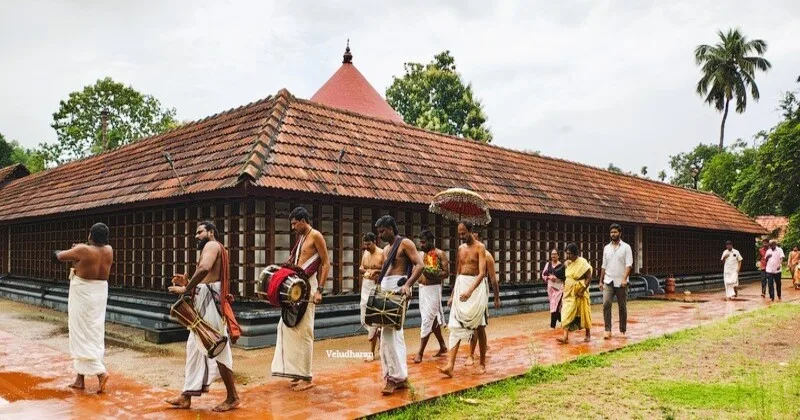
Built in the traditional Kerala style, the Mandir complex is spread across a spacious campus enclosed by ancient walls. The main sanctum houses Bhagwan Vamana in a striking posture, preparing to place His foot upon King Mahabali. One of the Mandir’s most captivating features is the Chuttu Vilakku, thousands of oil lamps lining the inner walls, which illuminate the temple beautifully during festivals.
Apart from the principal deity, the Mandir houses several important shrines dedicated to Bhagavati, Sastha (Ayyappa), Gopalakrishna, Nagas, Brahmarakshasa and Yakshi. The outer complex also features a sacred Sarpa Kavu (serpent grove), a revered banyan tree deity and the shrine of Brahmarakshasa. The Mandir has two sacred ponds. Kapilatheertham, situated close to the sanctum, is reserved for the Mandir pandit, while another pond outside the temple walls is used during the ceremonial Aarattu, the ritual bathing of the deity conducted during the Onam festival.
Adjacent to the Vamana Mandir stands an ancient Shiva Mandir, renovated in 2014, housing idols of Bhagwan Shiva, Ganesha, Kartikeya and Maa Durga. The Mandir complex also includes Naimishaaranyam, a group of cultural halls, and an auditorium that hosts religious gatherings, weddings and the grand Onasadya during the festival.
Local tradition narrates another interesting legend associated with Thrikkakara. A wealthy landowner once struggled to get a good yield from his plantain grove. After offering a bunch of bananas to the Mandir, his plantation began producing extraordinary golden bananas. The variety later became famous as Nendran Banana (Nenthiram Pazham).
When the local ruler suspected foul play and wrongly punished a sage, the sage cursed him. Seeking redemption, the king consulted learned sages, who advised him to perform sacred rituals using bamboo and a special grass called Koraipul, eventually freeing him from the curse. This legend continues to form part of the temple’s rich folklore.
The Heart of Onam Celebrations
Thrikkakara is widely regarded as the epicentre of Onam celebrations because it is traditionally believed to have been the capital of King Mahabali’s kingdom. The Mandir celebrates Onam over ten days, beginning with Atham and culminating on Thiruvonam. Throughout the festival, a pyramidal clay idol known as Thrikkakara Appan, symbolising both Bhagwan Vamana and King Mahabali, is installed in homes and temples across Kerala, reflecting the close association between the deity and the festival.
The festivities begin with Kodiyettam, the ceremonial hoisting of the Mandir flag on Atham. This marks the official commencement of the ten-day celebrations. The festival concludes with the lowering of the flag and the sacred Aarattu, during which the idol is ceremonially bathed, signifying the completion of the celebrations.
A major highlight is the ritual known as Chaarthu, where the Murti of Bhagwan Vamana is beautifully decorated with sandalwood paste, ornaments and traditional attire. Each day, the deity is adorned as one of the various incarnations of Bhagwan Vishnu, including Matsya, Kurma, Varaha, Narasimha, Vamana, Parashurama, Rama, Balarama, Krishna, Kalki and Trivikrama, allowing devotees to witness different manifestations of the Supreme Lord.
Grand Mandir Processions
The Mandir comes alive with magnificent processions. On the ninth day, the Pakalpooram procession sees the deity carried atop a decorated elephant accompanied by nearly eight caparisoned elephants, traditional percussion ensembles like Panchavadyam, and thousands of devotees.
On the concluding day, the Seeveli procession takes place before the deity returns to the sanctum after the Aarattu ceremony.
One of the most anticipated events is the Onasadya, the traditional vegetarian feast served during the final two days of the festival. More than 20,000 devotees are served the elaborate meal every year. The feast has become a symbol of communal harmony, with people from different religions and communities gathering together to share the festive meal in the spirit of Onam.
The Onam season across Kerala is traditionally inaugurated with the Athachamayam procession that begins at nearby Thrippunithura.
Historically, the Maharaja of Kochi led this colourful ceremonial procession in royal attire to the Thrikkakara temple, announcing the arrival of Onam. Today, Athachamayam remains one of Kerala’s most vibrant cultural spectacles.
Celebrating Keralam’s Performing Arts
For all ten days, the temple becomes a stage for Kerala’s classical art forms. Visitors can enjoy performances of Kathakali, Chakyar Koothu, Ottamthullal, Panchavadyam, Thayambaka, devotional music and traditional dance recitals. Every day is marked by special rituals dedicated not only to Lord Vamana but also to the temple’s other deities, making the celebrations a harmonious blend of devotion, art and culture.
Festivals Beyond Onam
While Onam is the temple’s most celebrated festival, the shrine also observes several other important occasions in the Hindu calendar, including Vishu, Makara Sankranti, Navaratri and Saraswati Puja. These festivals continue to attract devotees from across Keralam throughout the year.
For centuries, Thrikkakara Vamanamoorthy Mandir has stood as more than a place of worship. It is a living monument to Keralam’s history and cultural heritage. Its ancient rituals, magnificent architecture, vibrant festivals and enduring message of humility, generosity and communal harmony continue to inspire generations.
As Onam approaches each year, the temple once again becomes the spiritual heart of Keralam, reminding devotees of the eternal bond between Bhagwan Vamana and King Mahabali, a story that has shaped the identity of the festival for over a thousand years.