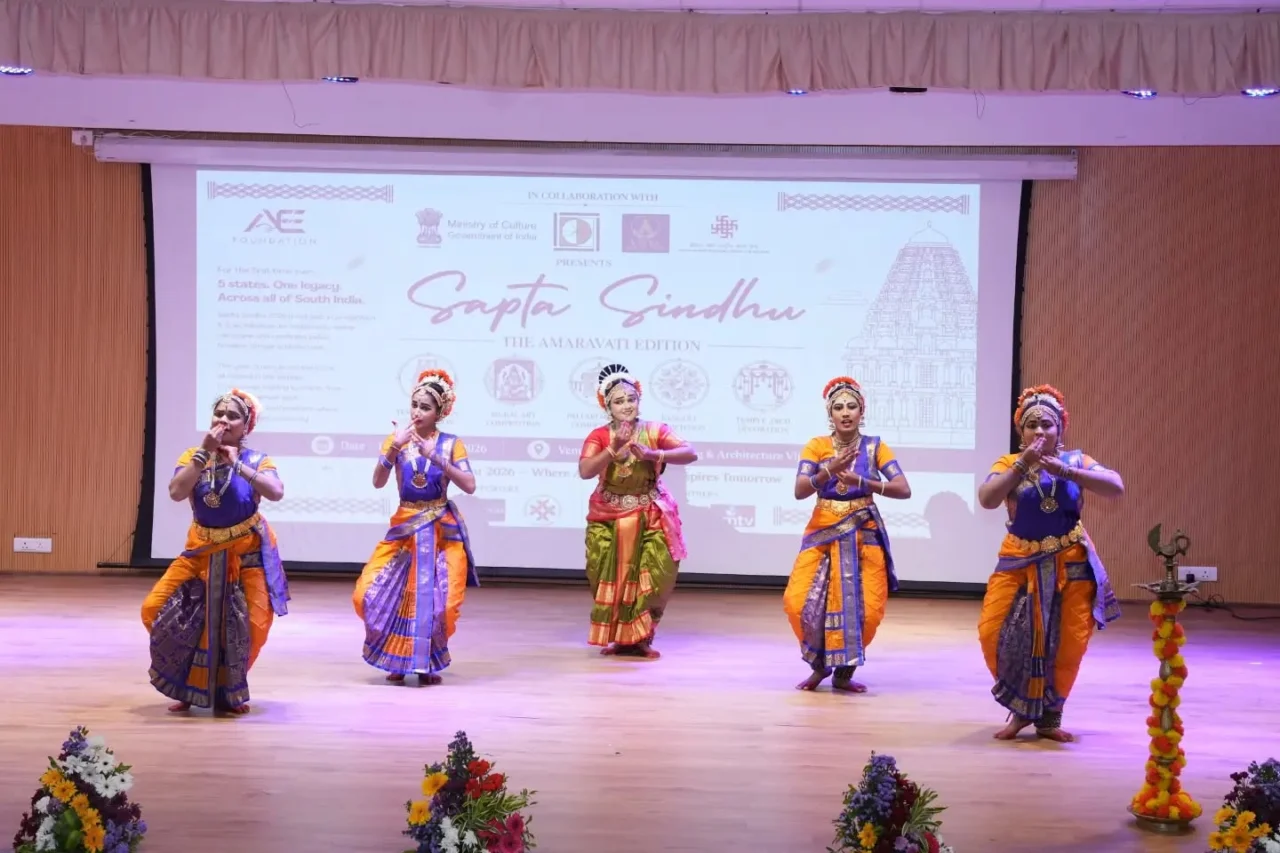
Vijayawada: Hyderabad-based AE Foundation concluded the Sapta Sindhu 2026 – Amaravati Edition, a two-day national programme dedicated to preserving and promoting India’s temple heritage and traditional architecture, at the School of Planning and Architecture (SPA), Vijayawada, on August 2.
Organised in collaboration with the Ministry of Culture, SPA Vijayawada, Vishwa Bandhu Trust, and the Indira Gandhi National Centre for the Arts (IGNCA), the event brought together students, architects, artisans and heritage enthusiasts from across southern India.
Held under the theme “5 States, One Vision: Temple Architecture,” the initiative highlighted the role of temples as enduring centres of India’s civilisation, culture and dharma while encouraging young people to study and preserve the country’s rich architectural traditions.
Through design competitions, exhibitions and heritage visits, participants explored the artistic, engineering and cultural aspects of temple construction and conservation.
A total of 459 participants from five states took part in five national-level competitions: Temple Model and Design Making, Pallaki Model Making, Mural Painting, Temple Arch Decoration and Rangoli.
Every participant received certificates jointly recognised by the Ministry of Culture, SPA Vijayawada, IGNCA and APSCCC, along with heritage-themed gifts.
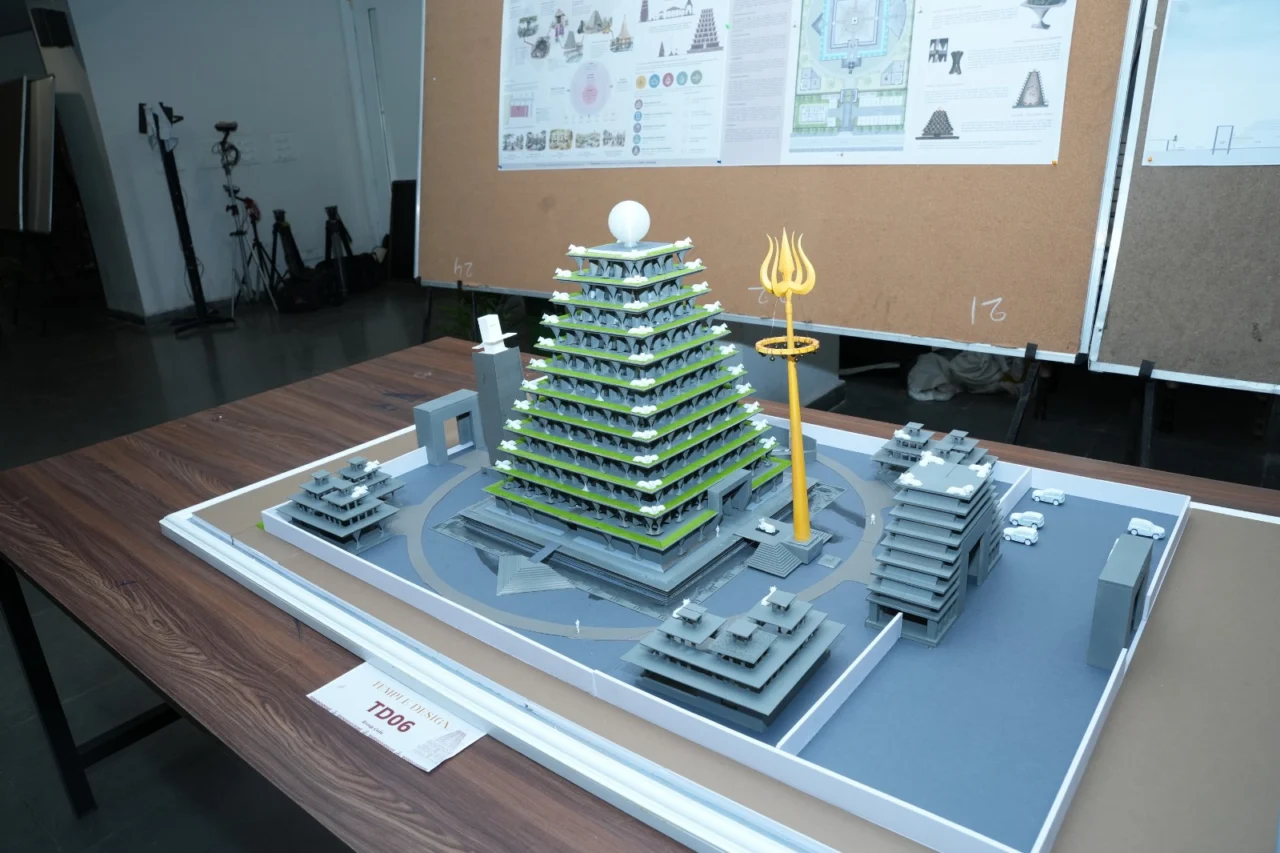
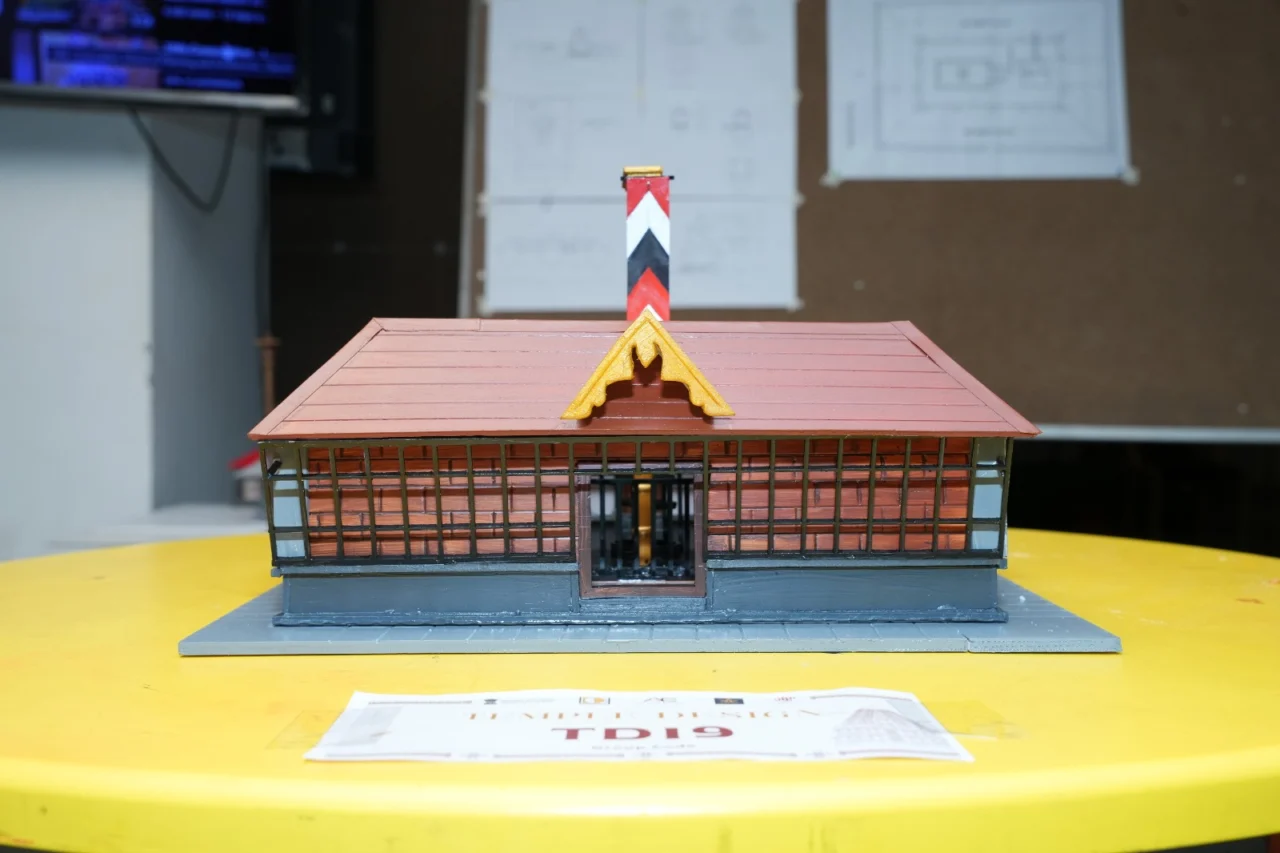
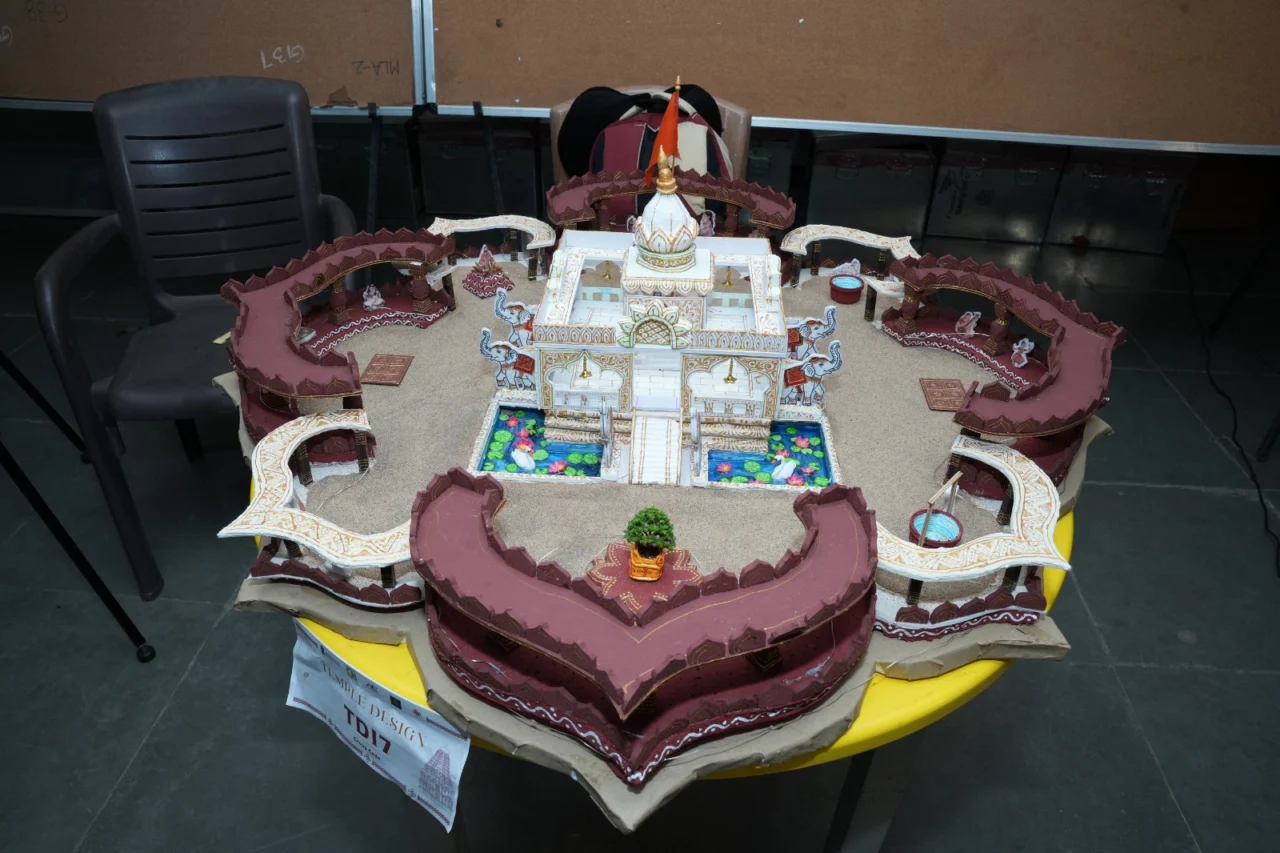
The event witnessed participation from institutions representing Karnataka, Telangana, Kerala, Tamil Nadu and Andhra Pradesh, reflecting a wide geographical representation of young architects, artists and students.
Among them were R.V. College of Architecture, Bengaluru (Karnataka); Sri Venkateshwara College of Architecture, Hyderabad (Telangana); Nehru College of Architecture, Ottapalam, Palakkad (Kerala); Dilliganesh Art and Sculpture, Chengalpattu (Tamil Nadu); School of Planning and Architecture – Jawaharlal Nehru Architecture and Fine Arts University (SPA-JNAFAU), Hyderabad (Telangana); and Acharya Nagarjuna University College of Architecture and Planning, Guntur (Andhra Pradesh).
Other participating institutions included the Institute of Mural Painting, Kannur (Kerala); University of Hyderabad – Fine Arts Department (Telangana); KL University, Vijayawada; Potti Sriramulu Chalavadi Mallikarjun Rao College of Engineering; Sri Durga Malleswara Siddhartha Mahila Kalasala; NKM Mandali, Vijayawada; and AKVA Society, Vijayawada, highlighting the diversity of institutions involved in promoting Bharat’s temple architecture and traditional arts.
The competitions encouraged participants to understand the principles of traditional temple architecture, which combines art, sculpture, geometry and engineering. Organisers said the programme sought to familiarise students with India’s diverse temple styles and the craftsmanship that has shaped the country’s cultural landscape for centuries.
The first day featured competitions in which students and young artists presented temple models, murals, decorative arches, rangoli and traditional palanquin designs inspired by India’s architectural heritage.
On the second day, the entries were exhibited for the public, attracting more than 300 visitors, including scholars, families and heritage enthusiasts.
As part of the cultural programme, participants also visited the Kanaka Durga Temple in Vijayawada, where they received special darshan and prasadam while learning about the temple’s architecture and historical significance.
Organisers said the visit enabled students to observe temple design and craftsmanship firsthand. They added that participants from different communities, including Muslim students, also joined the visit and showed interest in understanding the architectural features and cultural significance of the temple.
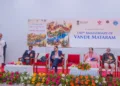
The inaugural session on August 1 was attended by Prof. Dr. Ramesh Srikonda, K. Hanumantha Rao, Dr. Buddha Chandrashekhar, K. Ramachandra Mohan, Prof. T. Narsing Rao and other dignitaries.
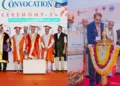
The valedictory session on August 2 was attended by Dr. K.T.V. Raghavan, Tejaswi Podapati, Dr. G. Lakshmisha, IAS, Swami Sthithikantananda, Prof. G.S.R. Krishna Murthy, Yalamanchili Satyanarayana Chowdary (Sujana Chowdary), MLA, Vijayawada West, Kolusu Parthasaradhi, Andhra Pradesh Minister for Information and Public Relations, and Anam Ram Narayana Reddy, Andhra Pradesh Minister for Endowments. Prizes were distributed to winners, while judges, sponsors and traditional Sthapatis were felicitated for their contributions.
Speaking to Organiser, Sangeetha Mishra, Director of AE Foundation, said the enthusiastic participation demonstrated the younger generation’s willingness to explore India’s traditional architectural knowledge while developing ideas for the future.
“The participants were enthusiastic and eager to explore ancient structures and develop ideas for the future. The potential among the younger generation and their interest in our culture, heritage and temple architecture is very promising,” she said.
Explaining the concept behind the design, a participant said the reinterpretation of the Shore Temple is centred around the idea that the journey to the Shiva Linga should be as significant as the destination itself. Instead of allowing immediate access to the temple, the design creates a sequence of experiences inspired by the five elements of nature—Bhoomi, Neer, Agni, Vayu and Aakash.
The experience begins at the entrance to the temple complex, where the visitor is greeted with a clear view of the temple but is unable to reach it directly. This intentional delay builds anticipation and encourages the devotee to slow down, allowing the senses and mind to gradually prepare before entering the sacred space.
A gently descending ramp forms the main processional path and becomes the key architectural element of the design. Throughout the descent, the temple remains in sight, maintaining a constant visual connection while postponing physical access.
The first half of the ramp represents Bhoomi through the use of natural stone and the feeling of moving into the earth. The second half represents Neer, where visitors walk barefoot through a shallow layer of water that symbolises cleansing before entering the temple.
Once inside, the remaining elements are experienced through the architecture itself—Agni through the play of natural light, Vayu through the movement of wind within the spaces, and Aakash through carefully framed views of the sky.
The design transforms the entire procession into a spiritual experience, where each element prepares the devotee before reaching the Shiva Linga, making the journey itself an act of worship.
The organisers said Sapta Sindhu 2026 sought to connect students, architects, traditional craftsmen, scholars and policymakers through a common platform dedicated to conserving India’s temple heritage and promoting awareness of its architectural legacy.