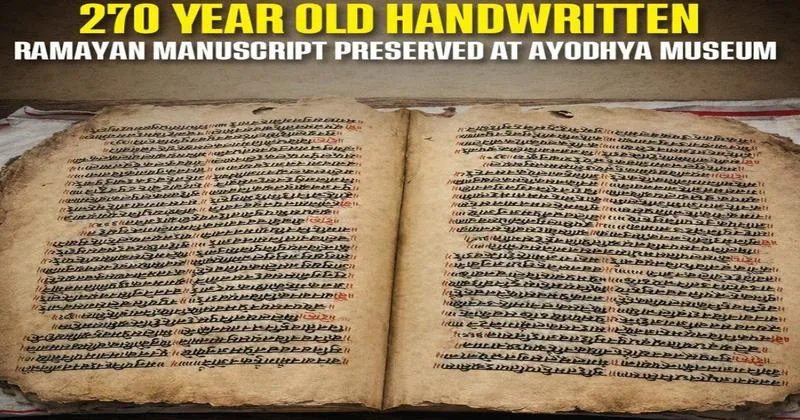
A rare handwritten manuscript of Tulsidas’ Ramcharitmanas, believed to be over 250 years old, is set to be preserved at the International Ramkatha Museum in Ayodhya, marking a significant step in safeguarding India’s literary and spiritual heritage. The manuscript, estimated to date back to around 1768 AD, is considered an invaluable cultural artefact that offers deep insights into the devotional and literary traditions of the Ramayana tradition in North India.
A rare handwritten manuscript of Tulsidas’ Ramcharitmanas, believed to be over 250 years old, will be preserved at Ayodhya’s International Ramkatha Museum.
The manuscript, estimated to date back to around 1768 AD, comprises nearly 650 pages written on traditional handmade paper… pic.twitter.com/RPBdLUrPa6
— DD News (@DDNewslive) June 17, 2026
A Glimpse into India’s Manuscript Heritage
The manuscript comprises nearly 650 pages, meticulously written on traditional handmade paper using red and black ink inscriptions. Despite the passage of time, the delicate pages still reflect the craftsmanship and devotion of scribes who painstakingly copied sacred texts by hand centuries ago.
Experts believe that such manuscripts are not only religious texts but also important historical documents that help researchers understand the evolution of language, script, and cultural practices during the period in which they were created.
Over the centuries, the manuscript has suffered significant wear and tear. Age-related degradation, along with termite infestation, has caused visible damage to several pages. However, conservation specialists have emphasised that the manuscript still retains its core literary and artistic value.
Efforts are now being directed toward careful preservation rather than restoration that might alter its original form. Experts highlight that even damaged manuscripts can provide crucial data for historians, linguists, and cultural scholars.
The manuscript has been acquired under the International Ramkatha Museum’s ambitious initiative titled the “Ramayana Manuscript Collection Yajna.” This project aims to collect, preserve, and digitise rare manuscripts and textual traditions related to the Ramayana across India.
Through this initiative, the museum seeks to build one of the most comprehensive archives of Ramayana-related manuscripts, ensuring that these cultural treasures are protected for future generations.
A Cultural and Scholarly Landmark
Once fully catalogued and preserved, the manuscript is expected to become a major attraction for both researchers and devotees. Scholars studying medieval Indian literature, religious traditions, and manuscriptology will gain valuable material for research.
For devotees, the manuscript offers a tangible connection to Ramcharitmanas, one of the most revered texts in Hindu devotional literature, composed by the saint-poet Goswami Tulsidas in the 16th century.
The inclusion of this rare manuscript in Ayodhya’s museum underscores the growing efforts to preserve India’s intangible cultural heritage in physical form. As conservation work progresses, the manuscript stands as a reminder of the enduring relevance of Ramcharitmanas in shaping spiritual thought, cultural identity, and literary tradition across centuries.
By safeguarding such treasures, institutions like the International Ramkatha Museum are not only preserving fragile pages of history but also keeping alive the timeless stories and values embedded within them.