
For centuries, blood has symbolised life, lineage and power. Yet for some royal families in Europe, blood carried a hidden danger, a rare inherited disorder that could turn a minor injury into a life-threatening crisis. Known as the “royal disease”, haemophilia affected the descendants of Queen Victoria and altered the fate of royal households, including that of Russia’s last Tsar, Nicholas II, whose son Alexei suffered from the condition.
More than a century later, far from European palaces, another story of haemophilia unfolded in Karnataka. Dr Suresh Hanagavadi, a doctor living with severe haemophilia B, a genetic bleeding disorder caused by deficiency of clotting factor IX, chose not to be defined by his illness. Instead, he dedicated his life to ensuring that thousands of people with haemophilia received the care and dignity he himself had once struggled to find.
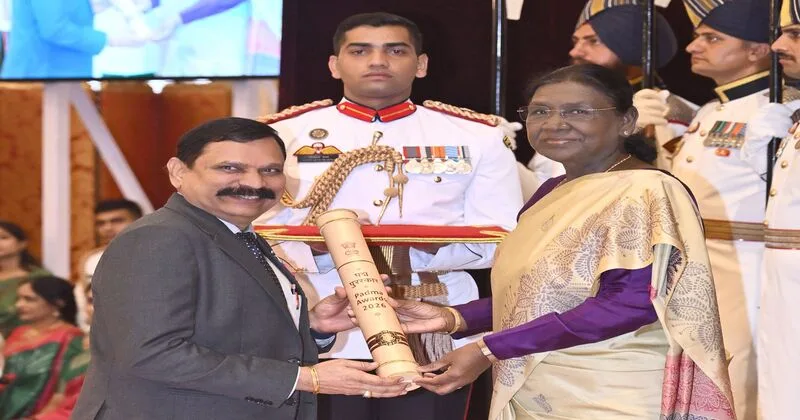
The Government of India recognised his lifelong contribution to haemophilia care and patient advocacy by conferring the Padma Shri on him in 2026.
Early life
Born into a family affected by haemophilia, with his mother being a carrier of the condition, young Suresh began showing signs of the disorder early in life, with bleeding spots appearing across his body. At a time when effective treatments were unavailable, doctors could only advise extreme caution to prevent injuries.
His maternal uncle, who also lived with haemophilia, endured years of suffering. Whenever bleeding occurred in the joints, the only available option was to immobilise the affected limb by tying it to bricks, recalls Dr Suresh.
The lack of adequate healthcare left families feeling helpless. Pursuing education while coping with repeated bleeding episodes added to the physical and emotional burden of his childhood.
As a child, Suresh dreamed of becoming a pilot. That dream changed after witnessing the suffering of his maternal uncle, who died following a severe brain bleed at a time when effective diagnosis and treatment were unavailable. Before his death, his uncle urged Suresh to become a doctor so others would not suffer as he had. Those words shaped the course of his life.
Despite frequent bleeding episodes, Dr Suresh completed his MBBS in Davangere, Karnataka before pursuing an MD in Pathology at the Karnataka Institute of Medical Sciences, Hubballi. He chose pathology knowing that the physical demands of many specialities might become difficult if his disability progressed. He later joined JJM Medical College, Davangere, as Professor of Pathology, a position he continues to hold, while simultaneously building haemophilia services.
The invisible burden
Childhood with haemophilia was marked by constant restrictions. Unlike other children, he could not participate freely in sports or play, as even minor injuries could lead to serious bleeding. Social acceptance of people living with haemophilia was poor.
Women who carried the haemophilia gene were often blamed within families for passing the disorder to their children. Many mothers lived with a deep sense of guilt as they watched their children endure repeated bleeding episodes.
His father hoped he would become a sportsperson. Wanting to fulfil that wish, young Suresh once entered an athletics competition, only to develop a painful bleed in his knee. Such episodes were common. He would miss classes until the swelling settled before returning to continue his studies.
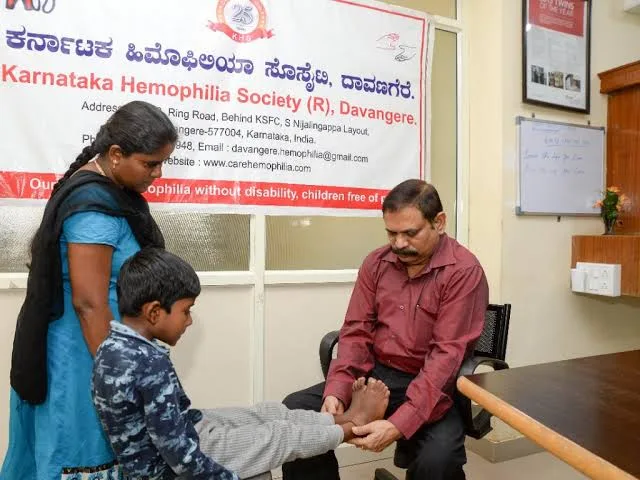
The birth of a mission
A turning point came when Suresh met 75-year-old Seshadri, whose son Ramakrishna had recently died due to haemophilia. The contacts and information gathered by Ramakrishna regarding haemophilia care, which he was interested in building on before his death, provided Suresh with a direction and renewed his efforts towards building organised haemophilia care.
Among those contacts was Ashok B Varma, another person living with haemophilia who had received treatment from the renowned Italian haematologist Dr Pier Mannuccio Mannucci, a pioneer in haemophilia care. Inspired by the work of Dr Mannucci and the need for organised support for patients in India, Ashok Varma established the Haemophilia Federation of India (HFI).
Taking forward the initial efforts initiated by Ramakrishna, Suresh established contact with the World Federation of Haemophilia (WFH) during his final year of MBBS. These efforts culminated in the formation of the Karnataka Haemophilia Society (KHS) in 1989. What began with only a handful of identified patients gradually grew into one of India’s leading haemophilia support organisations.
At the time, awareness about haemophilia was limited, many patients remained undiagnosed, and treatment was beyond the reach of most families. Patients depended largely on blood products such as cryoprecipitate, while modern clotting factor concentrates were scarcely available in India.
Determined that his patients should not be denied life-saving treatment, Dr Suresh reached out to medical colleagues in Europe and other Western countries to obtain clotting factor concentrates for those who urgently needed them.
He recalls the story of a young boy with haemophilia who survived a life-threatening brain bleed because timely factor treatment was available. That child later went on to graduate from the Indian Institute of Technology and is now contributing to the nation, serving as a powerful reminder of how early diagnosis and appropriate treatment can transform lives.
Changing the system
Dr Suresh soon realised that relying on donated medicines from overseas could not be a sustainable long-term solution. Along with fellow clinicians, including the renowned haematologist Dr Mammen Chandy, who provided invaluable guidance and support throughout this journey, as well as patient groups and advocates, he embarked on years of persistent advocacy, legal efforts and engagement with government authorities to secure public funding and ensure sustained access to haemophilia treatment.
These efforts helped Karnataka become one of the first states in India to provide clotting factor concentrates through the public healthcare system. The introduction of prophylactic therapy, regular administration of clotting factors to prevent bleeding, transformed the outlook for children with haemophilia.
Having himself experienced the disabling effects of repeated joint bleeds, Dr Suresh made it his life’s mission to ensure that no child with haemophilia would develop preventable disability.
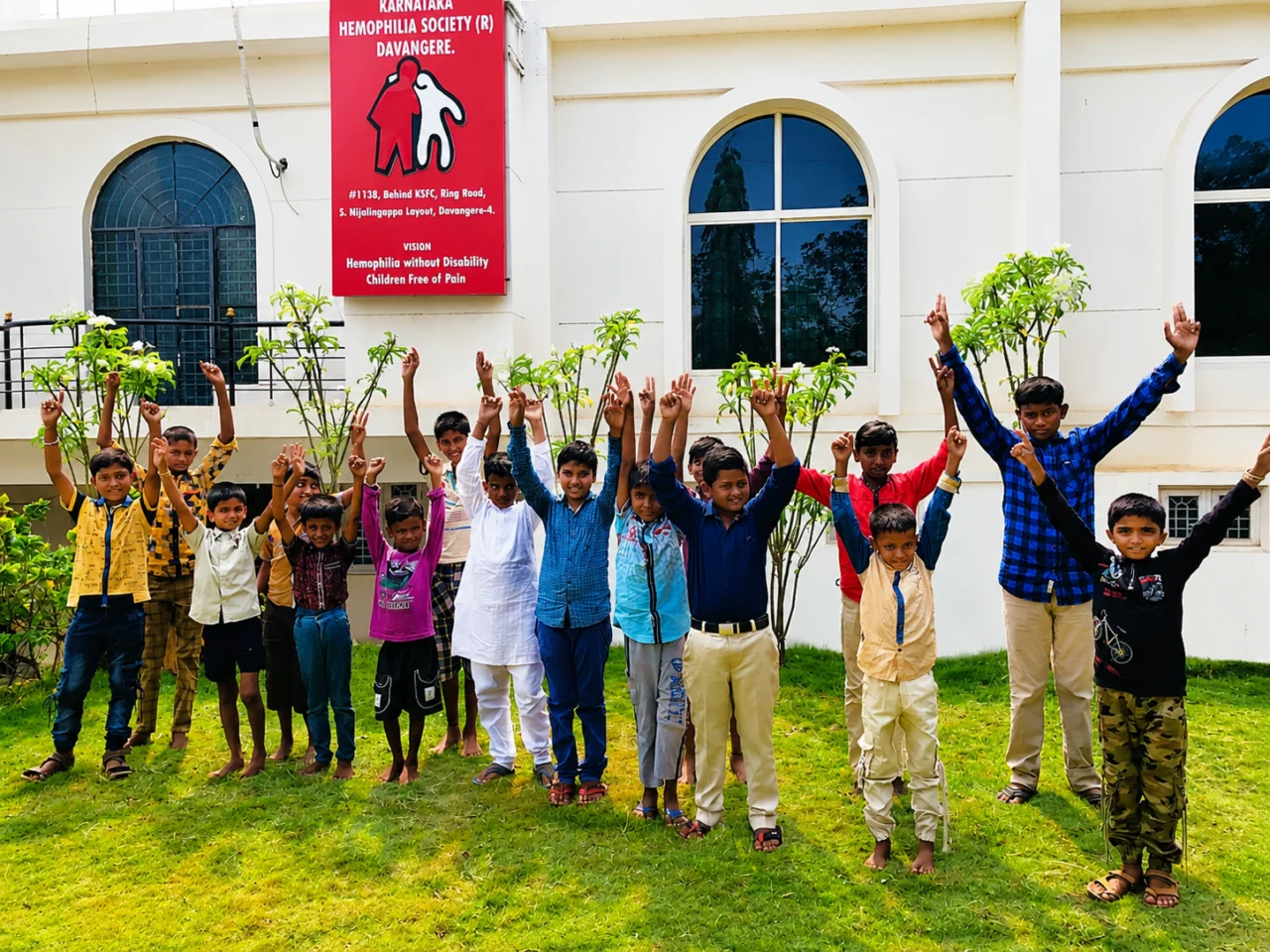
Building a centre of care
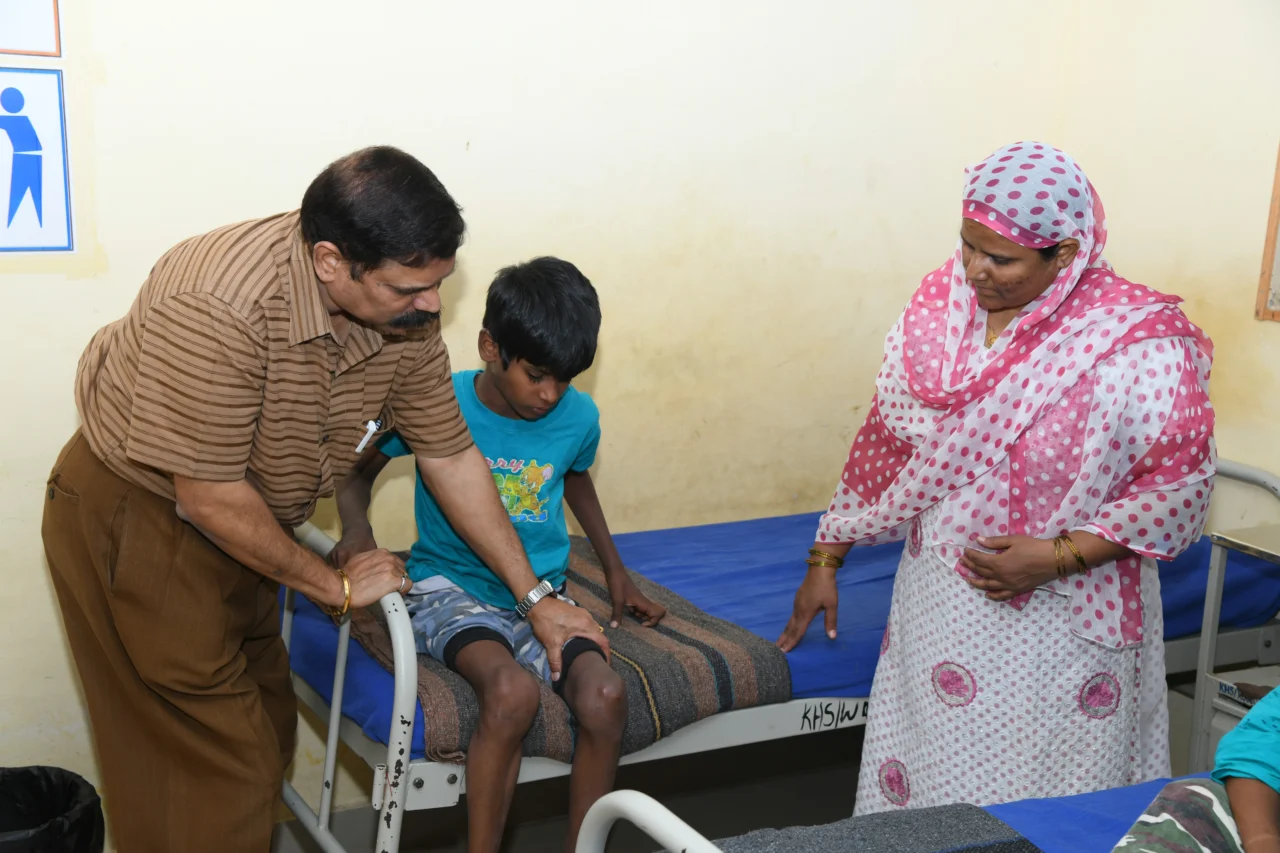
Today, Dr Suresh leads the Karnataka Haemophilia Care and Haematology Research Centre in Davangere, serving patients across central and north Karnataka. The centre provides comprehensive diagnosis, clotting factor replacement therapy, physiotherapy, rehabilitation, patient counselling and long-term follow-up.
Emergency ambulances that cover a 150 km radius, equipped with clotting factor concentrates, enable treatment to begin even before patients reach the hospital. Over the years, the centre has become a lifeline for people with haemophilia across North Karnataka.
The journey continues
Haemophilia was included under the Rights of Persons with Disabilities Act in 2016. However, it is not recognised as a benchmark disability, preventing many affected individuals from accessing employment reservations and certain other benefits.
Dr Suresh continues to campaign for this recognition, believing that people with haemophilia deserve not only modern treatment but also equal opportunities to study, work and live with dignity.
Perhaps Dr Suresh Hanagavadi’s greatest achievement is not the Padma Shri itself, but the transformation of haemophilia care in Karnataka. A disease once associated with delayed diagnosis, disability and despair has, through decades of his work, become one where early diagnosis, preventive treatment, rehabilitation and hope are realities for thousands of families.
His is the remarkable story of a patient who became a physician, a physician who became an advocate, and an advocate who transformed haemophilia care for generations to come.