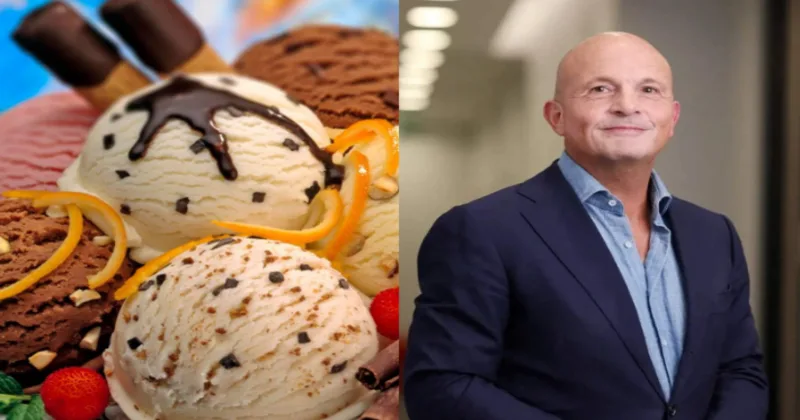
Ice creams, a favourite dessert among the consumers that act as a cooling agent to beat the unbearable heat of the summers. It is a symbol of rejuvenation and refreshment. However, if the big food corporations who are the trusted ice cream manufacturing brands violate the fundamentals of yielding healthy food and operate on profit principle, what will be the solution and won’t the health of the trusted consumers be at stake? Such a debate has been sparked across India, when Kwality Walls, an ice cream manufacturing giant with significant consumer footprint across India announced that it is completely switching to milk-based products from next year.
The Magnum ice cream company global CEO Peter ter Kulve said that Indian ice cream ecosystem is set for the biggest overhaul and strategic reset. Accordingly, Kwality Walls is set for a sweeping shift and the ice creams will be completely milk-based. It is drifting away from the frozen desserts manufactured with edible vegetable fats or popularly called as palm oil and is set to cater to its consumers in India with purely milk-based nutritious ice creams. The Unilever ice cream business is thus betting huge on the Indian market with hundreds of crores of investment and shifting to ice creams made with dairy products. In this direction, the Netherlands-based ice cream giant is also setting up a huge cold chain infrastructure in India and planning to deploy millions of cold cabinets for producing best quality and nutritious ice cream.
BIG WIN for India!
For years, many companies in India sold "frozen desserts" in the name of ice cream using palm oil and other vegetable fats instead of real milk.
But today, Kwality Wall's global CEO has announced that by next year, their products will become real ice creams,… pic.twitter.com/nDkN02lYIV
— Revant Himatsingka “Food Pharmer” (@foodpharmer2) May 30, 2026
Do big food giants prioritise profit over consumers’ health?
The decision of the Kwality Walls to completely shift to milk based products is appreciable as it is a pivotal step in streamlining the healthier fast food culture in India. However, it has ignited the debate over how the big food corporations operate and exploit the large Indian market for profits. Questions raised over selling frozen desserts made with vegetable fats such as palm oil under the label of ice cream. People who have limited knowledge and awareness about the differences between frozen dessert and ice cream consume it at the cost of their health and food companies extract profit. Thus, whether food giants make use of the big domestic Indian market to earn huge profits at the cost of people’s health is a major concern.
Awareness is the key to revolutionise healthier fast food ecosystem
In this direction, many food experts and influencers have consistently tried to create awareness about the harmful effects of fast food. People are urged to read and check the packaging and label of a product to gain awareness about the ingredients used and their health impact, prior to consuming it. Accordingly, the consumers can choose wisely and vigilantly about the products they consume and decide what is good and bad for their health. Thus, the decision by the Kwality Walls can be considered as a benchmark in revolutionising a healthier fast food ecosystem and culture in India. In this direction, Amul, the home-grown dairy brand stands as a testament to catering natural and quality products to the consumers at affordable prices, as they produce completely dairy-based ice creams and have huge market footprint as well.