
Few of the world’s great rivers possess the historical depth, civilisational significance, and cultural importance of the Sindhu river, the Sindhu is far more than just a river. It is a living symbol of our ancient heritage, cultural continuity, spiritual traditions, and geopolitical realities.
For millennia, the Sindhu has nurtured civilisations, inspired religious thoughts, fostered trade and communication, and shaped the political future of South Asia. The river’s significance is so profound that names such as Hindu, Hindustan, and India are all fundamentally derived from the word Sindhu. In many ways, the story of the Sindhu is inseparable from the story of Bharat itself. The river holds a special place in the Indian consciousness, as it bridges the country’s ancient past with its modern aspirations. From the prosperous cities of the Indus Valley Civilisation to contemporary concerns regarding water security and national sovereignty, the Sindhu has continuously influenced Bharat’s identity and strategic outlook. Therefore, understanding the Sindhu river is essential to comprehending the historical evolution, cultural diversity, religious traditions, and geopolitical challenges of the Indian subcontinent.
Journey of Sindhu River
The Sindhu river originates near Mount Kailash in Tibet, a site revered as sacred in several religious traditions. From there, it flows North Westward through the high-altitude deserts of Ladakh, entering regions that have historically served as meeting points between Bharat, Central Asia, and Tibet. After traversing Ladakh, the river enters Pakistan, flowing through the provinces of Gilgit-Baltistan, Khyber Pakhtunkhwa, Punjab, and Sindh before reaching the Arabian Sea.
Spanning approximately 3,180 kilometers, the Sindhu is one of Asia’s longest rivers. Its major tributaries – the Jhelum, Chenab, Ravi, Beas, and Sutlej – combine to form one of the world’s largest river systems. For millennia, these tributaries have sustained agriculture, trade, and urban settlements.
The most renowned chapter in the history of the Sindhu river is associated with the Indus Valley Civilisation, which flourished roughly between 3300 BCE and 1300 BCE. Considered one of the world’s earliest urban civilisations alongside those of Mesopotamia and Egypt, it developed along the banks of the Sindhu river and its tributaries. Archaeological discoveries at sites such as Harappa, Mohenjodaro, Dholavira, Kalibangan, Banawali, and Rakhigarhi reveal a highly advanced society characterised by excellent urban planning, standardised construction techniques, extensive trade networks, and impressive civic infrastructure. Towns and cities of the Indus Valley Civilisation featured wide roads laid out in a grid pattern, sophisticated drainage systems, public baths, granaries, and well-planned residential areas. Such a level of urban development was unprecedented for the time, reflecting a highly organised society with strong administrative capabilities. Agriculture formed the backbone of this civilisation’s economy. Annual floods from the Sindhu river deposited fertile silt across the plains, enabling the cultivation of crops such as wheat, barley, cotton, and sesame. Agricultural surpluses facilitated population growth, the division of labour, and the development of trade networks extending to distant regions like Mesopotamia and the Persian Gulf. The prosperity and stability of this civilsation relied heavily on the Sindhu river, without its waters, fertile plains, and transport routes, the development of one of humanity’s earliest urban societies would not have been possible.
Vedic Literature link
Even after the decline of the Indus Valley Civilisation, the Sindhu river retained a central place in the cultural and religious consciousness of the Indian people. The river is mentioned extensively in the Rig Veda, the oldest text of Indian civilisation. In Vedic literature, the Sindhu is described as the ‘King of Rivers’ powerful, majestic, life-giving, and worthy of reverence. Numerous hymns extol its power and grandeur. The river was not merely a physical entity but a sacred force that sustained life and embodied divine power. The concept of ‘Sapta Sindhu’ holds a significant place in the Vedic tradition. This region is often regarded as the cradle of early Vedic culture and the birthplace of many religious and philosophical traditions that later evolved into Hindu civilisation.
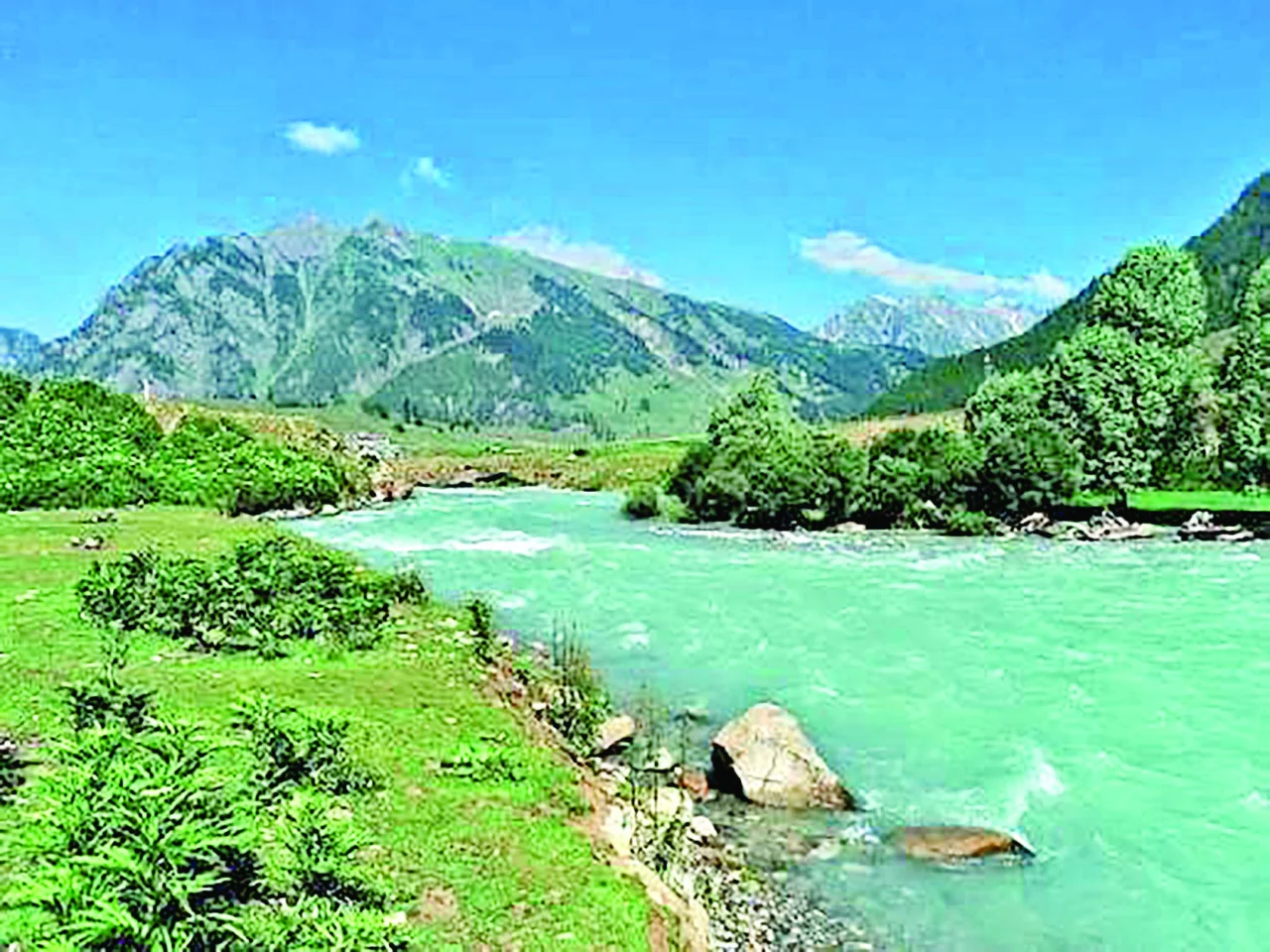
The Vedic reverence for rivers reflects a broader Indian worldview in which nature was considered sacred and inextricably linked to human existence. The Sindhu river symbolised abundance, purity, prosperity, and continuity; it was viewed as both a physical source of sustenance and a spiritual source of inspiration. The importance accorded to the Sindhu in Vedic literature demonstrates that the river’s significance transcended geographical boundaries to become an integral part of the civilisation’s consciousness.
The cultural legacy of the Sindhu extends far beyond archaeological discoveries and historical records. For millennia, the river has served as a conduit for cultural interaction, human migration, artistic exchange, and intellectual growth. Communities living along the banks of the Sindhu developed distinct traditions while simultaneously participating in extensive exchange networks. The river connected regions that, while now separated by political boundaries, were once part of a single civilisation. Trade routes along the Sindhu facilitated the movement of goods, ideas, technologies, and beliefs between South Asia, Central Asia, and the West Asia. Merchants, scholars, travelers, and spiritual masters traversed these paths, contributing to the creation of a vibrant cultural milieu.
Spiritual Significance
The Sindhu river holds a highly sacred place in India’s religious traditions. In Sanatan thought and tradition, rivers are often regarded as embodiments of divine power, they symbolise purification, renewal, and the cycle of life. The sanctity of the Sindhu is rooted in ancient Vedic traditions, where it was considered one of the most important rivers in the world of that era. The rituals, hymns, and religious customs associated with the river reflect a profound spiritual bond between humanity and nature. The river is also linked to the sacred geography of the Indian subcontinent. Its source lies near Mount Kailash, a site revered by followers of Hindu, Buddhist, Jain, and Bon traditions, which further enhances its spiritual significance.
Historically, the Sindhu river has served as the economic lifeline of Northwestern South Asia. Agriculture, trade, transportation, and human settlement have all depended on the river’s waters. Trade routes along the Sindhu connected the hinterlands to the maritime networks of the Arabian Sea. These routes facilitated commercial exchange with Persia, Mesopotamia, Central Asia, and, subsequently, the Islamic world. Even in the modern era, this river system is vital for agriculture, irrigation, hydroelectric power generation, and industrial development.
The Sindhu river basin supports a diverse range of ecosystems and biodiversity. Glaciers, wetlands, forests, grasslands, and riparian zones contribute to ecological balance and environmental stability. However, this river system faces numerous challenges today. Environmental degradation not only impacts biodiversity but also jeopardises food security, water availability, and economic development. Therefore, the sustainable management of the Sindhu basin is essential for the well-being of future generations. Protecting the river requires coordinated efforts, including scientific research, environmental conservation, efficient water management, and international cooperation.
Symbol of National Unity
Beyond its historical, cultural, and strategic dimensions, the Sindhu stands as a powerful symbol of national unity. It reminds Indians of a shared civilisational heritage that transcends regional, linguistic, and religious differences. The river connects modern-day India to a past spanning millennia. It embodies resilience, continuity, and cultural self-assurance. In a rapidly changing world, the Sindhu serves as a reminder of the enduring foundations upon which Indian civilisation was built. The annual “Sindhu Darshan Yatra” and Sindhu Kumbh festival in Ladakh reinforce this message. By bringing together people from diverse backgrounds, it pays tribute to a river that is an integral part of the nation’s collective memory. The story of the Sindhu demonstrates that rivers are not merely physical resources; they are bearers of history, culture, identity, and national aspirations.
The Sindhu river holds a unique and unparalleled place in Indian civilisation. It nurtured one of the world’s earliest urban cultures, inspired Vedic hymns, shaped religious traditions, fostered trade and cultural exchange, and gave India its name. Throughout millennia of history, the river has remained a source of prosperity, spirituality, and identity. Even today, the Sindhu holds immense economic, environmental, and strategic significance. At a time when climate change, geopolitical rivalry, and water security concerns are reshaping global priorities, the importance of the Sindhu has grown more than ever.
For Bharat, the Sindhu is not just a river flowing through mountains and plains, it is a civilisational symbol, a sacred heritage, and a strategic asset. Its waters embody memories of ancient cities, the wisdom of Vedic traditions, the aspirations of modern India, and hopes for future generations. Therefore, the conservation and responsible management of the Sindhu river is not merely an environmental necessity but also a national responsibility. Protecting the Sindhu means safeguarding a vital part of Bharat’s history, culture, identity, and future.