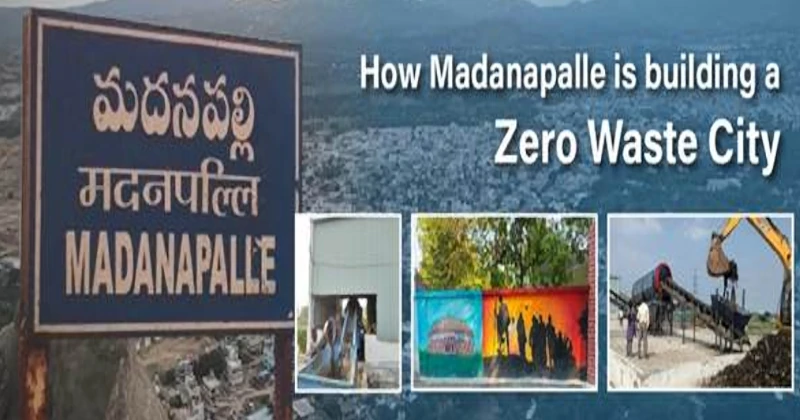
Once burdened by mounting garbage and shrinking landfill space, Andhra Pradesh’s Madanapalle is rewriting the rules of urban waste management. Instead of treating waste as a liability, the municipality is transforming it into compost, recycled materials, green landscapes, and even public art bringing the vision of a ‘Zero Waste City’ closer to reality under the Swachh Bharat Mission-Urban (SBM-U) 2.0.
Generating nearly 62 tonnes of municipal solid waste every day, Madanapalle faced the same challenge confronting many Indian towns—how to manage growing volumes of waste without creating environmental hazards. Today, its answer lies in scientific segregation, decentralized processing, and active citizen participation.
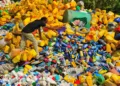
The municipality has introduced a structured system that segregates waste at the source into biodegradable, non-biodegradable, and upcycling categories. This simple but critical intervention has significantly improved recycling efficiency while reducing the amount of mixed waste reaching disposal sites.
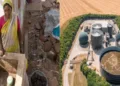
A major pillar of Madanapalle’s strategy is decentralised composting. Bulk Waste Generators have been encouraged to install on-site composting systems, while households are increasingly embracing home composting and terrace gardening to treat wet waste where it is generated.
At the municipal compost yard, nearly 15.5 tonnes of wet waste is processed daily through windrow composting, producing around 4.65 tonnes of compost used in parks, plantations, and public gardens. Another 3 tonnes of wet waste undergoes vermicomposting every day, yielding 1.2 tonnes of nutrient-rich organic manure, reducing dependence on landfills while promoting sustainable agriculture and landscaping.
How is Madanapalle becoming a Zero Waste City❓
⮕ Everyday waste is being turned into a resource in Madanapalle, Andhra Pradesh
⮕ Under #SwachhBharat Mission–Urban 2.0, the Madanapalle Municipality is transforming the way waste is managed
♻️ Bulk Waste Generators are setting… pic.twitter.com/8wOGkAQmTF
— PIB India (@PIB_India) July 27, 2026
Dry waste management has also undergone a complete transformation. Recyclable materials are channelled to the municipality’s Material Recovery Facility (MRF) before being sent to authorised recycling units. Non-recyclable waste, instead of being dumped, is transported to cement factories for co-processing, converting waste into industrial fuel while generating additional municipal revenue.
The municipality has also expanded its circular economy initiatives through its Reduce, Reuse and Recycle (RRR) Centre, where e-waste, old clothes, books, toys, and footwear collected through door-to-door campaigns are repaired, reused, or distributed to slum communities, homeless citizens, and old-age homes.
Perhaps the most striking transformation lies in the city’s battle against legacy waste.
Through bio-mining and bio-remediation, Madanapalle has scientifically cleared nearly 36,512 metric tonnes of accumulated legacy waste, reclaiming approximately 9.4 acres of land that had long remained unusable. Around 5 acres of this reclaimed land have already been converted into green spaces through plantation drives, replacing garbage mounds with urban greenery.
Recovered Refuse Derived Fuel (RDF) is supplied to cement industries for co-processing, while excavated soil and inert materials are reused to fill low-lying areas, ensuring that even old waste contributes to productive use.
The municipality has also turned waste into a tool for public awareness. Discarded tyres and other waste materials have been transformed into artistic installations across parks and public spaces. The Waste-to-Art Park at NVR Layout, along with colourful murals promoting cleanliness, hygiene, and waste segregation, serves as a constant reminder that sustainability begins with everyday choices.
Madanapalle’s model demonstrates that effective waste management extends far beyond collection it requires scientific processing, resource recovery, community ownership, and long-term planning. As Indian cities grapple with increasing waste generation, the Andhra Pradesh municipality is emerging as a compelling example of how integrated waste management can reclaim land, create green spaces, reduce landfill dependence, and move steadily towards the ambitious goal of becoming a Zero Dump, Zero Littering City.