We are living in strange times. At one end of the spectrum, we have Skyroot Aerospace, a Hyderabad-based private startup in the space sector which successfully launched the Vikram-1 orbital rocket on July 18. The average age of this startup with 1,000-plus employees is 28 years. This success in the space sector is extraordinary because it made India the third country after the US and China to acquire private orbital launch capability. The media did cover this magnificent event for a couple of days and then lost interest.
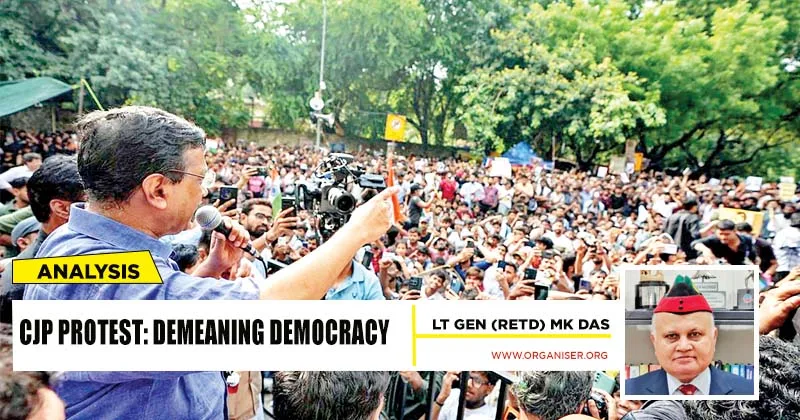
On the other end of the spectrum, we have a student-led protest at Jantar Mantar in Delhi where the average age of the protestors also appears to be at least 28 years. The protests over education-related concerns, including paper leaks, have continued amid a full media blitz, even after the Government conducted the re-NEET examination on June 21 with the strictest checks and balances. More than 11.21 lakh candidates qualified in the NEET exam results declared on July 16, and these students will now be busy with the counselling process for admission to their college of choice. Since no one has questioned the fairness of the re-NEET exams, I take it that the students who did not make it this time are looking at other career options. It is unlikely that a student who has a career ahead is likely to be partaking in such protests in Jantar Mantar.
Political Mobilisation
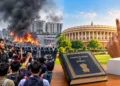
Even if we take it that the protests and dharna in New Delhi are raising student-related concerns, then the damage to public infrastructure and injuries to several policemen raise serious questions over their actual intentions. To coincide with the monsoon session of the Parliament, the students’ agitation has now been hijacked by the Opposition parties. All the evidence now points to the fact that the protests were initially sponsored by vested interests and are now a fully orchestrated political mobilisation. The media is having a gala time giving a live commentary, and all the focus is on this meaningless drama. The opposition also gets a legitimate excuse to boycott the monsoon session of the Parliament.
The above chaotic situation and a similar pattern around every session of the Parliament make me ask a fundamental question. My query simply is: do the protests in Delhi, especially at Jantar Mantar, represent the national sentiments? New Delhi is the capital of India and houses the temple of democracy called Parliament. All the departments of the Central Government are located here. One hundred and sixty-two Embassies/High Commissions are also located in New Delhi and provide wider visibility. Of late, Jantar Mantar has become a high-visibility rallying point for activists and civil society groups. More often than not, the protests here are politically motivated. There are also allegations of the involvement of the deep state and other anti-national forces in such agitations.
I am of the firm opinion that a protest or agitation in Delhi does not automatically represent the sentiment of the nation. There is every reason to believe that most of these agitations are more of a political campaign for vested interests. It is no coincidence that a few farmer bodies also had planned a march to Delhi on July 21. It may be recalled that the farmers’ agitation in 2020-2021 against Farm Laws in Delhi did not represent the interests of all the farming community in India. The core base of this farmers’ agitation was from Punjab, Haryana and Western UP, though the media portrayed it as a national cause. Similar is the case now too.
Unfortunately, we are increasingly noticing a pattern where protests or agitations in Delhi or Jantar Mantar are portrayed as national sentiments. This shortcut approach of the Opposition does not augur well for a proud democracy like India
The Government of the day should take note of any peaceful protest in any part of the country. Some issues being raised in such protests do involve national sentiment and the Government should act to carry out the necessary corrective action. For example, PM Modi stated on July 21 that those involved in paper leaks must face strict action and those held responsible should get the strictest possible punishment. PM Modi also said that the paper leaks are a matter of national concern and must not be politicised. I have a firm belief that the Government under PM Modi would take all possible steps to prevent any paper leak in the future. Similarly, the State Governments should also initiate foolproof examination systems.
I am of the firm opinion that the Parliament, as the temple of democracy, should set the national discourse in India. Similarly, the State Assemblies should be the mouthpiece for the public interest issues of the State. Unfortunately, we are increasingly noticing a pattern where protests or agitations in Delhi or Jantar Mantar are portrayed as national sentiments. This shortcut approach of the Opposition does not augur well for a proud democracy like India. Such an approach is also vulnerable to political mudslinging and extraneous anti-national forces. My military sense tells me that such narratives also pose a threat to national security. Therefore, it is now up to the political leadership of the country to get serious about the constitutional values and focus on nation-building through youth dividend in Bharat.