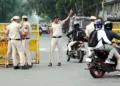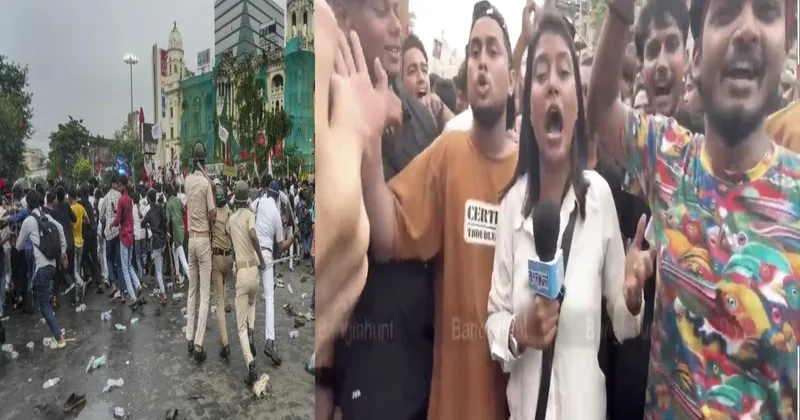
KOLKATA: On 24 July, Kolkata witnessed a protest that was projected as a demonstration in solidarity with NEET aspirants. Every citizen in a democracy has the right to protest peacefully, and students, in particular, have every right to raise their voices if they believe an examination process has been unfair or unjust. That principle should never be questioned. What deserves to be questioned, however, is whether this was truly a student movement—or whether it became yet another political spectacle disguised as one.
One cannot help but ask a simple question: how many genuine NEET aspirants were actually present at this protest? There may indeed have been students with legitimate grievances. Their concerns deserve to be heard with seriousness and empathy. But judging by the images and reports emerging from the event, it appeared that political organizations and familiar ideological groups occupied a far more prominent space than the students themselves.
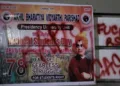
The participation of activists associated with the CPI(ML) Liberation-linked student platform AISA and the support of the Students’ Federation of India (SFI) raised a larger question. When political organisations dominate what is presented as a student protest, does the original cause remain the central issue, or does it become another battlefield in ideological politics? If the objective was justice for NEET aspirants, then the focus should have remained squarely on education, transparency, and examination reforms. Instead, the protest increasingly resembled a political mobilisation. Even more disturbing were reports of journalists and media personnel allegedly being attacked during the demonstration.
Journalists are not enemies of a protest. They are there to document events, ask questions, and inform the public. A democratic movement should welcome scrutiny rather than fear it. When media personnel are intimidated or physically attacked, it raises uncomfortable questions about the intentions of those claiming to defend democratic values.
The irony becomes even sharper when viewed in light of the slogans often associated with some of these very organizations. Certain Left-affiliated groups have frequently raised slogans such as “Manuvad se Azadi”, presenting themselves as champions of social justice, equality, and women’s rights. Those ideals, if sincerely held, deserve respect. But if women journalists are allegedly pushed, intimidated, or assaulted during a protest supported by these same ideological circles, then one must ask: where does that commitment to women’s dignity disappear?
Principles cannot exist only in speeches and slogans. They must be visible in conduct. If one genuinely believes in gender equality, then that belief must extend equally to every woman, regardless of whether she is a journalist, a political opponent, or someone asking inconvenient questions. Otherwise, slogans become little more than political branding.
Among the many placards carried during the protest, one attracted particular attention. It read: “Can you find the democracy, Mitro?” It is an interesting question.
Yes, I can find democracy. I find it in the very fact that thousands of people were able to gather in Kolkata and criticize the government without fear of the protest itself being outlawed. I find it in the presence of television cameras covering the demonstration. I find it in newspapers publishing criticism of governments every single day. I find it in courts hearing petitions against executive decisions. I find it in elections where governments rise and fall through ballots rather than bullets. Democracy is not the absence of disagreement. Democracy is precisely the ability to disagree openly.
The sarcastic slogan therefore misses an important reality. Those carrying that placard were themselves exercising democratic rights guaranteed by the Constitution of India. Their freedom to protest was itself evidence that democracy exists. This does not mean India is perfect. No democracy is. Every democratic society has flaws, institutional weaknesses, and legitimate public grievances. Governments deserve criticism whenever they fail, and citizens must remain vigilant in holding power accountable.
Equating India with authoritarian regimes ignores the lived reality of people who have never enjoyed the freedoms that Indians often take for granted. If someone sincerely believes that democracy does not exist in India, perhaps they should first witness life in countries where dissent is treated as a crime rather than a constitutional right. Visit China and see how tightly public criticism of the ruling establishment is controlled. Observe Afghanistan under the Taliban, where even the most basic freedoms—particularly for women—have been systematically stripped away. Look at Iran, where anti-government protests have often been met with brutal crackdowns, mass arrests, and severe punishments. Then return to India, where people openly criticize governments, organize demonstrations, hold press conferences, challenge policies in courts, and contest elections. The contrast is impossible to ignore.
The greatest strength of Indian democracy is not that it is flawless. It is that it allows criticism—even harsh criticism—to coexist with constitutional order. That is why violence during a protest is so disappointing. Whether the victim is a police officer, an ordinary citizen, or a journalist, aggression weakens the moral legitimacy of any movement. A cause rooted in justice cannot be advanced through intimidation.
Students deserve better than becoming instruments in ideological battles. Genuine educational concerns should never be overshadowed by partisan agendas. Nor should journalists become targets simply for doing their job. If 24 July was indeed a student protest, then let students lead it. Let their voices, not political organizations define its character. Let debate replace aggression. Let questions replace intimidation. And let democratic rights be exercised with democratic responsibility. Only then can a protest truly claim the moral authority it seeks.