Indian Railways has unveiled another major round of reforms aimed at transforming freight transportation and making rail logistics more competitive, efficient and environmentally sustainable. Railway Minister Ashwini Vaishnaw announced eight fresh structural reforms that span freight movement, project execution, contractor management, skill certification and private sector participation.
Addressing a press conference at Rail Bhawan in New Delhi, Vaishnaw said the reforms are designed to reduce logistics costs, improve supply chain efficiency, encourage innovation and strengthen India’s freight ecosystem. He said the reforms announced earlier under the Reform Express initiative have already started producing encouraging results, and the latest package will further modernise the country’s rail freight network.
The Reform Express initiative, launched by the Ministry of Railways, aims to introduce one major reform every week. With Tuesday’s announcements, the ministry has completed 17 reforms and plans to roll out another 35 over the coming months.
The minister said improving freight efficiency is essential for supporting India’s growing economy, reducing transportation costs and making domestic industries globally competitive.
Cleaner Fly Ash Transportation
One of the most significant reforms announced relates to the transportation of fly ash, a by-product generated by coal-based thermal power plants.
At present, fly ash is largely transported in open railway wagons, leading to considerable dust pollution during loading, transit and unloading. To address this issue, Indian Railways has introduced a policy allowing fly ash to be transported in ISO-standard closed containers.
Vaishnaw said India generates nearly 340 million tonnes of fly ash every year, while Indian Railways transported around 13 million tonnes during the financial year 2025-26. Under the new policy, containers can be loaded directly at thermal power plants and unloaded at their destination without exposing the material to the atmosphere.
The ministry believes the move will significantly reduce dust emissions, improve environmental protection and make the handling process more efficient. The reform is also expected to enhance logistics planning and reduce material losses during transportation.
Single Licence for Container Train Operators
Indian Railways has also overhauled its licensing framework for Container Train Operators (CTOs) to make the system simpler and more investor-friendly.
Earlier, operators were classified into four different categories, each with separate operational permissions and licence fees ranging from Rs 10 crore to Rs 50 crore. The ministry has now replaced the category-based system with a single Pan-India licence carrying a uniform non-refundable registration fee of Rs 25 crore.
Officials said the reform removes unnecessary regulatory complexities and provides equal opportunities for all operators to run services across the country. The simplified framework is expected to improve the ease of doing business, attract greater private investment and encourage wider use of containerised freight movement.
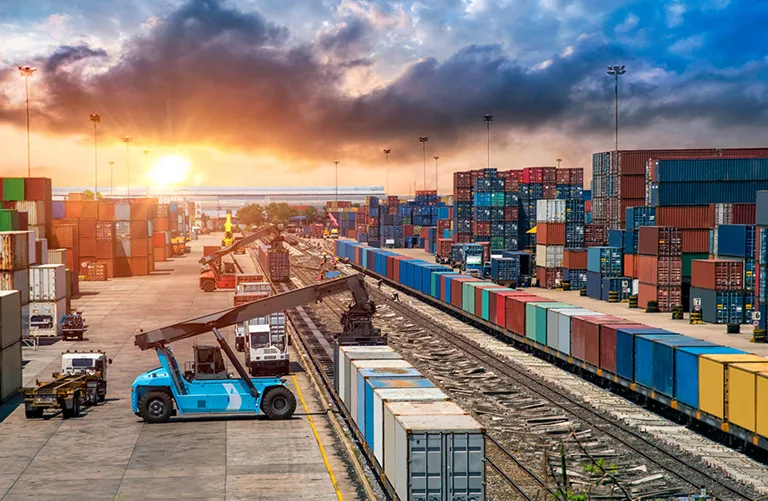
Containerisation is considered one of the most efficient modes of freight transportation as it reduces handling time, lowers damage to goods and allows seamless movement across different modes of transport.
Simplified Fertiliser Transportation
The Railways has also introduced major changes in the transportation of fertilisers by simplifying freight charges and expanding the use of containers.
Previously, freight calculations for fertilisers were based on nearly 50 different tariff slabs, making the system complex for both customers and railway officials. The new policy replaces this with a simple per tonne per kilometre pricing model.
According to the ministry, the revised pricing system will make freight charges more transparent, predictable and easier to calculate.
The reform also permits fertilisers to be transported through containers, allowing partial unloading at multiple destinations instead of holding up an entire rake until complete unloading at a single location. This is expected to improve wagon turnaround, reduce congestion at freight terminals and minimise damage caused by exposure to rain and moisture.
Officials said the new system would make fertiliser distribution faster and more efficient, particularly during peak agricultural seasons.
Certification of Skilled Workers
To improve the quality of railway infrastructure projects, Indian Railways has introduced a comprehensive certification policy for skilled workers engaged in specialised construction activities.
The certification programme will cover trades such as welding, masonry, fitting and other technical works that require specialised expertise.
Workers will undergo practical and oral assessments conducted by designated agencies. Those who qualify will receive QR code-enabled certificates linked to a live digital verification system, allowing contractors and railway authorities to instantly verify their credentials.
The ministry said the certification framework will initially be implemented in complex engineering projects such as bridges and tunnels before being expanded across all railway zones over the next two years.
Officials believe the initiative will improve workmanship, enhance safety standards and create a more skilled workforce for India’s rapidly expanding railway infrastructure projects.
Reforms to Speed Up Project Execution
The Ministry of Railways has also announced a fresh set of reforms aimed at reducing project delays, improving transparency and strengthening contractor accountability.
Under the revised framework, contractors will now submit 10 per cent performance security upfront instead of having deductions made from their running bills. Officials said this would improve liquidity for contractors and enable smoother execution of projects.
The ministry has also introduced stricter eligibility criteria for contractors. Companies involved in litigation exceeding 50 per cent of their net worth will no longer be allowed to participate in railway tenders.
In another major change, Contractor’s All Risk Insurance and Professional Indemnity Insurance have been made mandatory for all railway construction projects. The ministry said the move will improve financial security and ensure better risk management during project execution.
To minimise delays caused by land acquisition issues, Indian Railways has also introduced a structured land handover mechanism, ensuring construction agencies receive project sites in a more organised and time-bound manner.
Highlighting the use of technology in project execution, Railway Minister Ashwini Vaishnaw also showcased Rail Bhoomi, a digital platform developed by the Centre for Railway Information Systems (CRIS) to streamline land acquisition and project monitoring.
The platform has been designed to digitise railway land records, monitor project progress in real time and improve coordination between various departments involved in infrastructure development. Officials said the system would help identify bottlenecks at an early stage, improve transparency and accelerate decision-making.
According to the ministry, digitising land management will significantly reduce delays arising from land acquisition and improve the overall pace of railway infrastructure projects across the country.
Private Sector to Design Freight Wagons
One of the most significant policy changes announced under the latest reform package is the opening up of freight wagon design to private industry.
Until now, specialised freight wagon designs were largely developed by the Research Designs and Standards Organisation (RDSO). Under the new framework, manufacturers and industries will be allowed to design wagons tailored to the transportation needs of specific commodities.
These wagon designs will undergo testing, safety certification and technical evaluation before receiving approval from the Railway Board for commercial use.
Vaishnaw said the reform is expected to spur innovation and allow industries to develop wagons suited for commodities such as steel, petroleum products, chemicals, plastics, milk and other specialised cargo.
The ministry believes greater industry participation will diversify the freight ecosystem, improve efficiency and encourage the development of customised logistics solutions for different sectors of the economy.
Petroleum Logistics Opened to Private Participation
Indian Railways has also liberalised the transportation of petroleum, oil and lubricant (POL) products by allowing oil marketing companies to procure or lease specialised tank wagons.
Previously, these wagons were owned exclusively by Indian Railways, limiting operational flexibility for petroleum companies.
Under the revised policy, oil companies will now be able to own or lease specialised wagons and operate them on the railway network, enabling better logistics planning and more efficient movement of petroleum products across the country.
Officials said the reform would reduce transportation costs, improve supply chain planning and encourage a larger shift of petroleum cargo from roads to railways.
The move is also expected to support the government’s objective of increasing rail’s share in freight transportation while reducing dependence on road-based logistics.
Simpler Foodgrain Transportation
The Ministry of Railways has also introduced a simplified freight policy for transporting foodgrains, flour and pulses.
Like the fertiliser reforms, the new system replaces the existing freight structure with a transparent per tonne per kilometre pricing model, making freight charges easier to understand and calculate.
The policy also promotes containerised transportation of foodgrains, allowing sealed containers to be stored at buyers’ or sellers’ premises and unloaded according to demand instead of unloading an entire rake at one location.
According to the ministry, this will reduce contamination risks, minimise handling losses and provide greater operational flexibility to traders, processors and logistics companies.
Officials believe containerisation will also improve inventory management and make foodgrain distribution more efficient across the country.
Focus on Sustainable Rail-Based Freight
Explaining the broader vision behind the reforms, Vaishnaw said the government wants a larger share of India’s freight traffic to shift from roads to railways.
He noted that rail transport generates nearly 90 per cent lower carbon emissions than road transport, making it one of the most environmentally sustainable modes of freight movement.
The minister said increasing the use of containers across multiple commodities would diversify Indian Railways’ freight basket beyond traditional bulk cargo while improving speed, reliability and efficiency.
He added that lower logistics costs would enhance the competitiveness of Indian industries, strengthen domestic supply chains and support the country’s long-term economic growth.
According to the ministry, encouraging greater movement of freight by rail will also help reduce road congestion, lower fuel consumption and contribute to India’s climate commitments.
Reform Express Gains Momentum
The latest package of reforms marks another milestone in the Ministry of Railways’ ambitious Reform Express initiative, which seeks to fundamentally transform the way Indian Railways operates.
With 17 reforms already implemented and another 35 planned over the coming months, the ministry is pursuing one of the most comprehensive reform programmes in the history of the national transporter.
The reforms announced so far cover freight operations, passenger services, infrastructure development, project execution, digital governance, logistics, safety and private sector participation.
Officials said the objective is to create a modern railway system that is faster, technology-driven, environmentally sustainable and capable of supporting India’s rapidly expanding economy.
As freight demand continues to grow alongside manufacturing and industrial production, the Centre believes these reforms will play a crucial role in improving supply chain efficiency, reducing logistics costs and making Indian Railways the preferred mode of freight transportation.
With greater emphasis on digital platforms, cleaner logistics, simplified regulations, innovation and public-private partnerships, the latest reforms are expected to strengthen Indian Railways’ position as the backbone of India’s logistics network while supporting the country’s vision of becoming a global manufacturing and export hub.