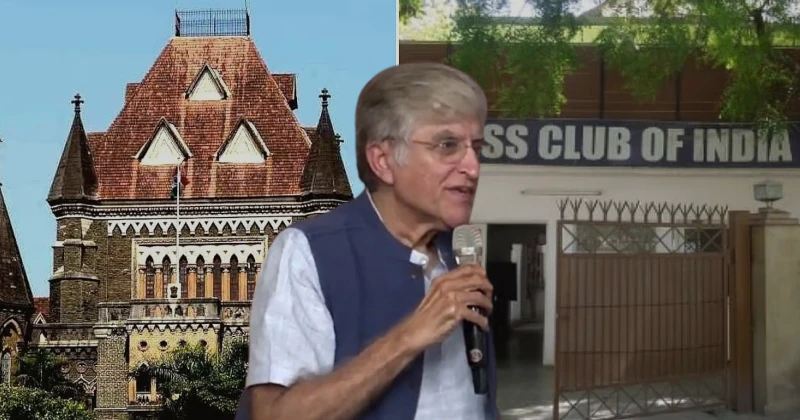
MUMBAI: In a significant ruling, the Bombay High Court on July 14, refused to grant interim relief to senior journalist Gurbir Singh, who was expelled for six years from the prestigious Mumbai Press Club for organising a meeting that violated court-directed restrictions or bail conditions and thereby facilitated interactions among several accused in the high-profile Bhima-Koregaon case.
Justice Prafulla S. Khubalkar dismissed Singh’s interim application, upholding the managing committee’s decision as neither arbitrary nor perverse.
The court observed that the Press Club’s internal processes provided Gurbir Singh with sufficient opportunity to present his case, and that judicial intervention in the club’s affairs was limited unless there was clear evidence of malice, jurisdictional overreach, or violation of natural justice principles.
Citing the Supreme Court’s precedent in T.P. Daver vs. Lodge Victoria, Justice Khubalkar emphasised the restricted scope of civil courts in club matters.
The Controversial Meeting
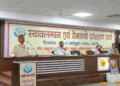
The incident dates back to January 19, 2026, when Gurbir Singh, along with two other members, reportedly organised a meeting within the Mumbai Press Club premises.
According to the club’s inquiry and investigation agency records, the event was attended by several individuals accused in the 2018 Bhima-Koregaon-Elgar Parishad case, including Vernon Gonsalves, Arun Ferreira, Varavara Rao, Sudha Bhardwaj, Gautam Navlakha, Sudhir Dhawale, Hany Babu, Anand Teltumbde, and Rona Wilson.
Investigators alleged that the gathering allowed these accused persons to interact in a manner that potentially violated their bail conditions. The National Investigation Agency (NIA) subsequently filed applications seeking cancellation of their bails, referencing this meeting.
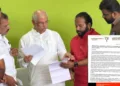
Following the event, the Mumbai Press Club issued a show-cause notice to Singh on February 22, 2026. After receiving his response, the managing committee constituted a three-member inquiry panel.
The panel’s report on April 25 held Singh responsible for facilitating the meeting. On April 27, the committee expelled Singh and two others for six years, effective immediately.
Legal Proceedings and High Court Observations
Singh challenged the expulsion in the City Civil Court, seeking an interim stay. The trial court rejected his plea on July 1, 2026.
He then approached the High Court, arguing that the expulsion violated the club’s bylaws (Article 11(D)) and principles of natural justice, particularly claiming that certain documents related to the inquiry were not provided.
Justice Khubalkar rejected these contentions, noting that Singh had participated in the inquiry process and was given adequate opportunity to defend himself.
The judge described the managing committee’s decision as reasoned and not “perverse,” limiting his observations to the interim stage without prejudice to the main suit.
Who is Gurbir Singh?
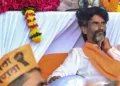
Gurbir Singh is a veteran journalist associated with The New Indian Express and a former president of the Mumbai Press Club. Singh’s supporters have decried the expulsion alleging curtailment of press freedom, freedom of association, and the boundaries of institutional autonomy versus accountability. They see the action as an overreach that could chill journalistic interactions, while critics argue that hosting individuals facing serious terror-related charges within a press institution raises questions of propriety and potential conflict with the club’s values.
Background: The Bhima-Koregaon Case
To understand the gravity of the controversy, one must revisit the events of January 1, 2018. Dalit groups and Ambedkarite organisations had gathered at Bhima-Koregaon village in Maharashtra’s Pune district to commemorate the 200th anniversary of a key battle of the Third Anglo-Maratha War.
In this battle, called the Battle of Koregaon Bhima (1818), a small contingent of Mahar (Dalit) soldiers (along with those from several other castes and communities of Indian origin) mercenaries fighting under the British East India Company engaged with the forces of Peshwa Baji Rao II.
At the infamous Elgar Parishad held on December 31, 2017 at Pune’s Shaniwar Wada, several speakers and performers portrayed the 1818 Battle of Bhima-Koregaon as a symbol of the victory of oppressed Dalits, particularly Mahars, over what they framed as an “oppressive Peshwa regime”, which they characterised as representing Brahminical domination and caste oppression.
What does Elgar or Yalgar mean?
Elgar is a Marathi word of Persian origin. It means a loud, defiant proclamation, a clarion call, a battle cry, or a declaration of revolt or resistance. With a variant spelling, Yalgar or Yalgaar, it literally means an attack, an assault, a military charge, or an offensive. Historically, it was used to describe the advance or charge of an army during battle.
Through flagrant and divisive speeches, songs, poetry and slogans, the Elgar Parishad event highlighted historical grievances, criticised the caste system, and urged resistance against what participants described as the continuing influence of “Manuwadi” or Brahminical forces in contemporary India.
Intensive probe by the Maharashtra Police and later the NIA found evidence of how some of the speeches and performances were inflammatory and contributed to heightened tensions ahead of the bicentenary commemoration on 1 January 2018 (i.e. the very next day in Pune itself at the Bhima Koregaon war memorial site).
Investigators further found that the event was used by divisive individuals linked to the banned CPI (Maoist) to mobilise support and provoke unrest. Those allegations form a central part of the prosecution’s case under the UAPA. The organisers and accused, however, deny that the programme incited violence or had Maoist backing, contending that it was a lawful cultural and constitutional event.
The truth remains that the commemoration turned violent when clashes erupted between the agitated Dalit participants and members of right-wing groups, resulting in one death (the victim being an innocent passer-by) and several injuries.
Following the violence, initial FIRs targeted Hindutva leaders like Milind Ekbote and Sambhaji Bhide for allegedly inciting the clashes.
However, the investigation took a dramatic turn when Pune Police, and later the NIA, found that a larger conspiracy hatched earlier and put into pace at the Elgar Parishad was at the root of what happened on that fateful day of Koregaon Bhima battle’s 200th anniversary.
The court has also been apprised of how that prominent so-called human rights activists, lawyers, and intellectuals had orchestrated the violence through inflammatory speeches at the Elgar Parishad event held in Pune on December 31, 2017 (i.e. just a day earlier), and that they had links with the banned Communist Party of India (Maoist).
BBased on solid intelligence about Maoist linkages and a plot against the state arrests began in 2018 and continued into 2020, encompassing figures like Sudha Bhardwaj, Varavara Rao, Gautam Navlakha, Vernon Gonsalves, Arun Ferreira, Anand Teltumbde, Stan Swamy (who died in custody), and others, collectively known as the Bhima-Koregaon 16 (BK-16).
They face charges under the Unlawful Activities (Prevention) Act (UAPA) and Indian Penal Code sections related to terrorism, conspiracy, and incitement. Many have spent years in jail, with trials still in progress.
Additional Context: Maoist Links Alleged in Video
Compounding the scrutiny on Singh is a video circulating on social media in which he is seen addressing an event where Anuradha Ghandy (Kobad Ghandy’s wife, a former Central Committee member of CPI (Maoist)) and Milind Teltumbde (brother of Anand Teltumbde, a senior Maoist leader killed in an encounter) were present.
CPI (Maoist) has been responsible for thousands of deaths over decades through violent insurgency, primarily affecting tribal areas, security forces, and civilians.
The High Court’s decision has been welcomed by those emphasising institutional discipline and national security concerns.
Singh’s main petition challenging the expulsion remains pending before the trial court. The High Court clarified that its interim observations would not influence the final merits.