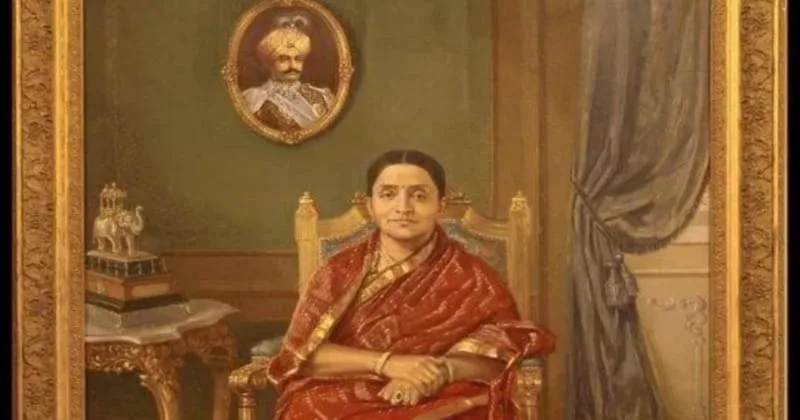
Mysore: Maharani Kempananjammani Vani Vilasa Sannidhana, the visionary Queen Regent of the erstwhile Kingdom of Mysore, is remembered on her Smruthi Diwas for her extraordinary contributions to education, healthcare, infrastructure, and public welfare. Her progressive leadership laid the foundation for many institutions and developments that continue to benefit Karnataka today.
Tributes to Raajamathe Kempananjammanni Vanivilasa Mahasannidhana avaru on her Smruthi Diwas. 🙏🏼
When 32-year-old Chamarajendra Wadiyar X, king of Mysore, fell ill and died, his son was still a minor. It was also the year when a severe epidemic of bubonic plague struck the city.… pic.twitter.com/V4edZUoGNw
— Girish Bharadwaj (@Girishbdwj) July 7, 2026
Maharani Vani Vilasa Sannidhana assumed the reins of the Mysore kingdom under extraordinary circumstances. In 1894, when her husband, Maharaja Chamarajendra Wadiyar X, passed away at the age of 32, their son and heir, Krishnaraja Wadiyar IV, was still a minor.
The kingdom was simultaneously grappling with one of the deadliest outbreaks of the bubonic plague. Despite these immense challenges, the Maharani stepped forward as Queen Regent and ruled Mysore for nearly eight years, guiding the state through a period of stability, modernisation, and social progress.
During her regency, Mysore emerged as one of the most progressive princely states in India. One of her greatest achievements was the commissioning of the Shivanasamudra Hydroelectric Project, regarded as Asia’s first hydroelectric power station. The project not only brought electricity to industries such as the Kolar Gold Fields but also marked the beginning of modern power generation in the region.
Recognising Bengaluru’s growing need for a reliable water supply, she also oversaw the development of the Hesaraghatta Reservoir, which became the city’s primary source of drinking water for many years.
A Pioneer of Women’s Education
Maharani Vani Vilasa firmly believed that education was the foundation of social progress, especially for women. She established numerous schools dedicated to girls’ education across the Mysore State. During her regency, nearly 12,000 girls received formal education—a remarkable achievement at a time when female literacy remained extremely low across India. Her initiatives played a significant role in encouraging families to educate daughters and laid the foundation for Karnataka’s later achievements in education.
Transforming Public Healthcare
The queen also prioritised healthcare, particularly the well-being of women and children. She emphasised maternal and child healthcare, introducing improved prenatal and post-natal care services. Several hospitals and dispensaries were established during her rule, improving access to medical facilities for thousands of people. These reforms reflected her understanding that public health was essential for the prosperity of society. Among her most enduring contributions was her generous support for scientific education.
Maharani Vani Vilasa donated 372 acres of land in Bengaluru for the establishment of the Indian Institute of Science (IISc). This landmark contribution helped pave the way for what would become one of India’s foremost institutions for scientific research and innovation. Today, IISc stands as a testament to her foresight and commitment to the advancement of knowledge.
Maharani Kempananjammani Vani Vilasa Sannidhana is remembered not merely as a regent but as a transformative administrator whose policies combined compassion with modern governance. Her investments in infrastructure, education, healthcare, and scientific development helped shape the future of Mysore and laid the groundwork for Karnataka’s emergence as a centre of learning, innovation, and development.
On her Smruthi Diwas, her life serves as a reminder that visionary leadership can leave an enduring impact across generations. Her dedication to public welfare, women’s empowerment, and nation-building continues to inspire historians, scholars, and citizens alike, ensuring that her remarkable legacy remains an integral part of Karnataka’s history.