
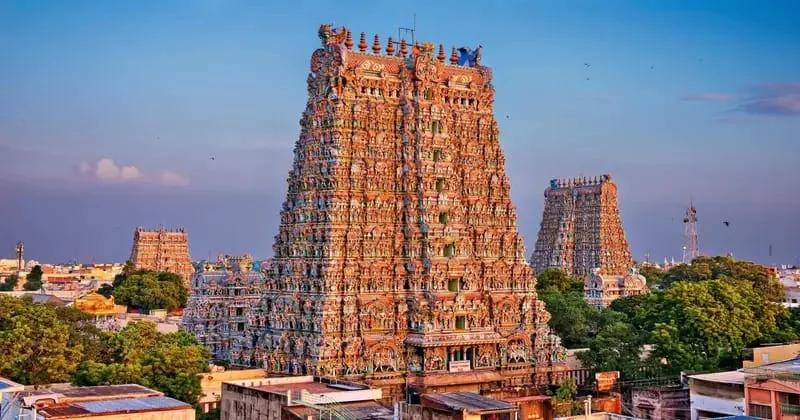
A gopuram is the monumental entrance tower of a Hindu Mandir complex, serving as both an architectural landmark and a sacred threshold between the secular and the divine. Found predominantly in the Dravidian Mandirs of South India, gopurams are among the most recognisable symbols of Indian temple architecture. Rising high above surrounding landscapes and adorned with thousands of colourful sculptures depicting Hindu deities, mythological stories, saints, celestial beings, and legendary creatures, they are masterpieces of engineering, religion, and art.
Although early South Indian Mandirs had relatively modest entrance gateways, the construction of towering gopurams became a defining feature of Mandir architecture from the medieval period onward. Today, some of the world’s tallest Mandir gateways stand in the Indian states of Tamil Nadu, Karnataka, Andhra Pradesh, and Telangana.
A typical gopuram is a remarkable example of Dravidian Mandir architecture, designed with both structural strength and artistic grandeur. It begins with a massive granite base, which provides stability and supports the enormous weight of the tower above. Rising from this foundation is a pyramidal, tapering superstructure composed of progressively smaller tiers known as talas, creating the distinctive stepped appearance characteristic of South Indian Mandirs. The exterior is richly decorated with thousands of intricately crafted stucco sculptures depicting Hindu gods and goddesses, scenes from the Ramayana and Mahabharata, various forms of Shiva and Vishnu, celestial dancers, saints, devotees, yalis (mythical lion-like creatures), guardian deities, and other symbolic figures. At the summit stands the kalasam, a sacred metal finial that crowns the tower and signifies its spiritual completion.
Tallest Gopurams in India
Murdeshwara Mandir
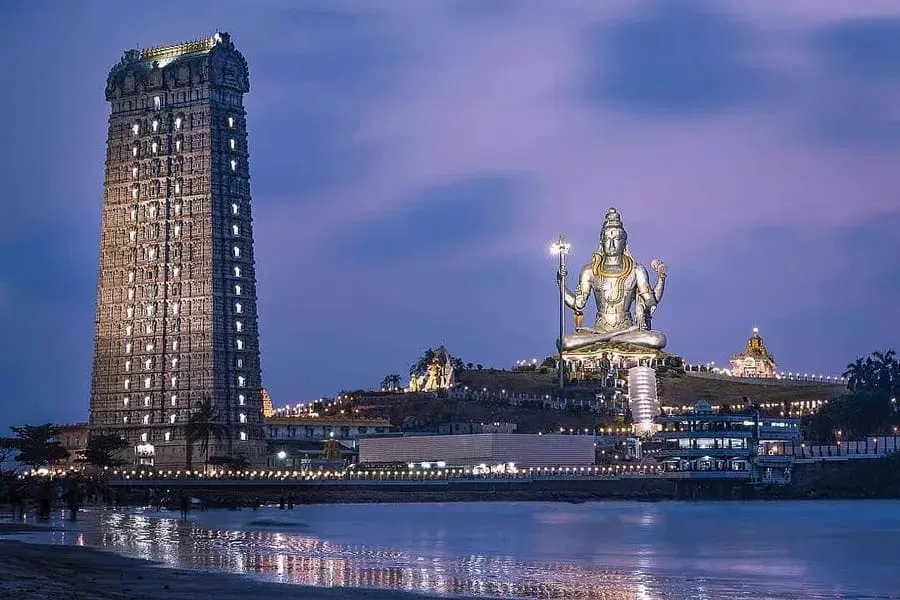
Height: 249 ft (76 m)
Location: Murdeshwar, Uttara Kannada district, Karnataka
Completed: 2008
The gopuram of Murdeshwara Mandir is the tallest temple gateway in India, standing approximately 249 feet (76 metres) high. Constructed using modern engineering while preserving the traditional Dravidian architectural style, the 20-storeyed tower has become one of Karnataka’s most recognisable landmarks.
Unlike most ancient Mandir gateways, it is equipped with two elevators, allowing visitors to reach the upper floors and enjoy panoramic views of the Arabian Sea, Murdeshwar Beach, and the towering Shiva statue.
The Mandir itself is dedicated to Bhagwan Shiva and is associated with the legend of the Atma Linga from the Ramayana. The complex also features a 123-foot (37-metre) seated statue of Shiva, making it one of the tallest Shiva murtis in the world. Situated on Kanduka Hill projecting into the Arabian Sea, the Mandir attracts millions of pilgrims and tourists annually.
Ranganathaswamy Mandir
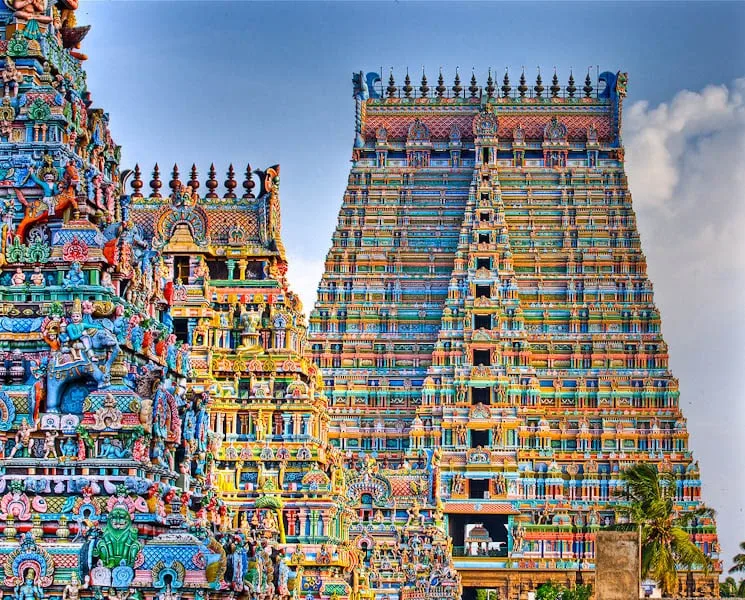
Height: 236 ft (72 m)
Location: Srirangam, Tiruchirappalli, Tamil Nadu
Construction: Begun around 1700; completed in 1987
The Raja Gopuram of the Ranganathaswamy Mandir is among the tallest and most celebrated Mandir gateways in the world. Rising to about 236 feet (72 metres), the 13-tiered gateway dominates the skyline of Srirangam Island. Although construction began during the Nayak period, it remained unfinished for centuries before being completed in 1987 under the guidance of the Ahobila Mutt.
The Mandir is the largest functioning Hindu Mandir complex in India, covering around 156 acres and enclosed by seven concentric walls. It contains 21 gopurams, with the Raja Gopuram serving as the principal eastern entrance. Dedicated to Bhagwan Ranganatha, a reclining form of Vishnu, the Mandir is one of the 108 Divya Desams and a major centre of Sri Vaishnavism.
Annamalaiyar Mandir
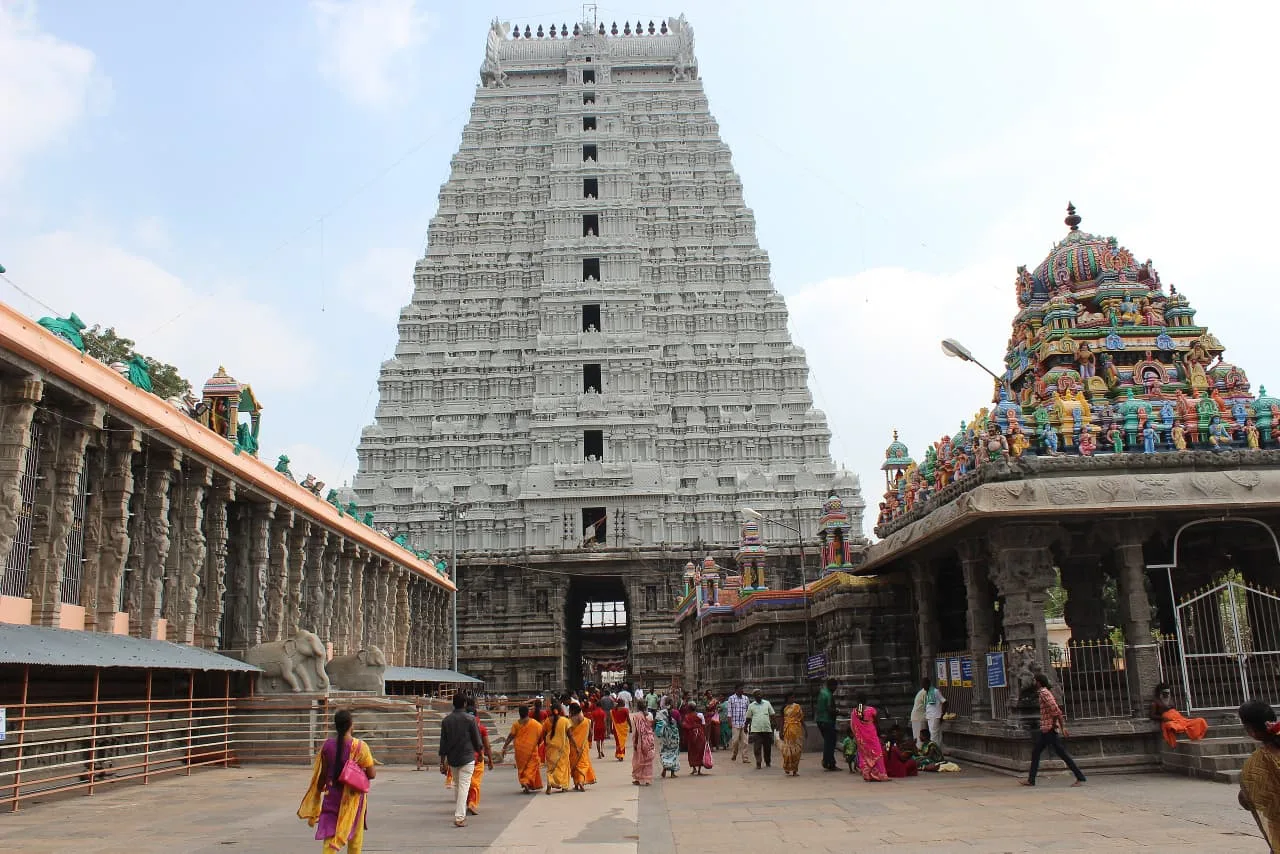
Height: 217 ft (66 m)
Location: Tiruvannamalai, Tamil Nadu
Main construction: 16th century
The eastern Raja Gopuram of Annamalaiyar Mandir is one of the finest examples of Vijayanagara architecture. Rising to approximately 217 feet (66 metres), it consists of 11 storeys crowned by multiple kalasams. Built mainly during the reign of King Krishnadevaraya, it is the tallest of the temple’s four monumental gateways.
Dedicated to Bhagwan Arunachaleswarar (Shiva), the temple spreads across nearly 25 acres (10 hectares) at the foot of the sacred Arunachala Hill. It is one of the Pancha Bhoota Sthalams, representing the element of fire (Agni). Every year, millions participate in the Karthigai Deepam festival when a giant flame is lit atop Arunachala Hill.
Srivilliputhur Andal Mandir
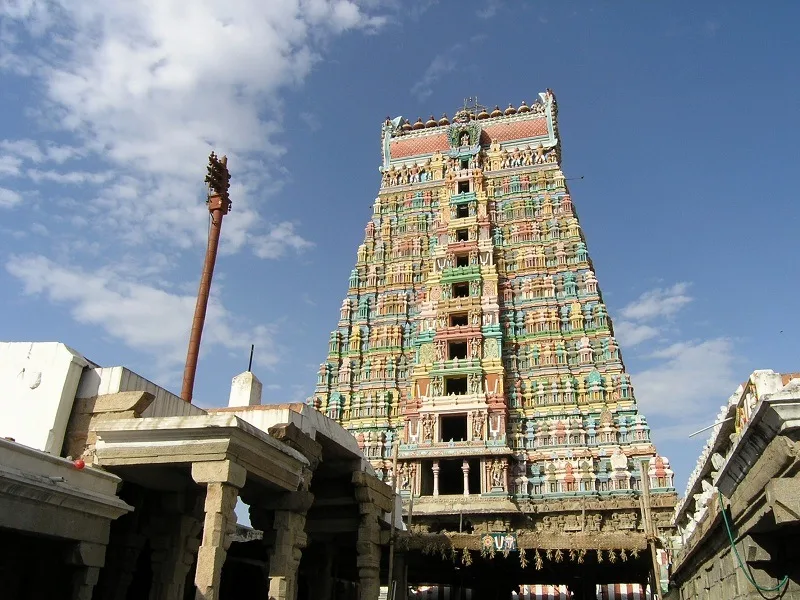
Height: 192 ft (59 m)
Location: Srivilliputhur, Tamil Nadu
Period: 10th–16th centuries
The Rajagopuram of Srivilliputhur Andal Mandir rises about 192 feet (59 metres) and remained among the tallest Mandir towers in South India for centuries. It is one of the finest surviving examples of Pandya and Nayak architecture.
Dedicated to Maa Andal, the only female Alvar saint, and Bhagwan Vishnu, the Mandir is one of the most sacred Vaishnavite shrines. Its magnificent tower is so iconic that it has been adopted as the official emblem of the Government of Tamil Nadu, symbolising the state’s rich cultural heritage.
Ulagalantha Perumal Mandir
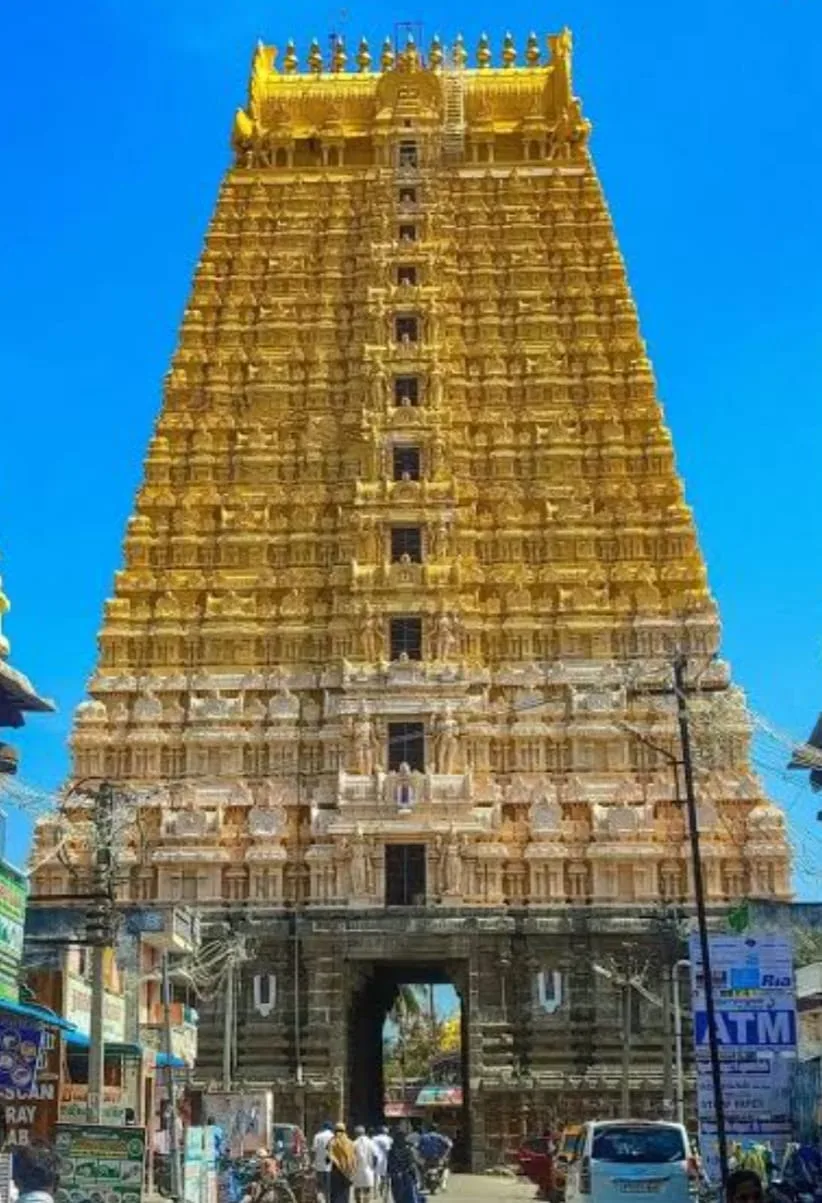
Height: 194 ft (59 m)
Location: Tirukoilur, Tamil Nadu
The towering Rajagopuram of Ulagalantha Perumal Mandir measures around 194 feet (59 metres) and is one of the tallest gateways dedicated to Bhagwan Vishnu. The Mandir is renowned for its colossal image of Trivikrama, depicting Vishnu’s Vamana incarnation measuring the universe in three strides. It is one of the 108 Divya Desams praised by the Alvar saints and represents an important centre of Sri Vaishnava worship. The towering entrance displays exquisite sculptures depicting scenes from the Puranas and Vaishnavite traditions.
Ekambareswarar Mandir
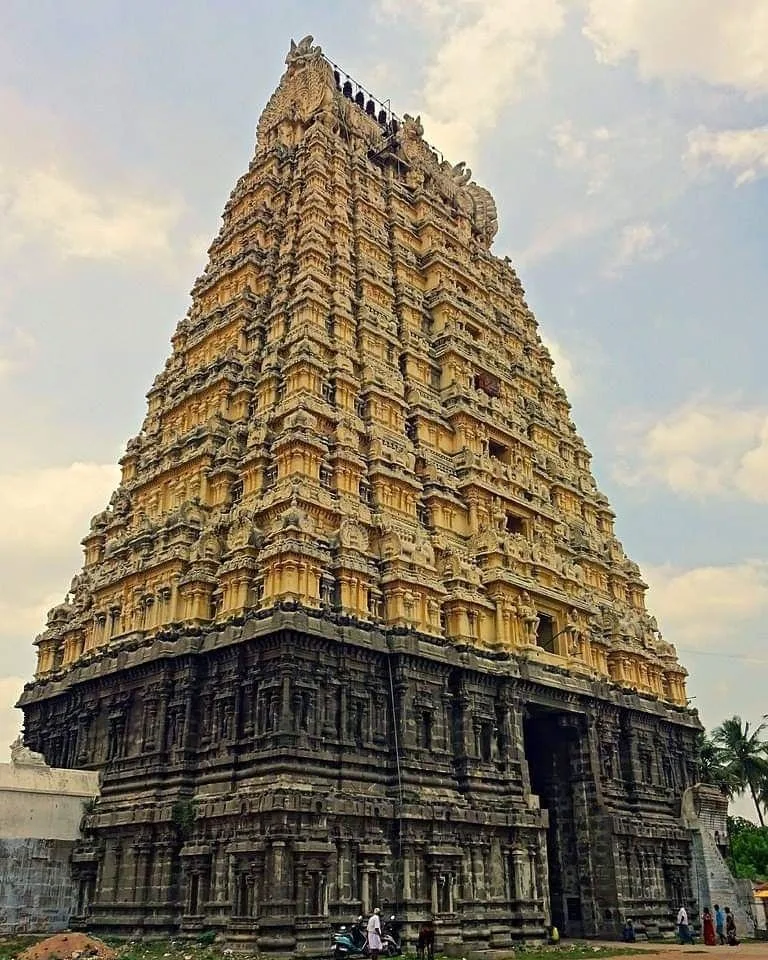
Height: 192 ft (59 m)
Location: Kanchipuram, Tamil Nadu
The southern Rajagopuram of Ekambareswarar Mandir stands approximately 192 feet (59 metres) tall and was constructed during the Vijayanagara period. It is among the most prominent landmarks of Kanchipuram, one of India’s seven sacred cities.
Dedicated to Bhagwan Shiva, the Mandir is one of the Pancha Bhoota Sthalams, representing the element of Earth (Prithvi). Covering about 25 acres, it is one of the largest Mandir complexes in Tamil Nadu and is famous for its ancient mango tree, believed to be over 3,000 years old.
Kallazhagar Mandir
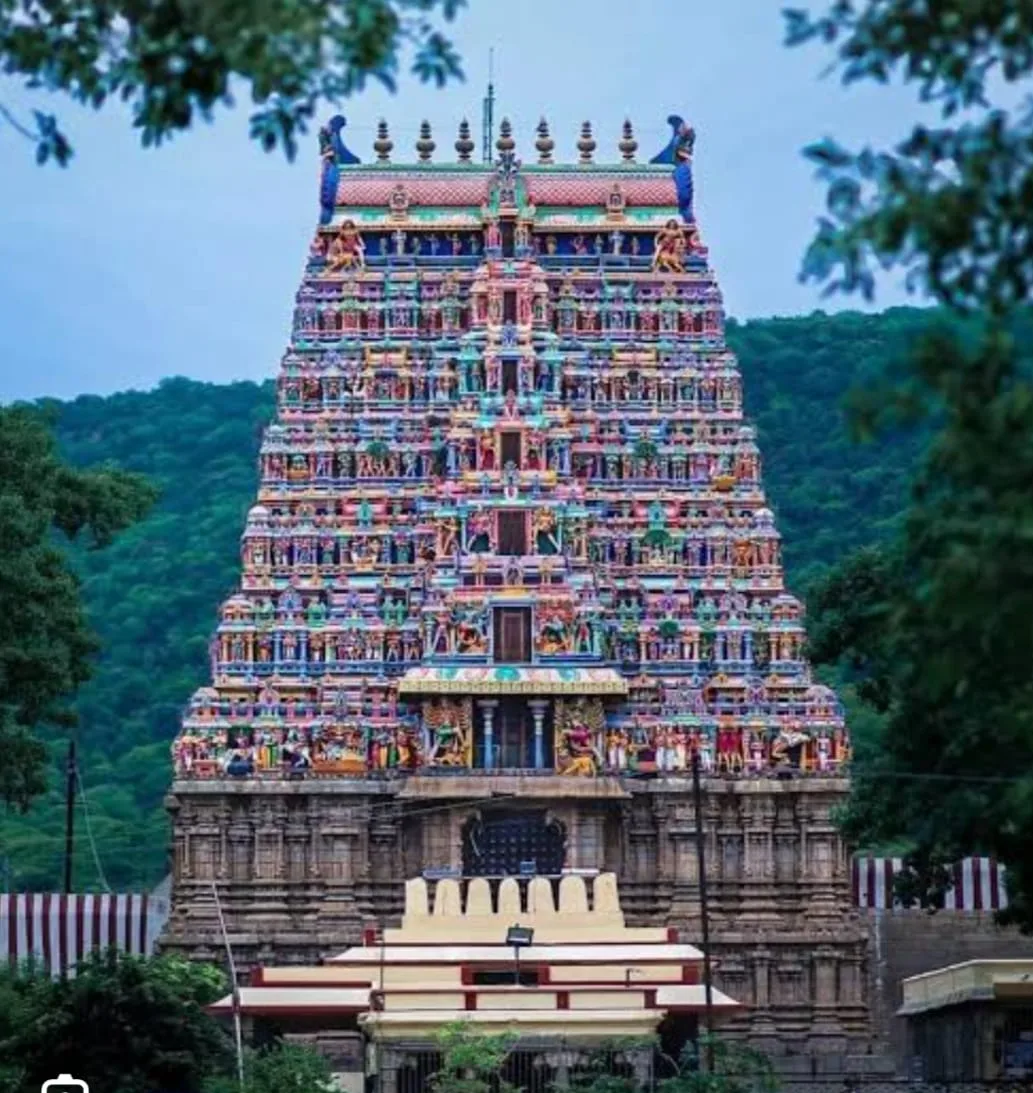
Height: 187 ft (57 m)
Location: Madurai district, Tamil Nadu
Situated amidst the scenic Alagar Hills, Kallazhagar Mandir is dedicated to Bhagwan Vishnu as Sundararaja Perumal. The imposing Rajagopuram rises to about 187 feet and showcases intricate sculptures typical of the Nayak period.
The Mandir plays a central role in the famous Chithirai Festival, during which Bhagwan Kallazhagar is believed to descend into the Vaigai River to bless devotees. Thousands of pilgrims gather every year to witness this grand event.
Kasi Viswanathar Mandir
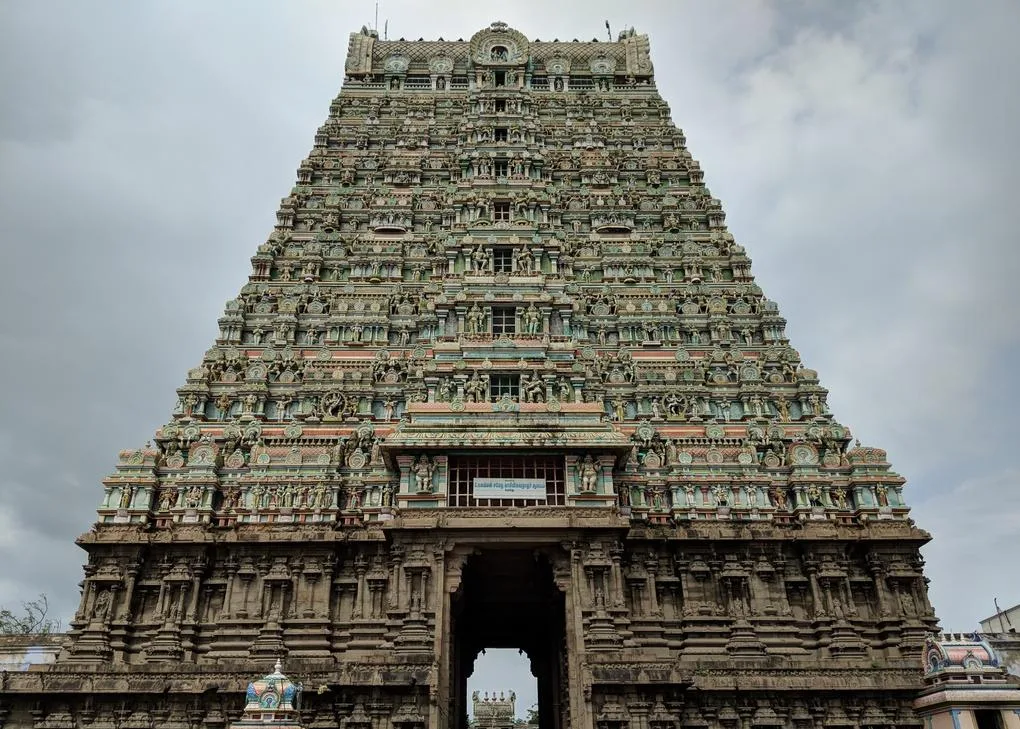
Height: 180 ft (55 m)
Location: Tenkasi, Tamil Nadu
Constructed by the Pandya kings during the 15th century, the massive Rajagopuram of Kasi Viswanathar Mandir stands approximately 180 feet high. The Mandir was envisioned as the “Kashi of the South,” giving the town its name, Tenkasi, meaning “Southern Kashi.” The Mandir is famous for its beautifully carved sculptures, musical stone pillars, and impressive Dravidian architecture. It remains one of southern Tamil Nadu’s most important Shaivite pilgrimage centres.
Sarangapani Mandir
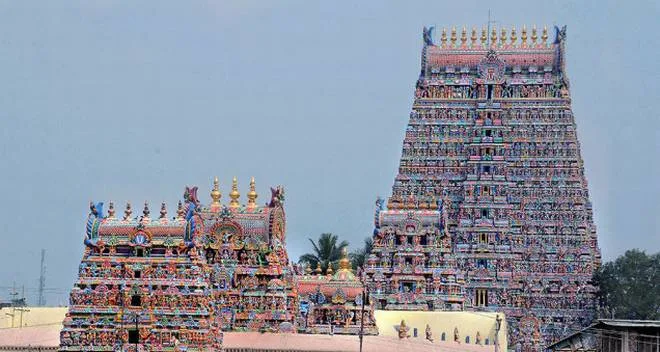
Height: 173 ft (53 m)
Location: Kumbakonam, Tamil Nadu
The eleven-tiered Rajagopuram of Sarangapani Mandir rises approximately 173 feet. Dedicated to Bhagwan Vishnu, the Mandir is among the most important Divya Desams and the largest Vishnu Mandir in Kumbakonam. Its sanctum is uniquely designed in the shape of a stone chariot, symbolising Vishnu’s celestial vehicle. The Mandir is a masterpiece of Chola and later Vijayanagara architecture.
Meenakshi Amman Mandir
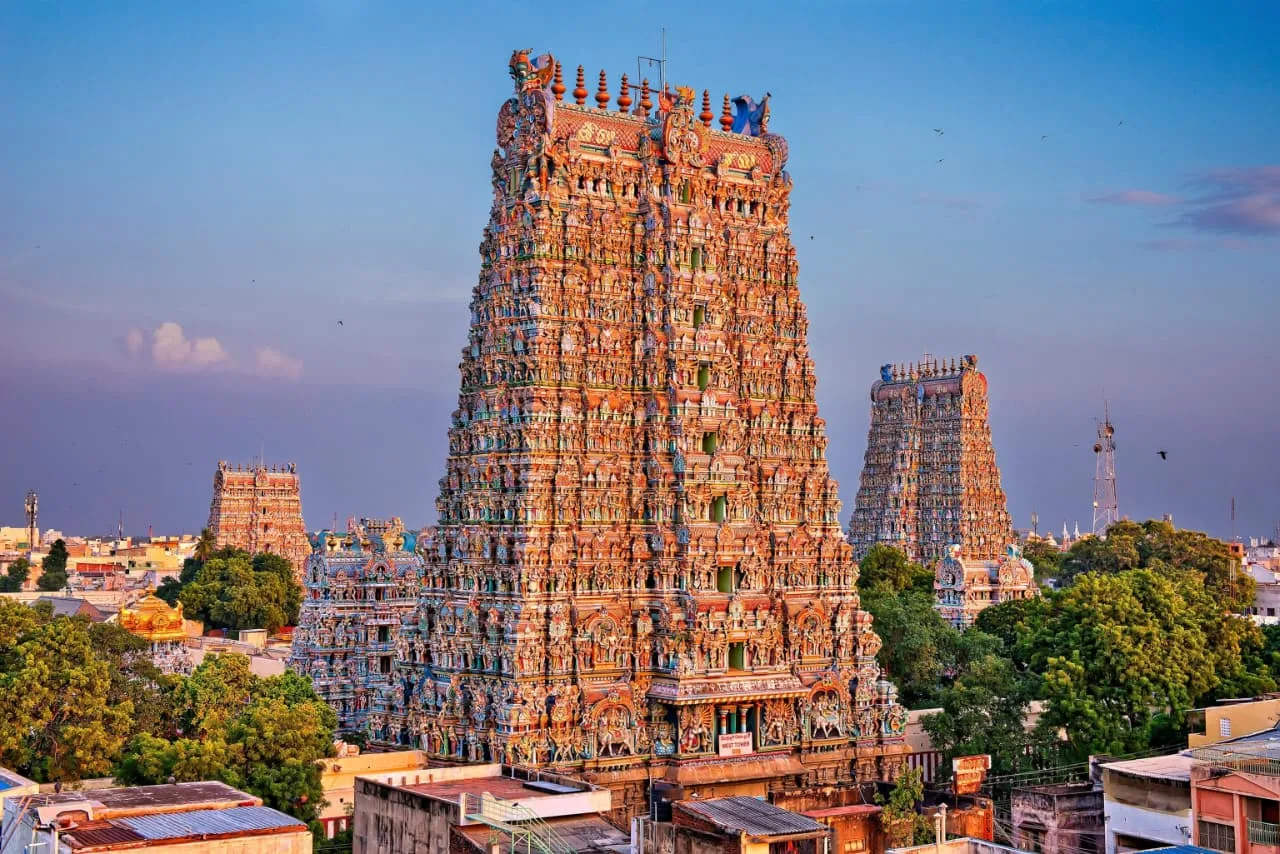
Height: 170 ft (52 m)
Location: Madurai, Tamil Nadu
The Meenakshi Amman Mandir houses 14 elaborately sculpted gopurams, with the southern tower being the tallest at approximately 170 feet. Every tower is covered with thousands of vividly painted stucco figures depicting gods, goddesses, demons, animals, and scenes from Hindu belief. Dedicated to Maa Meenakshi and Bhagwan Sundareswarar (Shiva), the Mandir is regarded as one of the greatest achievements of Dravidian architecture. Its annual Meenakshi Thirukalyanam festival attracts over a million devotees and visitors from across the world. The colourful gopurams have become one of the defining symbols of Tamil Nadu’s cultural and architectural heritage.