The British ruled the Indian subcontinent from 1757 to 1947. During this period, many local Islamic rulers, such as the Nawabs of Bengal and Arcot, the Mughal Emperor, and Tipu Sultan, were subdued by the British. Now Muslims had a resentment against the Britishers because they demolished many of the Muslim states in the Indian subcontinent. So, in 1857, the Mughal emperor, along with his Muslim clergy, started Islamic Jihad against the British, and many of the Hindus also joined against the British, like Nanasaheb, Rani Laxmibai, etc.
Britishers crushed the 1857 revolt, and the last Mughal emperor, Bahadur Shah Zafar, was imprisoned for life. Now, the Britishers mercilessly cracked down on the Muslims and destroyed the bases of Jihad. But during this time, Muslims got a religious as well as an intellectual leader like Sir Syed Ahmed Khan (1817-1898), who changed the landscape of Muslim politics and thinking in India.
Role of Sir Syed Ahmed in Two-Nations Theory
Now, the Two-Nation Theory is a religio-political ideology of Muslims to create a separate Muslim nation based on religion. Meanwhile, Sir Syed Ahmed Khan was the pioneer of the Two-Nations Theory because he believed that Hindus and Muslims are distinct religious communities and their culture and political ideologies differ a lot. Sir Syed used the tool of the Hindi-Urdu controversy of 1867 in Benaras. Meanwhile, he opposed Muslims joining the Hindu-majority Indian National Congress. His emphasize was on the Muslim social structure, history, and religious value system, which differed from the Hindu.
In the mid-19th century, Hindus, due to modern education, were running the administration, and Muslims were lagging behind the Hindus. Hence, he was the first Muslim in the Indian Subcontinent who used modern education to create a progressive Muslim class to propagate the Islamic agenda in the modern world. To fulfil the agenda, in 1864, he established the Scientific Society in Ghazipur to translate Western scientific works into Urdu. In 1870, he launched a Social reform journal ‘Tahzib-ul-Akhlaq’ to promote English education among Muslims. In 1875, he founded the Muhammadan Anglo-Oriental College, later in 1920 renamed as “Aligarh Muslim University”.
Now his Two-Nation Theory became the cornerstone of modern Muslim politics of Indian Subcontinent Muslims. Later, the Muslim League under Muhammad Ali Jinnah formed Pakistan in 1947, a separate Muslim country.
Formation of Muslim League in India
Muslim League was a united Muslim political party founded on Dec 30th, 1906, in Dhaka by the Nawab of Dhaka, Khawaja Salimullah, along with Aga Khan and Waqar ul-Mulk. The main aim of this organization was to safeguard the political and religious rights of Muslims against Hindus to maintain the Islamic agenda. Muslim League even advocated a separate Muslim electorate for Muslims. In a separate electorate system, the voters are divided by religion, like Muslims, so that they can vote for their own leader in elections and they can increase their representation in governance.
Now, to fulfil the wishes of radical Muslims then British Government in India, in the Government of India Act, 1909, famously known as the Morley-Minto reforms, awarded a separate electorate to the Muslims. Here, Muslims were at an advantage of double voting so they could vote twice to elect their own leader and another leader for the general elections. But, during this time Hindus were not given this opportunity of dual voting.
British Policy towards Indian Muslims (Sir William Hunter)
From 1757 to 1857, Britishers and Muslims were enemies, and Britishers suppressed radical Islam along with the Wahhabi movement. Even in 1858, when Britishers suppressed the 1857 Islamic Jihad, they massacred some of them to create terror, but from 1859 onwards, due to Sir Syed, Muslims became loyal to British rule; an era was started where Muslims turned from “Jihad to Ji-huzuri” in the Subcontinent. Now, the Britishers cleverly supported and appeased Muslims during this period, which later led to the partition of India.
Among the Britishers, “Sir William Wilson Hunter,” in the book “The Indian Musalmans” in 1871, argued that British policies always marginalized Muslims in the Subcontinent. Hence, he believed that the colonial government should make a series of reforms to promote Muslims in education and employment to eradicate the Muslim grievances against the colonial British government.
He points out that the English administration and resumption of rent-free lands have deprived the prosperous Muslims under British rule and pushing out of state authority.
Secondly, he points out that the Muslims in the Sub-continent did not consider the British Queen as Dar-ul-Harb (abode of war). So he recommended that the British should protect their religious liberties.
Thirdly, he points out that the British state should introduce the Arabic and Persian languages in the state schools and offer more scholarships to Muslim students, and needs to open the doors to more Muslim candidates in civil services to turn them into loyal subjects of the British Empire instead of rebellious ones.
Finally, because of his recommendations, there was a sharp increase in educational and job opportunities for Muslims. Meanwhile, this British interest served the institutionalizing of communal and separatist tendencies among the early Muslim leadership.
Role of Congress and Mahatma Gandhi in Muslim Separatism
In the 1907 Surat session, Congress divided into moderates and extremists’ groups. They signed the Lucknow Pact.
Lucknow Pact (1916) – In the Lucknow Pact, Congress leaders accepted the concept of separate Muslim electorates, which led to disproportionate weightage to Muslim votes; in fact, in the Hindu majority regions, the Muslim League became the representatives of Indian Muslims, by sidelining the national interests. In this pact, Muslims got Veto powers because it was agreed that no bill would affect the Muslim community if three-fourths of the Muslim community members opposed it. So it was a communal Veto for the legislature. Now, because of this Lucknow pact, the long-term impacts were very bad, and it ultimately paved the way for the Muslims polarization, and then it led to the partition of India in 1947.
Mahatma Gandhi
Mahatma Gandhi, from 1916 to 1948 dominant Congress leader who believed that the appeasement of Indian Muslims would bring them back to the national mainstream politics. To bring Muslims to the mainstream of nationalist Indian politics, he started fulfilling the Muslim demands and made sure that Hindus should compromise. Let us examine Mahatma Gandhiji’s Muslims appeasement policies.
The Khilafat Movement – From 1919 to 1924, Mahatma Gandhi launched the Khilafat movement, where he supported the Muslims to protect the Islamic Khilafat of Turkey (Ottoman Empire). In this movement, the Ali brothers (Muhammad Ali, Shaukat Ali) led the core movement. The main aim of this movement was to stop Britain from breaking up the Ottoman Empire and the Khilafat of Muslims. But in 1924, Mustafa Kemal Ataturk abolished the Khilafat and created a secular nation of Turkey, which led to the failure of the Khilafat movement in India as well. Mahatma Gandhi supported the Islamic radicals like Ali brothers for this movement, but after the failure of this movement, what Maulana Muhammad Ali said was: “even a person who is a ‘sinful’ or ‘failing’ Muslim is considered superior in religious priority to a non-Muslim, including an exemplary figure like Mahatma Gandhi”
In 1921, when Moplah revolts broke out in Kerala (Malabar region), Mahatma Gandhi supported the Muslims; hundreds of Hindus were killed. Mahatma Gandhi condemned the violence but still supported the Moplah.
Gandhi Ji said “On killings, looting, and forced conversions”:
“My heart bleeds to think that our Moplah brethren have gone mad. I am grieved to find that they have killed officers. I am grieved to think that they have looted Hindu houses leaving many hundreds of men and women homeless and foodless. I am grieved to think that they have endeavored forcibly to convert Hindus to Islam…”
But Gandhi said that these acts did not represent all Indian Muslims and he argued that Hindu–Muslim unity should be maintained.
On the wider communal impact:
“Islam has undoubtedly suffered for the brutalities practiced by the Moplahs, but Hinduism is suffering equally with Islam for thirsting for Moplah blood.”
Here Mahatma Gandhi is saying Hindus should not take revenge for these Moplah riots, and it is the responsibility of Hindus to maintain Hindu-Muslim unity at any cost.
Before and after partition
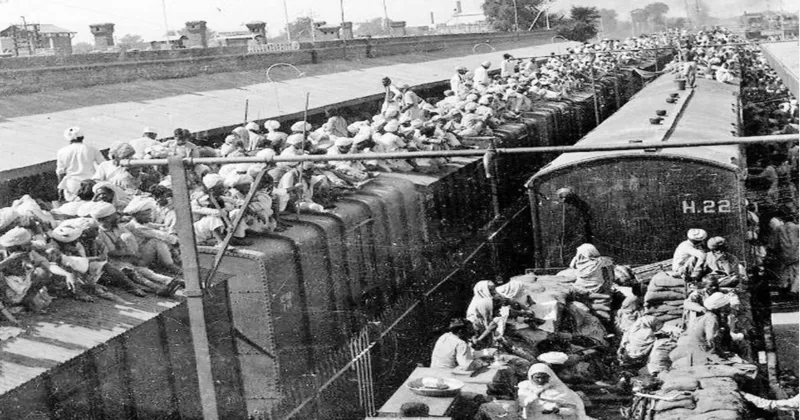
Mahatma Gandhi during partition defended the Muslims, and he forced Hindus to maintain unity instead of retaliation. Let’s examine Gandhi Ji’s ideas on Muslims.
Gandhi described his ideal India as a country where: “The Hindus, the Muslims, the Sikhs, the Christians, the Parsis and the Jews live as brothers.”
Gandhi opposed the argument that Muslims in India should be punished for the creation of Pakistan. He said: “We cannot make India a Hindu Pakistan. We have a duty to see that the minorities are protected.”
Gandhi said: “If we are to live as one nation, Hindus and Muslims must live as brothers.”
He argued that the presence of the Muslim minority is good and there is no question of Hindu revenge for the partition of India. Meanwhile, Gandhi Ji attacked those who condemned Muslim leaders for betrayal.
British shifted their policy towards Muslims from Crushing the Jihad to appeasment after 1857 revolt. Congress leadership dominated by Mahatma Gandhi continued the british policy of Muslim appeasement, which led to the revival of radical Islam in the Subcontinent, and finally it led to the partition of India in 1947.