In the red-soil landscape of Bankura district lies a tradition that has quietly shaped Bengal’s cultural identity for centuries, Bankura terracotta. Rooted deeply in the artisan village of Panchmura, this crafwestt is more than decorative art. It is a living expression of devotion, memory, and continuity, sustained by generations of Kumbhakar (potter) families for over 300 years.
🏺Bengal’s Living Legacy of Clay, Devotion & Timeless Craft Nestled in the red-soil heart of West Bengal’s Bankura district lies one of India’s most iconic folk art traditions- Bankura terracotta. Centred in the village of Panchmura (just 25 km from the historic town of… pic.twitter.com/E3BZpVi2aB
— Rima Sarkar (@_RimaSarkar) June 7, 2026
From village shrines to global art collections, these terracotta forms carry the story of a region where clay is not just a material, it is heritage shaped by hand, faith, and time.
Where Devotion Met Earth
The history of Bankura terracotta is inseparable from rural religious life in Bengal. Long before it became an art form admired worldwide, it served a deeply ritualistic purpose. Artisans created terracotta figures as votive offerings to local deities such as Dharmathakur, a folk god of the Rarh region often associated with Surya (the Sun Bhagwan), as well as Maa Manasa. Villagers would offer clay horses, elephants, and symbolic figures at sacred shrines (thans) in fulfilment of vows or prayers. These objects were not made for beauty alone; they were offerings of belief, sacrifice, and gratitude shaped in clay.
The Bankura Horse
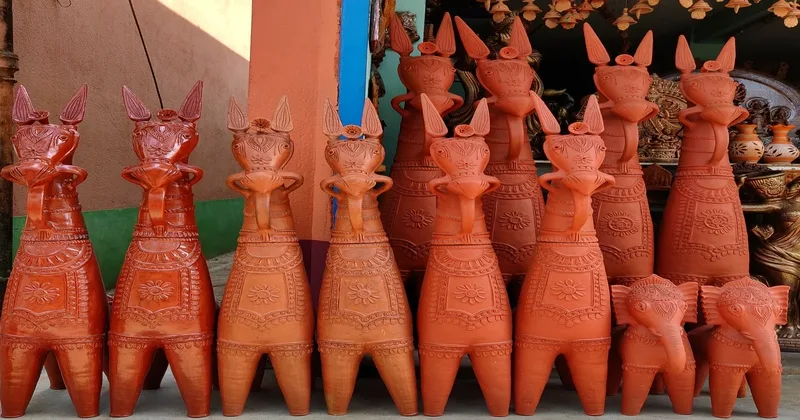
At the heart of this tradition stands the famous Bankura Horse, also known as the Panchmura Horse. Its tall neck, arched body, and elongated ears create a striking sense of movement and elegance, despite being made from static clay. Originally, these horses were dedicated offerings placed at village shrines. Over time, they became symbolic guardians of rural faith and prosperity. Their stylised abstraction is what makes them globally recognisable today, an artistic language that speaks without realism yet feels deeply alive.
Today, the Bankura Horse is no longer confined to ritual spaces. It has become a cultural emblem of Indian handicrafts and was adopted as the symbol of the All India Handicrafts Board in 1952, marking its national significance.
Craftsmanship: Clay, Skill & Generations of Knowledge
What makes Bankura terracotta remarkable is not just the final form, but the process behind it. There are no machines involved, only hands, earth, and inherited skill. The craft is passed down through generations in families, where children grow up watching clay being transformed into art.
Key stages include:
* Clay preparation: Local red soil is mixed, kneaded, and refined
* Shaping: Hand-moulding and wheel work define the structure
* Detailing: Fine features are carved manually
* Drying: Pieces are sun-dried naturally
* Firing: Kilns harden the clay into durable terracotta
Every step reflects patience and precision, where even a slight imbalance can alter the final form.
Beyond the iconic Bankura Horse, Panchmura’s artisans shape an entire universe of terracotta forms that reflect the richness of rural imagination and cultural life. Their craftsmanship extends to elephants and a variety of animal figurines that often carry symbolic meanings rooted in folklore and tradition. Alongside these are finely crafted deities and ritual icons, created for worship and village ceremonies, preserving the spiritual essence of the craft.
The artisans also produce decorative lamps and pots that blend utility with artistry, bringing everyday objects into the realm of aesthetic expression. Masks used in cultural performances further highlight the craft’s connection to storytelling and local theatre traditions, while stylised everyday objects and sculptural forms demonstrate the evolving creativity of the artisans. Despite this diversity, all these creations share a distinctive, unglazed, earthy red-brown finish that remains the defining visual identity of Bankura terracotta, binding the entire range of works into a single, recognisable tradition.
GI Tag: Protecting a Living Heritage
In 2018, the Bankura Panchmura Terracotta Craft received a Geographical Indication (GI) tag, officially recognising its origin and safeguarding its authenticity under India’s GI Act. This recognition has helped preserve traditional methods, prevent imitation products from undermining the craft’s originality, and improve market visibility for the artisans who depend on it for their livelihood. However, while the GI tag offers important legal and commercial protection, it alone cannot sustain a living heritage. The survival of this craft ultimately continues to depend on the hands that practise it, the traditions that nurture it, and the steady demand that keeps it relevant across generations.
Culture, Community & Livelihood
For nearly 100–300 artisan families in Panchmura, terracotta is not just a means of livelihood but an essential part of identity, deeply woven into the rhythm of rural life. The craft exists in close harmony with the agricultural calendar, with production cycles often adjusting to farming seasons and village rituals. Beyond its economic importance, it carries profound cultural meaning that reflects the beliefs and traditions of the region. Horses and elephants once symbolised devotion and protection, clay offerings were made as expressions of vows fulfilled at local shrines, and oral traditions, along with folk beliefs, continue to coexist with the act of craftsmanship. In this way, the practice represents a seamless continuity where art and life are inseparable, each sustaining and shaping the other over generations.
Today, Bankura terracotta travels far beyond Bengal. It appears in urban homes, exhibitions, museums, and global craft markets. Yet its essence remains unchanged: clay shaped by hand, guided by memory and belief.