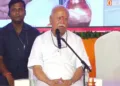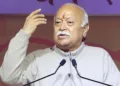
Nagpur: RSS Sarsanghchalak Mohan Bhagwat on Wednesday said those displaced during the Partition of India should not be described as “refugees”, asserting that they were “Sangharshrat Yoddhas” (struggling warriors) who sacrificed everything to remain on the land of Bharat and practise their faith fearlessly.
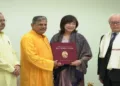
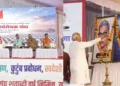
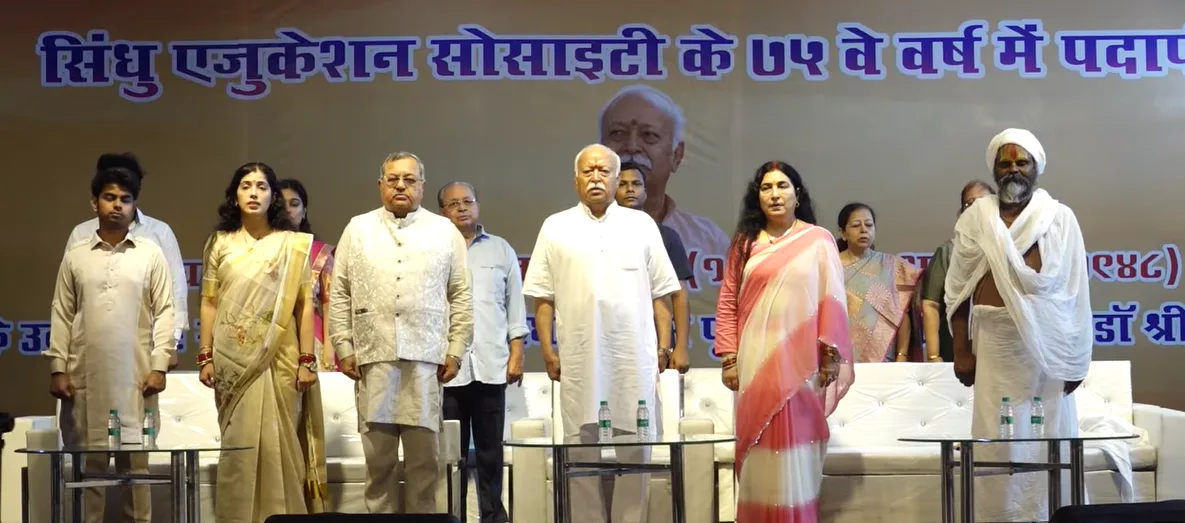
Bhagwat was addressing a gathering at the 75th Foundation Day programme of the Sindhu Education Society, an organisation run by the Sindhi community, in Nagpur on 1 July.
Recalling the sacrifices made by families uprooted during Partition, Bhagwat said they abandoned everything they had earned over generations, choosing the nation and Dharma over wealth and comfort.
“They left behind property accumulated over generations, lands, businesses, farms—everything—and came here. They were not refugees. They were certainly displaced. The word ‘refugee’ was wrongly used for them. They were Sangharshrat Yoddhas (struggling warriors), driven by love for their motherland and love for their Dharma.”
He said those displaced had lost a battle but refused to surrender to despair, rebuilding their lives from nothing through determination and hard work.
“They had nothing. Yet they did not sit crying. They lost everything, came here and built everything again. A person should not weep before circumstances or before destiny. One should make an effort. Through effort, everything becomes right. One has to be patient. One has to wait.”
Describing resilience as the defining lesson from the lives of the displaced, Bhagwat said those who lament before adversity lose even before the struggle begins.
“A person who keeps crying loses even before the battle begins. But the one who fights always achieves something. Therefore, in life, one should never accept defeat and never run away.”
Drawing from the Bhagavad Gita, Bhagwat said the first lesson given by Lord Krishna to Arjuna was not to abandon the battlefield.
“The first lesson was: ‘Do not run away. If you run away, you will earn disgrace. If you fight and win, you will gain honour. If you die, you will attain a state that even great yogis do not attain.’ Standing firm and continuing the struggle never brings loss. Running away, accepting defeat, sitting idle and becoming hopeless bring loss.”
Bhagwat also cited the life of former President A. P. J. Abdul Kalam to underline the importance of perseverance. Recalling that Kalam failed to secure admission to Aeronautical Engineering and later failed an interview in Dehradun, Bhagwat said the scientist once contemplated ending his life before meeting Swami Sivananda at Rishikesh, who encouraged him to seek another path instead of giving up. Referring to Kalam’s autobiography Wings of Fire, Bhagwat said the episode demonstrated that “when one door closes, another opens somewhere.”
Returning to the experience of the Sindhi community after Partition, Bhagwat said circumstances and fortunes may change, but one’s values and purpose must remain unchanged.
“Circumstances change. Situations come and go. Good days and bad days both pass. What must remain constant is the person who, through effort, rises above sorrow. They did not choose careers. They did not choose wealth. They chose the nation. They chose Dharma.”
Calling upon students to draw inspiration from the 75-year journey of the Sindhu Education Society, Bhagwat said the institution’s legacy was not merely about education but about nurturing character and values.
“We must live as good human beings, and through our own lives help create good human beings. Live not only for yourself but for others. Live a life of goodness yourself and teach goodness to others—not merely through words but through your actions.”
Bhagwat said true education was not confined to textbooks or classrooms but lay in developing viveka—the ability to distinguish between right and wrong, the permanent and the temporary—and in learning from life’s experiences. He urged students to remember the message of the institution’s 75th year throughout their lives and uphold the values demonstrated by those who built it despite losing everything during Partition.