In Islamic thought, the “Ummah” is a religious term encompassing the broad social, ethical and spiritual concepts of Islamic life. Its core essence is that Muslims worldwide, transcending race, language, geography and national borders, form part of a single, shared community. According to this concept, a Muslim living in any corner of the globe is the brother of another Muslim and assisting them in times of crisis is both a religious and moral obligation. However, when this lofty edifice of ideals collides with the political, economic and social challenges of real life, a starkly different picture often emerges. The concept of the “Ummah” falls by the wayside, and nationalism invariably triumphs over it.
Consequently, while the idea of the “Ummah” may hold relevance in dealings with non-Muslims, it loses its meaning for fellow Muslims once mutual economic and social interests begin to clash.
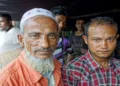
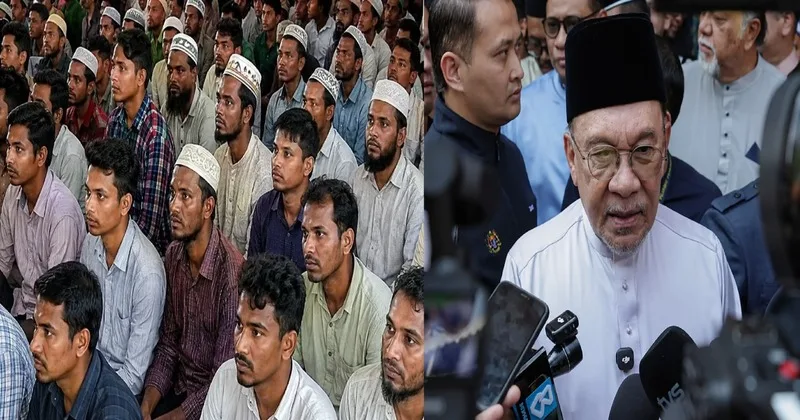
What, in fact, is happening to Rohingya refugees in Malaysia today? They are being treated exactly as a country treats outsiders who have entered as infiltrators. Here, the “Ummah” has vanished; the ongoing dispute highlights this very contradiction. The same country that once granted refuge to Rohingya Muslims, partly on the grounds of shared Islamic faith, now sees a large number of local Muslims demanding their expulsion. This situation demonstrates that national interest and the sense of citizenship are prevailing over the Islamic concept of the “Ummah.”
The Rohingya Controversy in Malaysia
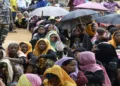
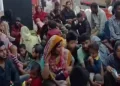
Rohingya Muslims fleeing Myanmar have long viewed Malaysia as a safe haven. Muslim-majority Malaysia had also granted them shelter, but the situation now appears to be changing. In recent months, an anti-Rohingya campaign has intensified on social media. A petition launched on Change.org urged the Malaysian government to either resettle Rohingya refugees in a third country or provide aid to them in areas near Myanmar, while expelling them from Malaysian cities, towns and villages. This petition garnered support from hundreds of thousands of people.
The petition claimed that the growing presence of the Rohingya community is placing a strain on resources, social services and infrastructure. Concerns regarding security and social harmony were also raised. A segment of Malaysian citizens is questioning who should be prioritised in a country with limited resources: its own citizens or the refugees? Locals argue that since Malaysia is not a signatory to the 1951 UN Refugee Convention, refugees do not possess the legal right to work or access full government services. They ask why the country should continue to shoulder the burden of the Rohingya, noting that these refugees are exerting direct and indirect pressure on employment and resources.
Another argument put forward by local citizens is that civil rights and national interests constitute the primary responsibility of any government. According to them, shared religious identity alone cannot serve as the basis for equal rights to a nation’s resources. Naturally, this perspective is rooted in the modern concept of the nation-state, wherein the state’s primary accountability is considered to be towards its own citizens.
Social and Economic Causes of the Dispute
Dissatisfaction regarding the Rohingya community stems not merely from cultural factors or their status as displaced persons; economic and social factors also play a significant role. Recently, the filth left behind after animal sacrifices during Eid al-Adha and the ensuing controversies fueled discontent on social media. Some questioned how a community reliant on self-help could afford to purchase livestock on such a large scale. These questions further stoked existing resentment. Now, millions of Malaysians want the Rohingyas expelled from the country at any cost.
Prime Minister Anwar Ibrahim states that efforts to repatriate Rohingya refugees to Myanmar or resettle them in a third country have so far failed. He says, “My advice to the citizens of Myanmar, especially the Rohingyas, is that they too must abide by our regulations. Their buildings and businesses must comply with the rules. If they fail to do so, we will have no choice but to take action.” He added that the public should report any instances of misconduct to the authorities, who would then take action in accordance with the law.
When asked to comment on reports regarding the largest Rohingya settlement in the Manjung district of Perak, Alwi stated that the police would discuss the matter with the state government and regularly monitor the refugees, most of whom hold United Nations High Commissioner for Refugees (UNHCR) cards. So much for the concept of the global Islamic “Ummah”! In reality, the actions taken against the Rohingya in Malaysia demonstrate that one cannot simply act arbitrarily based on religion after entering another country. A refugee remains a refugee unless the host country’s people or government decide otherwise.
How Rohingyas are receiving assistance in Bharat
Let us now examine this in the context of India. Whenever the central or any state government in India takes action against the Rohingya, numerous Islamic organisations step forward, and Public Interest Litigations (PILs) are even filed in the Supreme Court. There is a long list of organisations and individuals, both within India and internationally, that support Rohingya migrants, provide them with legal aid and extend humanitarian assistance.
These can be broadly categorised into three groups: first, legal experts and human rights organisations (NGOs) that are waging legal battles in Indian courts (Supreme Court and High Courts) regarding the rights of the Rohingya, the education of their children and opposition to their deportation.
Rohingya Human Rights Initiative (ROHRINGYA): A key NGO active in India that has been filing petitions in the Supreme Court to secure admission for Rohingya children in government schools and to ensure access to basic amenities like rations. Human Rights Law Network (HRLN): An organisation led by senior advocate Colin Gonsalves that provides free legal aid to Rohingya migrants and advocates for them in court against arrest or deportation.
Bandi Mukti Committee (West Bengal): An organisation working for the release of migrants held in Indian jails or detention centres. Working Group on Alternative Strategies (Delhi): A Delhi-based group advocating for human rights and the legal rights of refugees. Kerala Muslim Cultural Centre (KMCC): Involved in providing financial and social assistance to Rohingya migrants in South India and parts of Delhi. ActionAid Association (ActionAid India): An organisation that prepares reports on the status of refugees and advocates for their health and education.
A Network of NGOs Supporting the Rohingyas
International agencies and global organisations rank second in this list. UNHCR (United Nations High Commissioner for Refugees): This UN agency identifies Rohingyas living in India and issues them ‘Refugee Cards’ to ensure their protection. Amnesty International: This global human rights organisation strongly opposes the Indian government’s decisions to deport Rohingyas to Myanmar and advocates for their safety. Human Rights Watch: An organisation that highlights the actions of the Myanmar military on a global scale and urges countries, including India, not to expel the Rohingyas.
The Rohingyas Have an Army of Lawyers
Third in line are the prominent individuals and lawyers who advocate for the Rohingyas in court, filing petitions and arguing for their human rights. Key names among them today include: Colin Gonsalves (Senior Advocate), who has fought several significant cases in the Supreme Court on behalf of the Rohingyas; and Prashant Bhushan and Kapil Sibal, senior lawyers who have sought to halt the forced deportation of Rohingyas by citing human rights and international laws. Prominent senior lawyers who have argued the case in court include Dr Rajeev Dhavan and Dr Ashwani Kumar (a former Union Law Minister).
Mohammad Salimullah and Mohammad Shakir: These individuals are Rohingya refugees themselves and were the first to challenge the Indian government’s deportation policy in the Supreme Court. Government investigations and controversies: The Indian Ministry of Home Affairs and intelligence agencies have periodically monitored the activities of these organisations, citing concerns regarding national internal security. The government believes that certain organisations facilitate illegal infiltration and assist migrants in obtaining forged Aadhaar or ration cards; investigations into these matters are currently underway in states such as Jammu & Kashmir and Assam.
Jamiat Ulema-e-Hind provides extensive assistance: In addition to the aforementioned organisations, numerous other religious, social, legal and human rights groups, as well as prominent individuals, have supported providing shelter, education for children, free legal aid and humanitarian assistance to Rohingyas in India. A key name among them is the Islamic religious organisation Jamiat Ulema-e-Hind. As a major Muslim organisation in India, it provides humanitarian relief, such as blankets, rations, and financial aid, to Rohingya refugees living in Delhi, Haryana (Nuh) and other states during the winter months.
Multiple Action Research Group (MARG): This NGO works to legally empower displaced persons and refugees and advocates for their fundamental rights. Red Crescent Society of India (RCSI): Headquartered in Mumbai, this organisation has been sending relief supplies and medical aid, under the initiative “Operation Humanity”, to Rohingyas living in India as well as those sheltering in neighbouring countries (such as the Cox’s Bazar camps in Bangladesh).
Local and regional grassroots groups, including Hyderabad-based NGOs and child-welfare groups: Several local civil society organisations operate in Hyderabad, which is home to a significant Rohingya population in India. Some groups in Jammu & Kashmir… Local Non-Governmental Organizations (CSOs): According to investigations by security agencies, certain local social organisations and “madrasas” are active in the Jammu region (specifically in settlements like Narwal, Sunjwan, and Bathindi), assisting Rohingyas in residing there, finding employment, and securing basic civic amenities.
On one hand, there is the Muslim nation of Malaysia, which, rising above the concept of the “Ummah” and prioritising its own nation, focuses first on the welfare of its own citizens; its people are even campaigning to expel the Rohingyas from the country. On the other hand, there are certain Indian Muslims, NGOs, activists and politicians who are actively working to provide every facility to the Rohingyas in India! Is India not facing pressure due to the presence of these infiltrators?
The concept of the ‘Ummah’ is being torn apart as Muslim nations fight amongst themselves! Currently, several Muslim-majority countries across the globe are embroiled in direct warfare, proxy wars or severe internal conflicts. Six or seven nations lie at the heart of this confrontation; the rivalry between Saudi Arabia and Iran represents the most significant struggle for regional dominance. Both nations are engaged in proxy wars in countries such as Yemen and Syria.
Yemen and Syria: In Yemen, a war continues between Iran-backed Houthi rebels and the Saudi-backed government. In Syria, the Shia-led government and Sunni rebel factions are fighting each other.
Sudan and Libya: A fierce civil war for power is raging between two Muslim military generals in Sudan. Similarly, Libya has been divided for years between rival governments and armed factions. Key reasons for this infighting include Shia-Sunni sectarianism: the contest for religious and geopolitical leadership between Iran (Shia-majority) and Saudi Arabia (Sunni-majority) is the primary cause of this conflict.
Power and Dictatorship: Due to the absence of strong democratic institutions in countries like Libya and Sudan, a bloody struggle for power is underway between the military and rebel groups. Likewise, an undeclared war is ongoing between Pakistan and Afghanistan; the Pakistan Army frequently crosses into Afghanistan to kill Afghans, while Afghans, in turn, are regularly detonating bombs within Pakistan.
In essence, the Islamic concept of the “Ummah” holds no sway in these regions; yet, in places where Islam is not the state religion, such as India, Sri Lanka, Nepal, other nations of the Indian subcontinent, as well as European and American countries, the ‘Ummah’ concept is highly prominent! “Political Islam” exerts its full influence in those regions. The strategy involves first seizing power in regions ruled by non-Muslims by inciting and provoking people in the name of the “Ummah”. Once power is secured, internal infighting and bloodshed ensue, accompanied by a scramble to control resources, a scenario currently visible in the conflicts or war-like situations unfolding between various Muslim nations.
In this context, the concept of the “Ummah” currently manifests as an overt and covert war against non-Muslims, leaving no room for them to coexist peacefully! In non-Muslim nations like India, the influence of the “Ummah” appears to be growing stronger by the day.