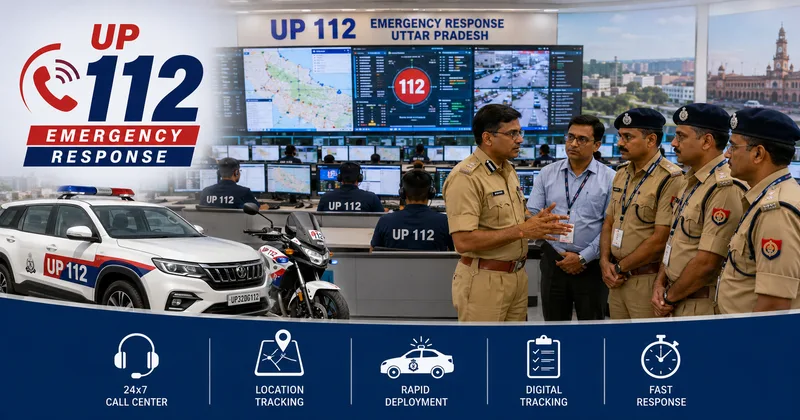
LUCKNOW: Uttar Pradesh’s UP 112 emergency response system is drawing attention from across India, with senior West Bengal Police officers visiting Lucknow to study its functioning. Their visit shows growing interest among states in adopting modern, centralized policing systems that have helped Uttar Pradesh improve emergency response, crime control, and public safety. A four-member delegation from West Bengal Police, led by Inspector General (IG) Sukesh Jain, visited the UP 112 headquarters in Lucknow to gain firsthand knowledge of the system’s functioning. During the visit, the officers closely examined the centralized command-and-control infrastructure, technological framework, and rapid response mechanisms that have made UP 112 one of India’s most recognized emergency services.
Uttar Pradesh’s integrated emergency response system, UP 112, has become a model for efficient law enforcement and citizen assistance. The service handles emergency calls related to crime, accidents, medical emergencies, women’s safety, and public distress through a centralized platform that coordinates responses across UP’s vast geographical area.
As per the information received, the officials from West Bengal were briefed in detail about how UP 112 receives, processes, and responds to emergency calls. They were shown the functioning of the advanced control room, where calls are monitored round the clock through a sophisticated technological network designed to ensure that no emergency request goes unattended. The delegation learned how UP 112 ensures that no emergency call goes unanswered. If a call operator is busy, the system automatically routes the call to another available operator, helping authorities respond more quickly to emergencies.
Officials were shown how the UP 112 system automatically identifies a caller’s location and forwards the information to the nearest available police vehicle. This helps emergency teams respond swiftly and efficiently to incidents.
Officials explained that a digital record is created for every emergency request. All actions taken by the police are documented from start to finish, making the process transparent and easier to monitor while enhancing public confidence in the system.
The West Bengal delegation was particularly keen to understand how UP 112 delivers quick emergency assistance across the state. UP 112 officials said the service maintains an average response time of about 6.5 minutes, thanks to technology-driven operations and real-time coordination between control rooms and field units.
The success of UP 112 is widely regarded as a result of the policing reforms introduced under Chief Minister Yogi Adityanath. The government has invested heavily in modern technology, emergency response services, surveillance systems, and police infrastructure to improve public safety and law enforcement. Experts believe that such technology-enabled policing systems are becoming increasingly important as states seek more efficient ways to manage public safety challenges. The ability to receive real-time information, deploy resources quickly, and monitor outcomes through digital platforms has transformed the functioning of modern police organizations across the world.
Sources indicate that West Bengal Police is exploring ways to further strengthen its own emergency response capabilities and improve law-and-order management through the adoption of best practices from successful policing models. The visit also highlights the growing recognition of Uttar Pradesh’s policing innovations at the national level. In recent years, delegations from various states and institutions have visited the UP 112 headquarters to understand its operational framework and technological capabilities.
Although West Bengal has not yet announced any decision to fully adopt the UP 112 model, the insights gained during the Lucknow visit could help shape future improvements in the state’s emergency response system.