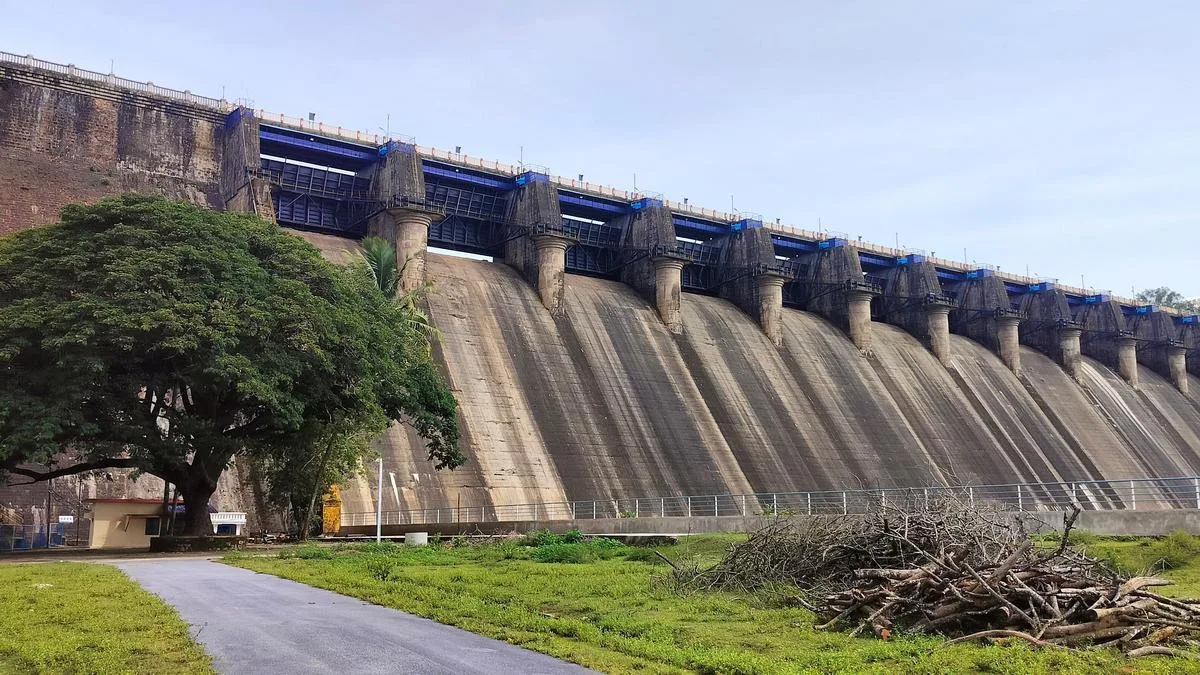
Shivamogga: The delayed arrival of the southwest monsoon has triggered growing concern across Shivamogga district, popularly known as the gateway to Karnataka’s Malnad region, with reservoir levels dropping sharply and farmers staring at an uncertain agricultural season. Although the monsoon is typically expected to set in during the first week of June, the district has received little rainfall even as June draws to a close, leaving agriculture and water resources under severe stress.
Farmers who sowed crops in anticipation of timely rains have suffered losses, while those dependent on irrigation from reservoirs are anxiously waiting for rainfall. Officials warn that if the dry spell continues, irrigation for crops could become increasingly difficult despite drinking water supplies remaining stable for now.
The situation stands in stark contrast to last year when pre-monsoon showers arrived during the second week of May, followed by a healthy southwest monsoon that filled reservoirs, lakes and tanks across the district. This year, however, all three major reservoirs in Shivamogga are witnessing a significant decline in water levels due to poor inflows.
Tunga reservoir records poor inflow
The Tunga Dam, located at Gajanur in Shivamogga taluk, supplies irrigation water to farmers in Shivamogga and parts of Davanagere district while also meeting the drinking water needs of Shivamogga city. Water from the reservoir is additionally diverted to Haveri district under the Tunga Upper Bank Canal Project.
With a gross storage capacity of 3.24 TMC, the reservoir currently holds only 2.047 TMC of water. The present water level stands at 587.58 metres compared to 587.90 metres during the corresponding period last year when storage had reached 3.04 TMC.
Officials said inflows into the reservoir have remained extremely poor, with only 323 cusecs entering the dam. Normally, rainfall in Sringeri of Chikkamagaluru district and Agumbe in Shivamogga district substantially increases inflows into the Tunga reservoir. Had the monsoon arrived on time, authorities would have begun releasing water downstream by the second week of June. Instead, the reservoir is yet to receive adequate inflows, raising concerns over irrigation during the coming months.
Bhadra reservoir also under pressure
The Bhadra Dam, situated on the border of Shivamogga and Chikkamagaluru districts, has also recorded a sharp decline in water storage. Considered the lifeline of central Karnataka, the reservoir provides drinking water and irrigation to several districts including Chikkamagaluru, Shivamogga, Davanagere, Haveri, Gadag and Koppal.
The reservoir currently stands at 136.7 feet against its full reservoir level of 186 feet. It contains 24.669 TMC of water compared to 52.84 TMC during the same period last year. Inflows have reduced to just 211 cusecs, while an equal quantity is being released downstream.
The Bhadra river supports cultivation of paddy, ragi, jowar, arecanut and coconut across thousands of hectares. Together with the Tunga river, it forms the Tungabhadra river near Kudli in Shivamogga before eventually joining the Krishna river basin.
Linganamakki storage drops significantly
The Linganamakki Reservoir, constructed across the Sharavathi River near Sagar, is primarily used for hydroelectric power generation. The reservoir supplies water to the Sharavathi Hydroelectric Project, one of Karnataka’s most important sources of low-cost electricity.
The reservoir has a storage capacity of 151.64 TMC but currently holds only 14.97 TMC of water. The present water level is 1,745.85 feet compared to 1,778.95 feet during the corresponding period last year, when storage stood at 52.84 TMC.
KPCL sources at Jog indicated that unless substantial rainfall is received soon, power generation may have to be curtailed in the coming days. Water levels in the Sharavathi backwaters have receded so drastically that the foundations of a bridge built across the reservoir have become visible.
Farmers fear crop losses
The prolonged dry spell has caused widespread anxiety among farmers, particularly arecanut growers who rely heavily on regular rainfall during the early monsoon period. Agricultural experts caution that existing plantations could suffer severe moisture stress if rainfall continues to remain deficient.
Farmers who had already completed sowing operations based on normal monsoon expectations are now worried about crop failure, while irrigation-dependent farmers fear that reservoir storage may not be sufficient to support cultivation throughout the season.
MP raises Cauvery issue, compensation concerns
Meanwhile, Shivamogga MP B.Y. Raghavendra urged the Karnataka government to strongly defend the state’s interests in the ongoing Cauvery water-sharing issue, warning that deficient rainfall could intensify water disputes this year.
Addressing a meeting with district officials on monsoon preparedness, he said the present storage position in the Cauvery basin and other reservoirs indicates that even drinking water could become a challenge if rainfall does not improve. He also expressed hope that the recently inaugurated crest gates at the Tungabhadra Dam would receive adequate inflows in the coming weeks.
The MP further pointed out that more than 700 houses suffered partial damage and over 200 houses were completely damaged during storms in April and May, while nearly 1,000 acres of arecanut plantations were affected. He said compensation proposals have been submitted to the state government but relief is yet to reach beneficiaries.
Raghavendra also highlighted that irrigation projects in the district owe nearly Rs 32 crore in electricity dues to MESCOM, warning that failure to clear the pending bills could affect pumping operations if rains arrive later in the season. He added that the government has assured repairs to over 220 automated rain-gauge stations across the state, which will improve rainfall monitoring and help farmers receive timely assistance.