Brinda Karat’s article, “The majoritarian shadow over Adivasi identity, faith” published in The Hindu on June 1, raises important questions about tribal identity, religion and constitutional rights. However, the article is marked by a selective reading of realities on the ground and an unmistakable hostility towards the Janjati Suraksha Manch (JSM), an organisation founded and led primarily by tribal individuals themselves.
While presenting herself as a defender of Adivasi rights, Karat ends up reducing a complex civilisational and cultural issue into a simplistic political narrative of “majoritarianism versus minorities”. As someone who comes from one of the remotest tribal regions of India and has lived within the realities of tribal society rather than observing them from ideological distance, I find this portrayal deeply inadequate and in several respects, misleading.
The central weakness of Karat’s argument is that she treats the growing concern over religious conversions among tribal communities as if it were merely an extension of a majoritarian political project. In doing so, she completely ignores the genuine anxieties of countless tribal families who have witnessed the gradual erosion of their traditional belief systems, customs, rituals, festivals and community institutions under the influence of organised missionary activity.
The issue is not whether an individual has the constitutional right to choose a religion. Article 25 of the Constitution guarantees precisely that freedom. The real question is whether conversions achieved through inducement, dependency networks, social pressure, material incentives, educational monopolies or cultural delegitimisation can genuinely be described as exercises of free choice. This is a question that deserves honest engagement rather than ideological dismissal.
For decades, Christian missionary organisations belonging to different denominations have systematically expanded their presence across the tribal belt of Central India. Having achieved significant success in many parts of the North-East, their focus increasingly shifted towards tribal communities in Chhattisgarh, Jharkhand, Odisha, Madhya Pradesh, Maharashtra and adjoining regions.
Today, it is difficult to find a tribal district in Central India where missionary institutions do not exercise considerable influence over social, educational and religious life. To point out this reality is not communalism. It is simply acknowledging a sociological fact.
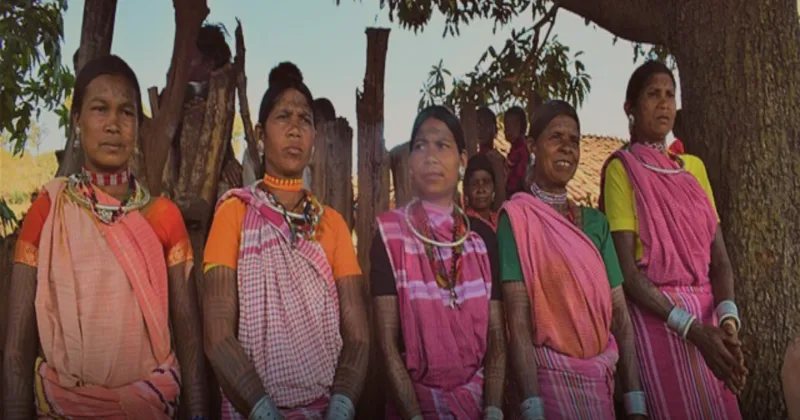
The concern expressed by organisations such as the Janjati Suraksha Manch emerges from this lived reality. Contrary to the portrayal offered by Karat, JSM was not created by some external force seeking to impose an alien identity upon tribal communities. It emerged from within tribal society itself. Its members include individuals who fear that indigenous traditions inherited over centuries may disappear within a few generations if current trends continue unchecked.
Those who have grown up in tribal villages understand that tribal identity is not merely an ethnic label. It is intimately connected with sacred groves, ancestral deities, village festivals, collective rituals, oral traditions and a worldview centred around nature. Forests, rivers, mountains and ancestral spirits are not symbolic abstractions; they form the living foundation of community life.
When conversion occurs, what often follows is not merely a change of personal faith. Traditional rituals are abandoned, ancestral practices are denounced as “pagan” or “backward”, village festivals lose participants and social institutions that once bound communities together begin to fragment. This cultural transformation cannot be wished away by invoking constitutional rhetoric alone.
Ironically, while Karat speaks passionately about preserving Adivasi identity, she remains conspicuously silent about the role that organised missionary activity has played in weakening many of the very cultural traditions she claims to defend. One searches her article in vain for any serious reflection on this aspect.
Equally absent from her analysis is the question of constitutional safeguards available to Scheduled Tribes. The debate surrounding the extension of provisions analogous to those applicable to Scheduled Castes is undoubtedly complex and deserves careful discussion. Yet it cannot be denied that a growing section of tribal society feels that converted individuals continue to enjoy benefits intended to protect vulnerable tribal communities while simultaneously becoming part of a separate religious minority framework.
Whether one agrees with this concern or not, it deserves reasoned debate rather than caricature.
Having said this, there is one aspect of Karat’s article that cannot be dismissed outright. She is correct in drawing attention to the continuing dispossession of tribal communities through mining projects, land acquisition and failures in implementing protective legislation such as the provisions of the Panchayats (Extension to Scheduled Areas) Act (PESA) and the Forest Rights Act, 2006. Indeed, this is one of the greatest challenges confronting tribal India today.
Across the country, tribal communities have repeatedly witnessed forests being diverted, mountains being excavated, rivers being polluted, and ancestral lands being acquired in the name of development. These are not merely economic resources for tribal communities. They are sacred landscapes inhabited by their deities, ancestors, and collective memories.
Any development model that treats tribal territories merely as repositories of minerals while ignoring their cultural and spiritual significance is fundamentally flawed.
The implementation of PESA and the Forest Rights Act must therefore be strengthened in both letter and spirit. Gram Sabhas must be empowered rather than bypassed. Free, prior, and informed consent must become a meaningful reality rather than a bureaucratic formality. If mineral extraction is undertaken, tribal communities must receive a substantial and lasting share of the benefits generated from resources extracted from their lands.
Token employment opportunities and occasional compensation packages cannot substitute for genuine economic participation and decision-making power.
Unfortunately, the beneficiaries of many extractive projects are often not the nation as a whole but a nexus of corporate interests, political influence, and local power brokers. Tribal communities frequently bear the environmental and cultural costs while receiving only a fraction of the benefits. Yet acknowledging this reality does not require us to ignore another reality.
The exploitation of tribal lands and the erosion of tribal faith traditions are not mutually exclusive concerns. Both can exist simultaneously. One cannot be used to excuse or conceal the other.
This is where Karat’s article falls short. By focusing almost exclusively on alleged majoritarian threats, she overlooks the profound cultural consequences of organised conversion efforts among tribal communities. In her eagerness to defend missionary activity from criticism, she neglects the voices of those tribal men and women who seek to preserve their indigenous traditions and who view conversion as a serious challenge to their cultural continuity.
The future of tribal India cannot be secured through ideological binaries. It requires a commitment to protecting tribal faith traditions, strengthening constitutional safeguards, implementing PESA and the Forest Rights Act effectively, preventing coercive or inducement-based conversions and ensuring that development occurs with the consent and participation of tribal communities.
The defence of jal, jungle, zameen and the defence of tribal civilisational heritage are not competing causes. They are inseparable. Those who genuinely care about Adivasi rights must be willing to defend both.