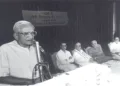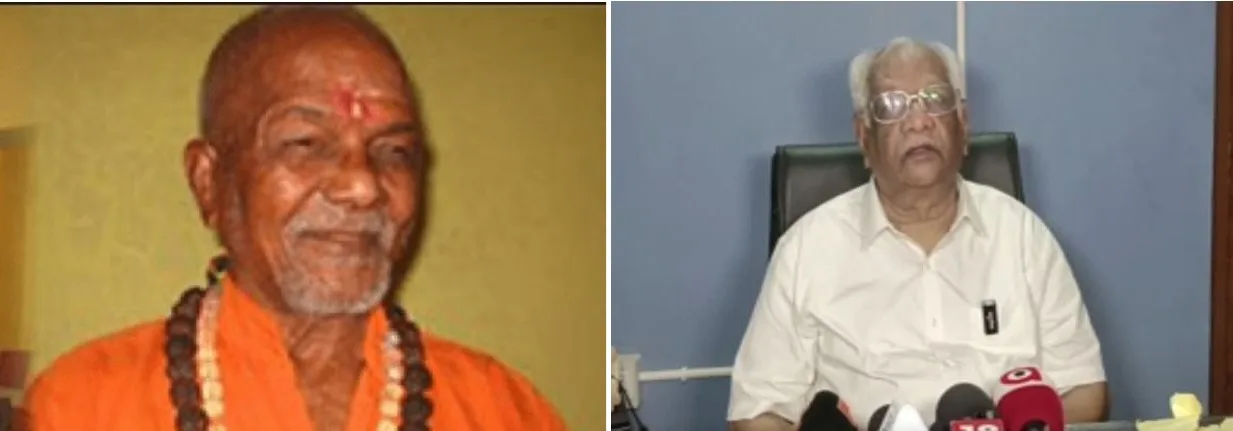
Justice A.S. Naidu, who led the judicial commission investigating the brutal murder of Swami Laxmanananda Saraswati and the subsequent violence in Kandhamal, has disclosed that the inquiry identified religious conversion as a key contributing factor in the murder.
This revelation follows reports of the commission’s inquiry report disappearing and an FIR being filed in connection with the matter. Justice Naidu made his statement after these developments, emphasizing the commission’s findings and confirming that it had thoroughly examined various aspects of the incident and its aftermath.
This revelation follows reports of the commission’s inquiry report disappearing and an FIR being filed in connection with the matter. Justice Naidu made his statement after these developments, emphasizing the commission’s findings and confirming that it had thoroughly examined various aspects of the incident and its aftermath.
The case relates to the August 23, 2008 killing of Swami Lakshmanananda Saraswati and his followers at the Jalespeta Ashram in Kandhamal district of Odisha, an incident that triggered widespread communal violence in the region, resulting in multiple deaths and large-scale unrest.
Commission findings and scope of inquiry
Speaking on the matter, Justice Naidu said the commission he headed functioned within the framework of the terms of reference originally assigned to the Justice Sarat Chandra Mohapatra Commission, and later expanded by the state government in the wake of subsequent violence following the killings.
“I followed the terms of reference from the Justice Sarat Chandra Mohapatra Commission. I took it up and tried to take it forward. After multiple killings in the aftermath of Lakshmanananda Saraswati’s death, the government expanded the scope of investigation upon request,” he said.
According to him, the commission examined multiple dimensions of the incident, including the socio-religious situation in Kandhamal, alleged Maoist involvement, and the broader circumstances that led to the violence.
Justice Naidu clarified that the role of a commission is not to determine criminal guilt but to examine causes, contributing factors, and preventive measures.
“A commission does not decide who killed and why. Its role is to establish why such an incident happened and how it can be prevented in future,” he said.
Reference to religious conversion in findings
A major point of renewed attention is Justice Naidu’s statement that religious conversion emerged as one of the factors discussed during the inquiry.
He said the report examined allegations that conversion activities in the region contributed to tensions that culminated in the violence.
“Religious conversion, among other reasons, came up as a cause for his killing. The report also included details about how conversion activities were taking place and the social tensions arising from them,” he said.
He added that much of the foundational material had already been collected by earlier commissions, and only additional details were incorporated when he assumed charge.
According to him, the inquiry also examined issues affecting Scheduled Caste and tribal communities, as well as the geographical and socio-political conditions in Kandhamal district.
Maoist angle and witness examination
Justice Naidu further stated that the commission also examined allegations of Maoist involvement in the killings. Several witnesses were examined during the proceedings, and extensive documentary and oral evidence was recorded.
The commission, according to him, undertook a detailed examination of the aftermath of the killings, including the widespread violence that followed the incident and the administrative challenges faced in restoring normalcy.
Submission of 1,500-page report
Justice Naidu said the final report submitted by the commission ran into approximately 1,500 pages, divided into two volumes. He stated that the report was formally submitted to the then Chief Minister through official channels.
“A full-fledged report consisting of nearly 1,500 pages was given to the then Chief Minister Naveen Patnaik by my secretary,” he said.
The report reportedly contained detailed observations on the causes of violence, socio-religious tensions, alleged conversion activities, law-and-order breakdown, and recommendations aimed at preventing similar incidents in the future.
Justice Naidu added that after submission, all records, evidence, and supporting documents were returned to the department that had constituted the commission, as per standard procedure.
Missing file controversy and administrative response
The issue has resurfaced following reports that the inquiry file is missing, allegedly from the Chief Minister’s Office. The development has triggered concerns over administrative record-keeping and the status of sensitive judicial inquiry documents.
Justice Naidu, however, expressed doubt that the file had been stolen.
“I would say the file is misplaced, not stolen, because stealing it would not benefit anyone. Both BJD and BJP were in coalition then, so there is no point blaming any single party,” he said.
He added that he had followed up on the report for a short period after submission and had been informed that it had been processed through official channels, but its current status remains unclear.
Earlier, police registered an FIR following a complaint regarding the disappearance of two commission-related files from the CMO. The Capital Police initiated an investigation and questioned officials, including Joint Secretary Sarat Chandra Marandi, as part of the probe.
A Special Investigation Team (SIT) has since been formed to examine the circumstances under which the files went missing, who may be responsible, and whether any criminal conspiracy is involved.
Police Commissioner S. Dev Datta Singh said the investigation is at an early stage and will involve detailed examination of timelines, custody records, and procedural handling of documents. He also indicated that forensic support may be used if required.
Background of the 2008 incident
The case dates back to August 23, 2008, when Swami Lakshmanananda Saraswati and four of his disciples were killed at the Jalespeta Ashram in Kandhamal. The incident triggered one of the most serious episodes of communal violence in Odisha’s recent history, lasting several weeks and resulting in at least 38 deaths, according to official estimates.
In the aftermath, the state government constituted multiple inquiry mechanisms over time, including earlier commissions before the formation of the Justice A.S. Naidu Commission in 2012.
The Justice Naidu Commission submitted its findings in 2015. However, the report was never made public, leading to periodic demands for its release and increasing public interest in its contents.
Broader implications and unresolved questions
Justice Naidu stressed that the significance of the report lies not only in its findings but also in its recommendations aimed at preventing recurrence of similar incidents.
He remarked that while significant effort went into preparing the report, its lack of public access has limited its impact.
“The tree was planted, but the fruit could not be consumed,” he said, referring to the extensive inquiry process and the lack of utilisation of its outcomes.
He also emphasised that inquiry reports are not meant solely for government archives but hold public importance, especially in cases involving large-scale violence and long-term social consequences.
VHP Demands CBI Probe
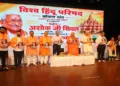
The Vishva Hindu Parishad (VHP) demanded a Central Bureau of Investigation (CBI) probe into the alleged disappearance of the Justice A.S. Naidu Commission report on the murder of Swami Laxmanananda Saraswati.
The organisation claimed that the judicial commission report, which was submitted to the then state government, has now gone missing, raising serious concerns over transparency and accountability in handling sensitive official documents.
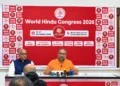
Speaking at a press conference, VHP Odisha (East) state secretary Mahesh Kumar Sahu said the murder of Swami Laxmanananda Saraswati was not an ordinary incident and that the inquiry report should have been made public long ago. He alleged that despite repeated demands over the years, the report was not released by the previous government.
Sahu further said that although the current state government has initiated steps to trace the missing report and an FIR has already been registered in connection with its disappearance, the matter requires a deeper and impartial investigation.
“The report’s disappearance is highly surprising. The government must not stop at registering an FIR but should recommend a CBI probe so that all facts come to light. The ongoing developments must be closely monitored,” he said.
He also referred to broader cultural and political issues, alleging that during the previous BJD government, certain public infrastructure names in Bhubaneswar were altered, including the renaming of a road earlier associated with poet Abhimanyu Samanta Singhara to Mother Teresa Road. He demanded that the current government restore the original nomenclature, calling it part of correcting historical and cultural distortions.
VHP (Purv) Prant president Professor Prafulla Mishra also addressed the press conference and questioned the plausibility of the report being missing.
He said that typically, copies of commission reports are submitted to both the Chief Minister’s Office and the Home Department. “If one copy was with the CMO and another with the Home Department, then how can both be missing? The claim itself appears questionable,” he said.
Mishra urged the state government to take stringent steps to trace the report and ensure accountability. He added that a CBI investigation would help establish the truth behind the disappearance and bring clarity to the matter.
With allegations of missing official records and renewed political pressure from various groups, the case has once again returned to the centre of public and administrative debate.