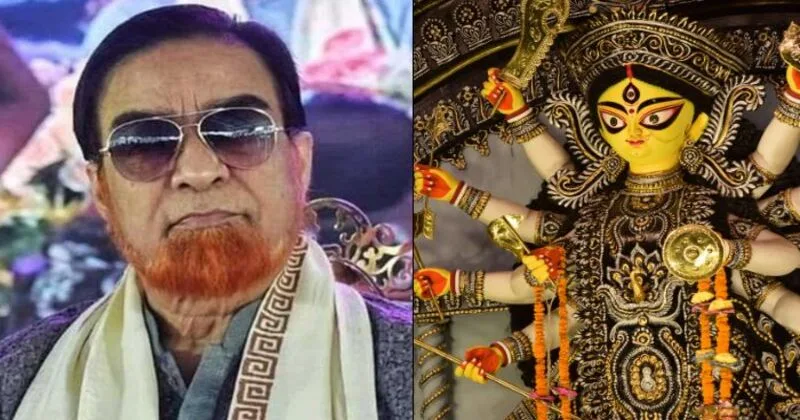
Kolkata: Five years after the shocking communal violence that followed the discovery of a Quran at a Durga Puja pandal in Comilla, Bangladesh, fresh controversy has erupted following social media claims that an individual identified as Baharuddin, allegedly linked to the incident, has been detained in Kolkata.
Five years ago, a horrific conspiracy was allegedly hatched against Hindus in Comilla when a Quran was placed under the feet of a Durga idol. The incident triggered severe violence across the region, resulting in over 500 Hindu homes being set on fire and more than 23 Hindus losing their lives in response to the allegations of blasphemy. Subsequent examination of CCTV footage revealed a Muslim youth personally carrying and placing the Quran into the pandal. Under the administration of the Sheikh Hasina government, interrogation of the youth revealed that Baharuddin had allegedly instructed him to place the holy book in exchange for 50,000 (currency unspecified).
Five years ago, in Comilla, Bangladesh, under a Durga Puja pandal, a horrific conspiracy was allegedly hatched against Hindus by placing a Quran under the feet of the Durga idol.
What followed was severe violence: over 500 Hindu homes were set on fire, and more than 23 Hindus… pic.twitter.com/fFpSfavZKv
— Tathagata Roy (@tathagata2) June 12, 2026
Following these revelations, the Bangladesh police launched a manhunt for Baharuddin, but no trace of him was found at the time. The case resurfaced two days ago when online videos circulated showing someone matching his description in Kolkata, India. This morning, the Kolkata police arrested the alleged operative. Reports indicate that Baharuddin had been living peacefully in Kolkata alongside his wife, son, parents, and five other family members, totalling eight people. The family was reportedly found in possession of official Indian documentation, including ration cards and identity cards, indicating they had established residency in India.
Violence Spreads Across Bangladesh
Chandpur
In Chandpur district, clashes broke out after mobs organised processions protesting the alleged desecration of the Quran. Several Durga Puja venues were attacked. At least four people died when police opened fire while attempting to disperse violent crowds.
Noakhali
Noakhali witnessed some of the most severe violence. Temples and Puja mandaps were attacked and set ablaze in Chaumuhani and the surrounding areas. ISKCON facilities were also targeted. The body of Pranta Chandra Das, a Hindu devotee who had gone missing during the attacks, was later recovered from a pond near an ISKCON temple. Several other devotees were injured during the violence.
Bandarban
In Lama, Bandarban district, mobs attacked the Lama Central Hari Mandir and Hindu-owned businesses after rallies protesting the Comilla incident. Shops in local markets were vandalised and damaged.
Chittagong
Tensions escalated in Chittagong on 15 October. Protesters gathered outside the historic JM Sen Hall Durga Puja venue and attempted to break through security barriers. Stone-pelting and vandalism were reported, while banners and decorations were torn down. Police eventually dispersed the crowd using tear gas and detained dozens of individuals.
Cox’s Bazar
In Pekua Upazila of Cox’s Bazar, processions chanting provocative slogans attacked Durga Puja mandaps and Hindu homes. Multiple temples were vandalised, dozens of houses were damaged, and at least one residence was reportedly burned.
Gazipur
Hundreds of attackers reportedly stormed Hindu temples in Kashimpur, vandalising idols and disrupting religious ceremonies. Local residents described scenes of panic as worshippers fled for safety.
Moulvibazar
Several Puja mandaps, temples and religious institutions were attacked in Kamalganj and surrounding areas. Idols were vandalised and decorative structures destroyed. Security forces were later deployed to prevent further violence. A Kali temple in Karimganj Upazila was vandalised by attackers amid the nationwide unrest.
Rangpur
On October 17, violence erupted in Pirganj Upazila after allegations spread regarding a social media post deemed offensive to Islam. Hindu-owned homes were set ablaze, and entire neighbourhoods were attacked. Subsequent investigations suggested that local political rivalries may have played a role in instigating the violence.
The attacks left widespread destruction across Bangladesh’s Hindu community. Temples that had stood for generations were vandalised. Hundreds of families lost homes, businesses and personal belongings. Many victims were forced to seek temporary shelter, while others struggled to rebuild homes destroyed during the violence. Human rights organisations expressed concern over the scale of the attacks and called for stronger protections for religious minorities.