Over the last ten years, India has undergone a significant transformation in the way welfare benefits are delivered and public services are accessed. What began as an effort to improve the efficiency of government programmes has gradually evolved into a broad-based welfare ecosystem that seeks to reach every eligible citizen through technology-enabled governance, targeted interventions and infrastructure development.
According to official estimates, India’s multidimensional poverty rate declined from 29.17 per cent in 2013-14 to 11.28 per cent in 2022-23. This reduction translated into nearly 25 crore people moving out of multidimensional poverty within less than a decade.
Unlike income-based measures, multidimensional poverty takes into account several indicators including access to housing, healthcare, education, sanitation, nutrition, drinking water, electricity and living standards. The sharp decline therefore reflects improvements across multiple aspects of daily life rather than a single economic indicator.
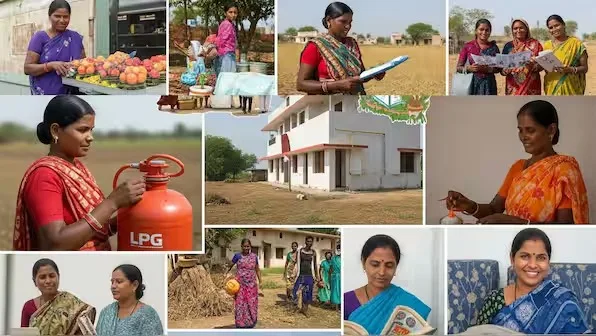
The progress has been driven by a combination of welfare programmes focused on food security, healthcare, sanitation, financial inclusion, housing, livelihood generation and social protection.
The result is a welfare architecture that today reaches hundreds of millions of people through both physical infrastructure and digital platforms.
Poverty reduction through multi-dimensional approach
For decades, poverty alleviation remained one of India’s most complex development challenges. While economic growth helped improve incomes, policymakers increasingly recognised that poverty could not be addressed solely through employment or cash assistance.
A family without safe drinking water, proper sanitation, healthcare access or secure housing often remained vulnerable despite income improvements.
This understanding led to the adoption of a multidimensional approach where welfare interventions targeted several aspects of deprivation simultaneously.
The impact has been substantial.
Official data indicate that nearly one in four Indians who were multidimensionally poor a decade ago have moved out of that category. Improvements in housing, sanitation, nutrition, healthcare access and financial inclusion have contributed significantly to this shift.
At the same time, inflation management has played an important role in protecting household purchasing power. Average inflation declined from approximately 8.1 per cent during 2004-14 to around 5.1 per cent between 2014 and 2025, contributing to greater economic stability and reducing pressure on household budgets.
Together, welfare support and relative price stability have helped strengthen household resilience, particularly among lower-income groups.
Bringing tap water to rural India
One of the most visible transformations has occurred in access to drinking water.
For decades, millions of rural households relied on wells, hand pumps, ponds and distant water sources. Women and children often spent hours collecting water every day, affecting education, health and productivity.
The launch of the Jal Jeevan Mission in 2019 sought to fundamentally change this situation.
At the time of its launch, only 3.23 crore rural households had tap water connections. By May 2026, that number had increased to 15.84 crore households, covering more than 81 per cent of rural homes.
The scale of this expansion is unprecedented.
More than 2.77 lakh villages have achieved full tap-water coverage under the Har Ghar Jal initiative. In addition to households, schools, Anganwadi centres, health centres and community institutions have also received potable water facilities.
The availability of clean drinking water has implications far beyond convenience. It contributes to better health outcomes, reduces waterborne diseases, improves sanitation practices and frees up time for women and girls who previously spent hours fetching water.
In many villages, tap water connections have become a symbol of changing living standards and improved quality of life.
The sanitation revolution
Alongside drinking water access, sanitation has emerged as another major area of progress.
Before 2014, open defecation remained a significant challenge in large parts of rural India. Lack of sanitation infrastructure posed risks to public health, especially for women, children and elderly citizens.
The Swachh Bharat Mission sought to address this challenge through a nationwide campaign focused on toilet construction, behavioural change and community participation.
Over 12.11 crore household toilets have been constructed under Swachh Bharat Mission-Grameen.
As a result, rural sanitation coverage increased from approximately 39 per cent in 2014 to near-universal coverage.
The initiative has gone beyond toilet construction. The next phase focuses on sustaining behavioural change, waste management and village cleanliness.
Today, more than five lakh villages have achieved ODF Plus status, indicating progress towards solid and liquid waste management systems in addition to eliminating open defecation.
The sanitation movement has had important social and health consequences, particularly for women who previously faced safety and dignity concerns associated with open defecation.
Expanding healthcare access at an unprecedented scale
Healthcare has been another major pillar of India’s welfare expansion.
The launch of Ayushman Bharat in 2018 represented a significant step towards reducing the financial burden of healthcare for vulnerable families.
Widely regarded as the world’s largest publicly funded health insurance programme, Ayushman Bharat provides health coverage to eligible beneficiaries for secondary and tertiary care hospitalisation.
The scale of the programme has grown rapidly.
More than 43.93 crore Ayushman cards have been issued across the country, enabling beneficiaries to access treatment at empanelled hospitals.
The scheme has supported over 12 crore hospital admissions, while the total value of treatments provided has crossed Rs 1.80 lakh crore.
For millions of families, this has meant protection from catastrophic health expenditures that often pushed households into debt or poverty.
The programme has also expanded access to specialised medical care for vulnerable sections of society who previously struggled to afford treatment.
Digital healthcare and medical infrastructure
India’s healthcare transformation has extended beyond insurance coverage.
The creation of more than 88 crore Ayushman Bharat Health Accounts (ABHA) marks a major step towards digitisation of healthcare services.
These digital health accounts enable the creation of electronic health records, facilitating paperless healthcare delivery and improving continuity of treatment.
Simultaneously, healthcare infrastructure has expanded significantly.
The number of operational AIIMS institutions has nearly doubled compared to the pre-2014 period, improving access to advanced medical education, specialised treatment and tertiary healthcare services across different regions of the country.
Maternal and child health indicators have also improved.
India’s Maternal Mortality Ratio declined from 130 maternal deaths per 100,000 live births during 2014-16 to 88 during 2021-23.
Institutional deliveries and antenatal healthcare utilisation have also increased steadily, reflecting improved access to maternal healthcare services.
Housing for millions
Housing has emerged as another major component of welfare delivery.
Secure housing is often considered one of the most important determinants of social and economic well-being. It provides safety, improves health outcomes and enhances access to education and livelihood opportunities.
Under the Pradhan Mantri Awas Yojana (PMAY), housing construction has expanded significantly across both urban and rural India.
More than 98 lakh houses have been completed in urban areas, while over 3 crore houses have been constructed in rural regions.
A noteworthy feature of the programme is its emphasis on women’s ownership.
Many homes have been registered either solely in the name of women or jointly with female family members, contributing to women’s social and economic empowerment.
The programme has also improved access to basic amenities such as electricity, sanitation facilities and clean cooking arrangements within households.
Clean cooking fuel and women’s health
The Pradhan Mantri Ujjwala Yojana has sought to address another longstanding challenge faced by millions of rural households, the use of traditional biomass fuels for cooking.
For generations, women cooked using firewood, coal, crop residue and cow dung cakes, exposing themselves to harmful indoor air pollution.
Under Ujjwala, more than 10.57 crore LPG connections have been provided to women from economically weaker households.
This has helped reduce dependence on traditional fuels and improved access to clean energy.
Health experts have long associated indoor air pollution with respiratory diseases, eye disorders and adverse maternal health outcomes.
The transition to LPG has therefore contributed not only to convenience but also to public health improvements.
The overall number of LPG connections in India has more than doubled over the past decade, reflecting the growing adoption of clean cooking fuel.
Electrification and improved quality of life
Electricity access is another area where substantial progress has been reported.
Through initiatives such as the Saubhagya programme, household electrification has been extended to virtually all villages and households.
The benefits of electrification extend beyond lighting.
Access to electricity improves educational outcomes, supports small businesses, enhances healthcare services and contributes to better living standards.
Average daily electricity supply in rural areas increased from approximately 12.5 hours in 2014 to 22.6 hours by 2025.
This increase has transformed daily life for millions of rural families by enabling greater productivity, better educational opportunities and improved household comfort.
Education and empowering girls
Education indicators have also shown encouraging improvements.
Particular progress has been recorded in female education.
Female primary school dropout rates declined sharply from 4.6 per cent in 2013-14 to just 0.3 per cent in 2024-25.
At the secondary level, girls’ enrolment has increased steadily.
These improvements have been supported by expanded school infrastructure, residential schooling facilities, sanitation amenities, scholarship programmes and awareness campaigns.
Initiatives such as Beti Bachao Beti Padhao have contributed to changing social attitudes regarding girls’ education and participation in public life.
The improvements indicate growing recognition of education as a pathway towards empowerment and social mobility.
Women-led development and Self-Help Groups
Women’s empowerment has become a central theme in welfare programmes.
One of the most notable developments has been the rapid growth of Self-Help Groups (SHGs).
The number of women associated with SHGs increased from approximately 2.37 crore to nearly 10 crore over the past decade.
Through these groups, women have gained access to credit, financial literacy, entrepreneurship opportunities and livelihood support.
Government livelihood missions have further strengthened SHGs by connecting them with markets, training programmes and income-generating activities.
Initiatives such as the Lakhpati Didi programme seek to help women increase household incomes through enterprise development and economic participation.
The expansion of SHGs has not only improved financial inclusion but has also strengthened community-level leadership among women.
Financial inclusion and digital governance
Perhaps one of the most transformative changes has occurred in financial inclusion.
The Pradhan Mantri Jan Dhan Yojana created a banking infrastructure that enabled millions of previously unbanked citizens to access formal financial services.
The number of Jan Dhan accounts increased from 17.9 crore in 2015 to more than 58 crore by May 2026.
These accounts have become the foundation of Direct Benefit Transfer (DBT) systems, enabling welfare benefits to be transferred directly into beneficiaries’ bank accounts.
This has improved transparency, reduced leakages and strengthened accountability in welfare delivery.
Digital payment systems have expanded alongside financial inclusion.
Unified Payments Interface (UPI) has emerged as one of the world’s largest real-time payment platforms, transforming how individuals, businesses and governments conduct transactions.
At the grassroots level, initiatives such as BharatNet and eGramSwaraj have expanded broadband connectivity and digitised governance processes, helping bring public services closer to citizens.
Livelihood generation and social security
Beyond welfare delivery, policy efforts have increasingly focused on livelihood creation and social protection.
Employment generation programmes have created billions of person-days of work in rural areas, providing income support and creating local assets.
Skill development initiatives have trained millions of youth for employment opportunities in different sectors.
Schemes targeting artisans, street vendors, micro-entrepreneurs and self-help groups have expanded access to credit, training and market linkages.
Meanwhile, social security coverage has widened considerably through schemes such as Atal Pension Yojana, Pradhan Mantri Jeevan Jyoti Bima Yojana and Pradhan Mantri Suraksha Bima Yojana.
These programmes provide pension benefits, life insurance and accident insurance coverage to millions of workers and vulnerable households, strengthening financial resilience against unforeseen circumstances.
India’s welfare journey over the past decade reflects a shift from fragmented assistance programmes towards saturation-based service delivery that aims to reach every eligible beneficiary.
The expansion of tap water connections, sanitation coverage, healthcare access, housing, clean cooking fuel, electrification, financial inclusion and social security has fundamentally reshaped the country’s welfare landscape.
While challenges remain in ensuring quality, sustainability and last-mile delivery, the scale of progress achieved across multiple sectors demonstrates how coordinated policy interventions and technology-enabled governance can transform lives.
As India continues its development journey, the focus is expected to remain on strengthening service delivery, improving human development indicators and ensuring that welfare benefits reach even the most remote and underserved communities.
The story of nearly 25 crore people moving out of multidimensional poverty is not merely a statistic. It reflects changes in everyday life, families gaining access to clean water, mothers receiving healthcare, children staying in school, women entering the financial system, and households experiencing improved living conditions.
Together, these changes represent one of the most significant welfare transformations in contemporary India.