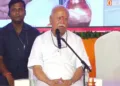
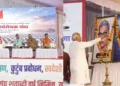
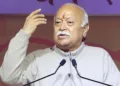
“In the Bharatiya tradition, responsibilities relating to family, education, service, dharma and social life have historically been fulfilled by society itself. In the present times, there is a need to develop an effective internal mechanism for social reform and to strengthen coordination among individuals and institutions working in different spheres of social life,” said Atul Limaye Ji Sah Sarkaryavah, Rashtriya Swayamsevak Sangh while addressing a Pramukh Jan Gosthi Rashtriya at Raipur, Chhattisgarh.
He further said that society manages its own affairs. He said that people engaged in social, cultural, religious, educational, service and economic fields should be brought onto a common platform to undertake collective efforts for the welfare of society. Broad social transformation can be achieved through networking and cooperation among organisations working on issues such as environmental protection, family awakening (Kutumb Prabodhan), social harmony and other social concerns.
He further stated that in Bharatiya society, the Ashrama system had made every stage of life socially meaningful and productive. Even today, the capabilities of retired and experienced individuals can be effectively utilised for nation and society-building. He emphasised that service activities should not remain confined merely to providing assistance, but should also cultivate a sense of duty and participation within society.
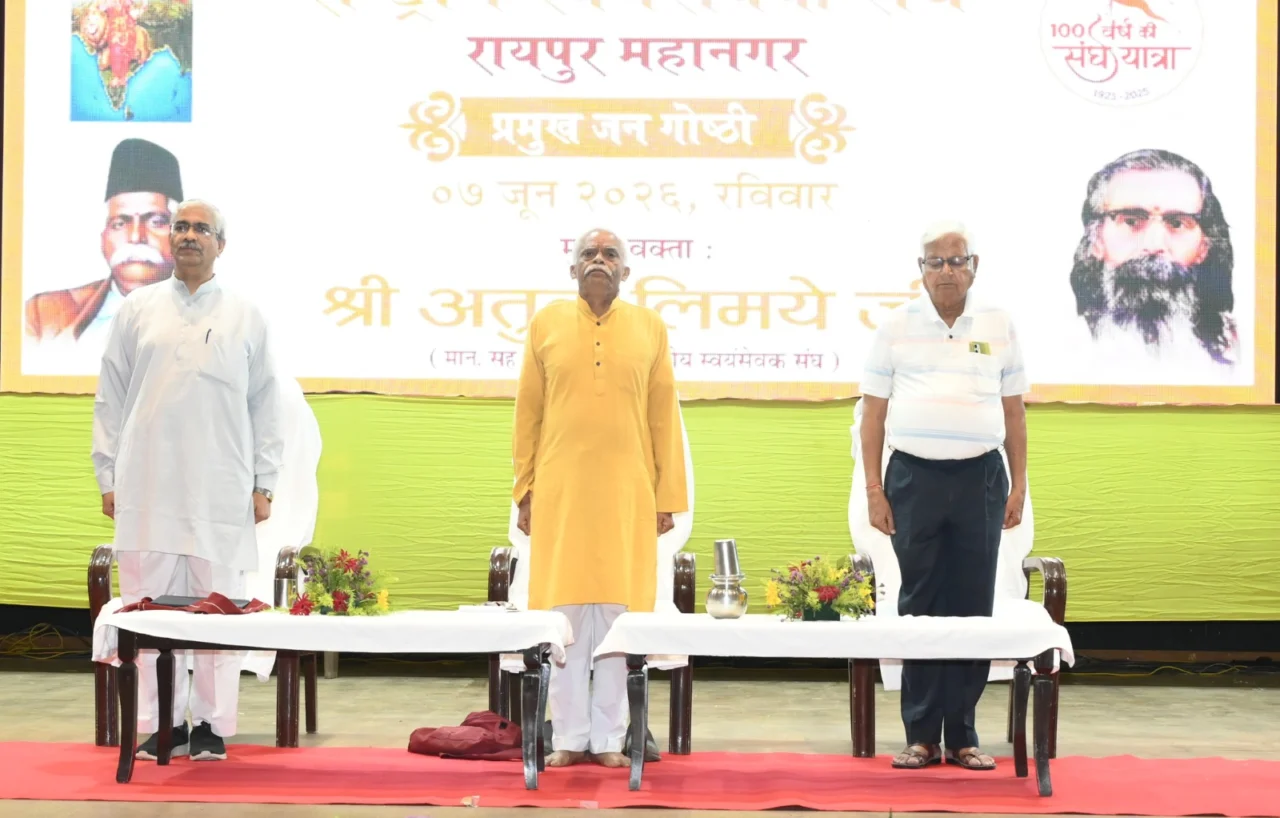
Atul Limaye Ji said that the Sangh can play an important role in connecting individuals and institutions working in different sectors of society and in providing a platform for dialogue and coordination. He remarked that transformation comes through society’s own initiative and that the active involvement of citizens provides direction to society. The decline of society, he added, occurs not because of the activity of wrongdoers, but because of the inactivity of good people.
During the gathering, eminent participants from various fields also shared details of their work. Representatives from the religious sector highlighted their efforts related to social concerns.
Organisations working in the social sector presented information about environmental protection initiatives, polythene-free campaigns and public awareness activities. Representatives from the education sector outlined their work for the education of underprivileged and needy children, book distribution programmes, labour-oriented value education and initiatives for children with special needs.
Institutions engaged in service activities shared information about programmes related to biogas, rehabilitation of the elderly, service to nomadic and destitute communities, and environmental conservation campaigns. Representatives from the economic sector expressed their views on Bharat’s growing economic potential and the need for greater participation of society in national development.
The objective of the gathering was to promote dialogue, cooperation and coordination among individuals and organisations working across diverse fields of social life.