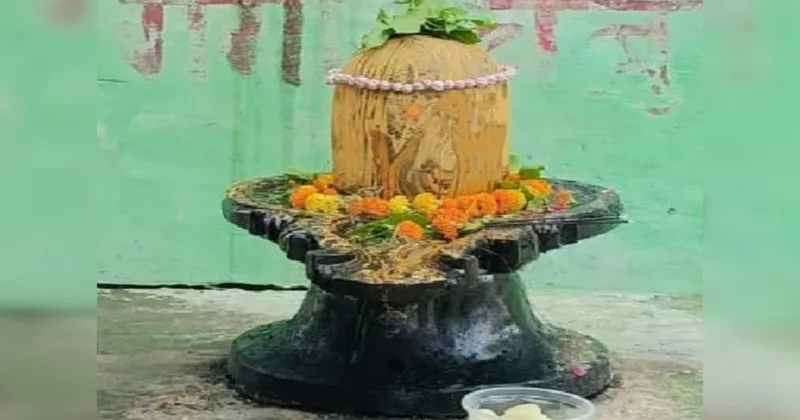
Varanasi: In a discovery that has captivated devotees, historians, and local residents alike, a massive stone Shivling recovered from the waters of the Ganga River has become the centre of intense discussion in the ancient city of Varanasi. The find has prompted both spiritual reverence and archaeological curiosity, with some locals claiming the Shivling could be nearly 2,500 years old.
A HUGE Shivling weighing about 200 kgs was found from the Ganga river in Varanasi.
As per sources this Shivling could be about 2500 years old.
Ancients will rise again and world will know why Sanatan dharma is ETERNAL pic.twitter.com/HpU4UHy2CM
— Sheetal Chopra 🇮🇳 (@SheetalPronamo) June 9, 2026
The remarkable discovery was made near Shakti Ghat in the Sujabad area, located across the Ganga from the main city. According to local boatmen, they were engaged in routine fishing activities when their nets suddenly became entangled in an unusually heavy object submerged beneath the river’s surface.
Initially believing the obstruction to be a large rock or river debris, the fishermen attempted to free their nets. However, as they gradually pulled the object toward the surface, they were astonished to find a massive black-stone Shivling emerging from the waters of the sacred river.
A Difficult Recovery Operation
Witnesses say the Shivling was so heavy that it required the combined effort of numerous boatmen and local residents to retrieve it from the river. Reports suggest that between 10 and 15 people worked together to lift and transport the sacred object.
Local estimates place the weight of the Shivling at approximately two quintals (around 200 kilograms). After being brought ashore, it was carefully transported across the river and temporarily installed outside the Ganga Mandir in Sujabad, where devotees immediately began offering prayers.
The Shivling was reportedly discovered around 200 meters from Shakti Ghat, an area where the Ganga’s shifting currents have historically altered the riverbed and occasionally revealed ancient objects buried beneath layers of silt.
Devotees See a Divine Sign
As news of the discovery spread through Varanasi, crowds quickly gathered at the Mandir site. Pilgrims have been arriving continuously to offer flowers, perform rituals, and seek darshan of the newly discovered Shivling. Chants of “Har Har Mahadev” echoed through the area as worshippers viewed the find as a sacred manifestation emerging from the holy Ganga.
For many believers, the discovery carries profound spiritual symbolism. Varanasi, also known as Kashi, is considered one of the holiest cities dedicated to Bhagwan Shiva. The appearance of a large Shivling from the waters of the Ganga, a river itself revered as a goddess, has led many devotees to interpret the event as spiritually significant.
What has generated even greater intrigue is the possibility that the Shivling could be centuries or even millennia old. According to local residents and temple visitors, the size, shape, and weathered texture of the black stone suggest considerable antiquity. Some residents have claimed that the Shivling may date back nearly 2,500 years.
Officials and experts caution that determining the age of the Shivling requires proper archaeological examination. Without scientific analysis and historical assessment, any estimate regarding its age remains speculative.
Historians point out that Varanasi’s riverfront has undergone dramatic changes over thousands of years. The Ganga’s shifting course, seasonal flooding, riverbank erosion, and the rise and fall of ancient settlements have often submerged or buried Mandirs, shrines, and sculptures.
Archaeological Department Informed
Darshan Nishad, associated with the Namami Gange initiative, stated that local estimates suggest the black-stone Shivling could be approximately 2,500 years old. He confirmed that the sacred object was discovered on June 5 and was later installed on a platform outside the Ganga Temple after local residents learned about the find.
Nishad further stated that the matter has been brought to the attention of the Archaeological Department, which is expected to examine the Shivling and assess its historical significance.