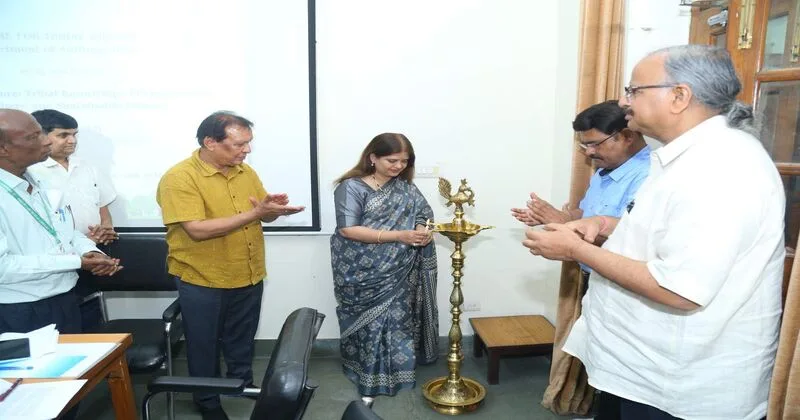
NEW DELHI: Scholars from diverse disciplines such as Environmental Sciences, Anthropology, Forensic Science, Ecology, Andrology, Sociology, History, and Sanskrit Studies came together to understand the basis of environmental crisis and the potential solution towards it.
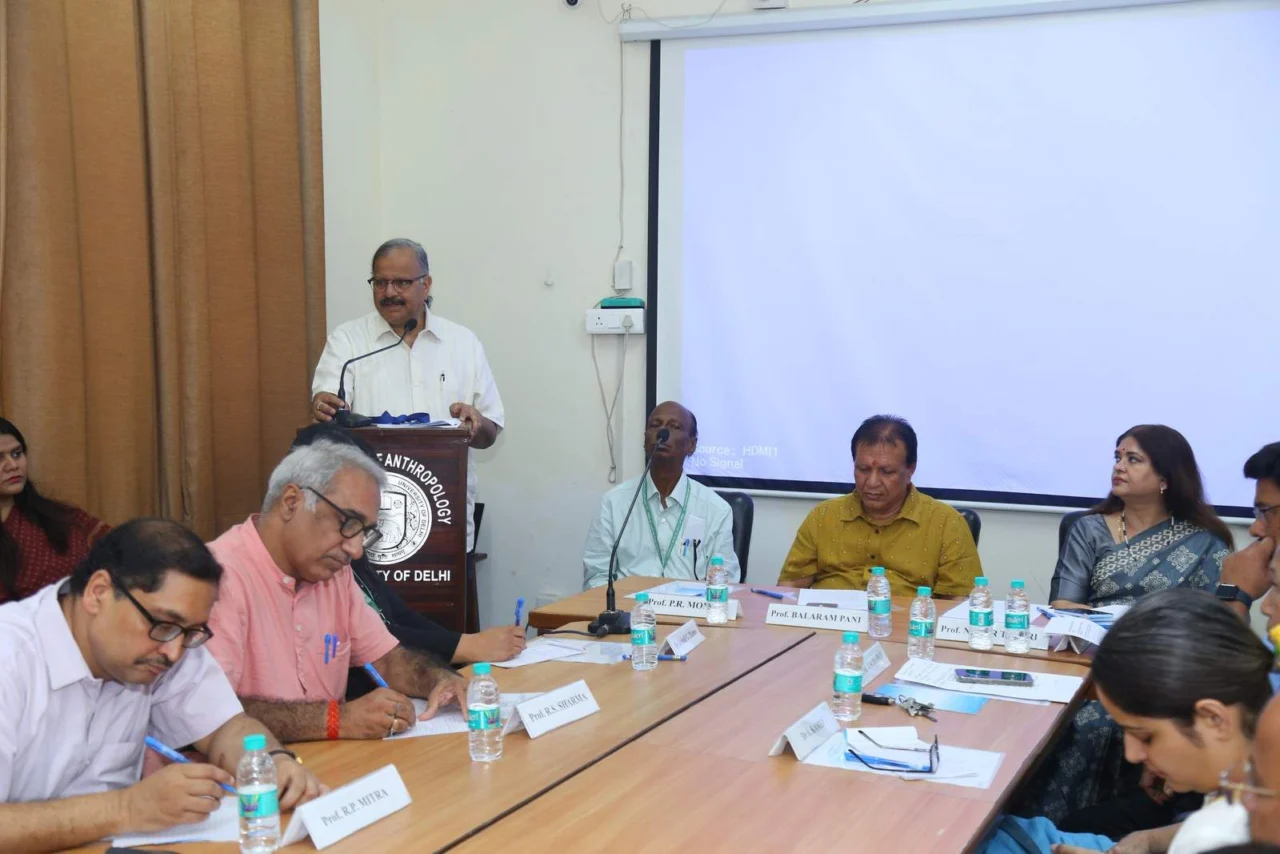
Addressing the gathering, Prof Balaram Pani, Chief Guest and Dean of Colleges, University of Delhi & an accomplished Environmentalist of International status, emphasised that nature and human beings are intrinsically connected. “Nature and man are not disconnected. We need to understand them as complementary rather than contradictory,” he remarked. He also briefly reflected on the concepts of nature and nurture and the growing role of artificial intelligence in contemporary society.
The distinguished panel of experts comprising of Prof. Radhey Shyam Sharma, Head, Department of Environmental Studies, Prof. Om Nath Bimali, Director, Centre for Hindu Studies, Prof BW Pandey, Director, Centre for Himalayan Studies, Prof Virendra Negi, Shaheed Bhagat Singh College, Dr Achingliu Kamei, Atma Sanatan Dharma College and Prof RP Mitra, Department of Anthropology, emphasised on the need for patenting the tribal knowledge systems while creating appropriate mechanisms for their wider dissemination and sustainable utilisation. The deliberations underscored how Indian philosophical traditions, particularly the concepts of Purusha and Prakriti and broader Vedantic thought, view individuals and communities as deeply embedded within nature.
An Indian way of looking at nature necessities transcending of certain binaries such as such as nature versus nurture, nature versus culture, man versus nature, and environment versus nature.
In his remarks, Prof SM Patnaik, Convenor of the event & Director, Centre for Tribal Studies, compared the event to the concept of Samudra Manthan, where the exchange of diverse perspectives leads to the emergence of knowledge and wisdom. He appreciated the participation of students from interdisciplinary streams, highlighting the importance of cross-disciplinary dialogue in addressing environmental challenges.
A major highlight of the event was the screening of a visual documentary on environmentally sustainable tribal customary practices prepared by Dr Avitoli G Zhimo, Joint Director, Centre for Tribal Studies. The documentary showcased indigenous ecological knowledge and community-based conservation practices that can contribute significantly to sustainable development.
The event fostered a strong sense of environmental consciousness and responsibility among students and participants, reaffirming the importance of integrating traditional knowledge systems with contemporary approaches to build a sustainable future.